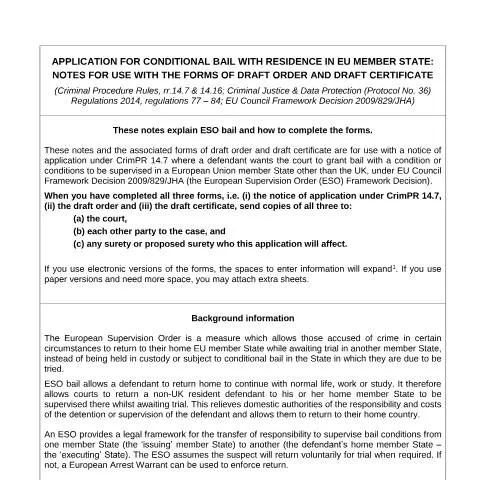
Understanding the European Supervision Order: A Pathway for Conditional Bail
The European Supervision Order (ESO) is an essential legal framework that facilitates the conditional release of defendants awaiting trial in a country outside the UK. It allows individuals charged with crimes in the UK to return to their home EU member states while being supervised, effectively balancing the need for justice and the individual's rights. This document, the Draft Order for Conditional Bail with Residence in EU Member State, is pivotal in this process.
The Context of the European Supervision Order
The ESO operates under the EU Council Framework Decision 2009/829/JHA, allowing the transfer of supervision to the defendant’s home country, lightening the burden on the domestic justice system. Key authorities involved include the Criminal Procedure Rule Committee and the Ministry of Justice.
Eligibility for the ESO
Not every case is suitable for an ESO. The following conditions must be met:
- The defendant is charged with an offence that qualifies under Article 14 of the Framework Decision.
- The defendant is ordinarily resident in the executing member state (the home country) that agrees to supervise the bail conditions.
- There are adequate monitoring arrangements available in the executing state.
Preparation: Gathering Essential Documentation
Before submitting a request for an ESO, it’s crucial to compile the necessary documentation. This includes:
- The notice of application under Criminal Procedure Rule 14.7.
- A draft order specifying the conditional bail terms.
- A draft certificate confirming the arrangements for supervision in the EU member state.
Case-Specific Documentation
Depending on the details of the case, additional documents may be required, such as:
- Evidence of ties to the executing state, such as employment contracts or family connections.
- Any previous criminal records that may influence the court's decision.
Step-by-Step Guide to the ESO Process
Understanding the procedural steps is essential for a successful application. Here’s a chronological outline:
- Preparation of Forms: Complete the necessary forms — the notice of application, draft order, and draft certificate.
- Submission: Send copies of all forms to the court, all parties involved in the case, and any sureties affected.
- Review by the Court: The court will review the application, checking that the offences and bail conditions meet the legal requirements.
- Consultation: In line with Article 22 of the Framework Decision, the court may consult with the proposed executing state to verify the defendant's identity and the adequacy of supervision arrangements.
- Decision: The court makes a ruling on the conditional bail application. If granted, the terms will be laid out clearly.
Submission Channels: Online vs. Paper vs. In-Person
Depending on the jurisdiction, there are multiple channels for submitting the ESO application:
| Channel | Advantages | Disadvantages |
|---|---|---|
| Online Submission | Fast, convenient, and allows for immediate confirmation of receipt. | Requires access to reliable internet and may have technical issues. |
| Paper Submission | Traditional method, suitable for those uncomfortable with technology. | Slower processing times and potential for postal delays. |
| In-Person Submission | Direct interaction with court staff for immediate queries and assistance. | Time-consuming and may require travel, which can be challenging for some individuals. |
Handling Unique Cases: Special Considerations
Specific situations may require tailored approaches when applying for an ESO:
Foreign Nationals
If the defendant is a foreign national residing in the UK, ensure that the application clearly outlines their connections to the executing state, as courts will rigorously assess the feasibility of monitoring their bail conditions.
Minors and Vulnerable Individuals
For applications involving minors or individuals deemed vulnerable, additional safeguards and considerations may be necessary. Courts may require more extensive documentation regarding the welfare and supervision arrangements in the executing state.
What If the Application Is Denied?
In instances where the court declines the ESO application, understanding the subsequent steps is crucial:
- Seek clarification on the reasons for the denial; this will assist in any future applications.
- Consider whether to appeal the decision. The process and conditions for appeals will be defined by existing legal frameworks.
- Explore alternative bail arrangements that may be accepted by the court.
Addressing Missing Information or Errors
If an application is returned due to incomplete information or errors, promptly correcting these issues is vital. Follow these steps:
- Review the court’s feedback carefully to identify specific deficiencies.
- Gather any missing information swiftly to avoid unnecessary delays.
- Resubmit the corrected application, ensuring all parties are informed.
Important Timelines: Key Dates and Milestones
The timeline for processing an ESO application can vary significantly based on multiple factors:
- Submission Deadline: Ensure applications are submitted promptly to avoid any delays that could affect the trial date.
- Response Time: Courts usually aim to respond within a designated period; however, this may depend on the complexity of the case and the need for consultations.
- Trial Date: Be aware of the scheduled trial date as it will determine the urgency of the application process.
Post-Approval Expectations
Once an ESO is granted, there are critical obligations to fulfill:
- Compliance with all terms outlined in the bail order.
- Maintaining regular communication with authorities in the executing state.
- Returning to the UK for scheduled court appearances as directed.
Diving Deeper into the Draft Order: Form Details Unpacked
In examining the Draft Order for Conditional Bail, it’s essential to understand each component and its implications:
Defendant Details
The initial section requires comprehensive personal information about the defendant, including:
- Full name and contact details.
- Date of birth and National Insurance number, if applicable.
- Current address in the UK and permanent address in the executing member state.
Offence Details
Accurate details about the offence charged must be provided, including:
- The nature of the offence and relevant case number.
- Specific articles of law that pertain to the offence, ensuring alignment with the ESO framework.
Conditions of Bail
Clearly outline the conditions under which bail is granted, which may include:
- Reporting requirements to local authorities in the executing state.
- Restrictions on travel beyond the executing state.
- Engagement in specified activities, such as employment or educational commitments.
Signature and Declaration
Finally, the document must be signed by the defendant and any necessary parties to certify the information's accuracy and the acceptance of the bail conditions.
Final Thoughts: Navigating the ESO Landscape
Successfully navigating the ESO application process requires a clear understanding of its complexities and responsibilities. For defendants, this pathway not only provides an opportunity to maintain personal and professional lives during legal proceedings but also underscores the importance of adherence to the established conditions. Engaging with legal professionals familiar with this area of law can greatly enhance the chances of a successful application and ensure compliance with all necessary regulations.
Understanding Bail Conditions and Their Implications in the UK Legal System
When a draft order for conditional bail is considered, understanding the specific nature of bail conditions is crucial. Conditional bail may involve various stipulations tailored to the individual case, aimed at ensuring the defendant's appearance in court and the safety of the public. Conditions can vary widely, from reporting regularly to a police station to restrictions on travel within or outside the UK.
In the context of an individual residing in an EU member state, additional complexities arise. The legal framework for conditional bail must align with the UK’s obligations under the European Arrest Warrant (EAW) framework. This means that if a person is granted bail but is required to reside in an EU country, the authorities may need to coordinate with respective jurisdictions to monitor compliance with bail conditions.
Furthermore, the impact of the Data Protection Act 2018 and UK GDPR on how these bail conditions are communicated and enforced cannot be understated. Information sharing between jurisdictions must comply with data protection laws, ensuring that personal data is handled in a manner that protects the rights of the individual while fulfilling legal obligations.
Navigating the Legal Framework for Conditional Bail Orders Involving EU Residents
The legal framework surrounding draft orders for conditional bail, especially when the individual resides in an EU member state, is governed by several key pieces of legislation. Firstly, the Bail Act 1976 provides the foundation for bail applications in the UK. However, when it comes to international elements, the UK must consider its post-Brexit relationship with EU law, which has introduced nuances that were not previously a concern.
In cases where an individual is granted bail with conditions implicating their residency in an EU country, the order may stipulate that the person must remain within a specific jurisdiction while awaiting trial. This can complicate matters, as it requires the UK courts to liaise with their counterparts in the relevant EU member state to ensure enforcement of the bail conditions. Additionally, the principle of mutual recognition, as outlined in EU law, once offered a smoother process for cross-border justice, but the ramifications of Brexit mean that such cooperation now requires more rigorous negotiation and formalities.
It's essential for legal practitioners to stay abreast of the changes in international legal obligations and how they impact bail orders. This includes understanding the specific requirements that may be placed on individuals who are required to report to authorities in the EU and the UK, and how violations of these conditions can lead to serious legal consequences.
The Role of Legal Representation and Advisories in Drafting Conditional Bail Orders
When seeking a draft order for conditional bail, particularly for individuals residing in an EU member state, legal representation plays a pivotal role. A solicitor with expertise in both UK and EU law can provide invaluable guidance through the complexities of such cases. They can assist in drafting an order that comprehensively addresses the nuances of cross-border bail conditions while ensuring compliance with all relevant legal frameworks.
Moreover, solicitors should be well-versed in recent case law and precedents that may influence bail applications, especially those involving international elements. They may need to consider factors such as the nature of the offence, previous convictions, and the likelihood of absconding, which are all weighed by the courts when deciding on bail applications.
In addition to legal representation, individuals may benefit from advisories on the practical aspects of living abroad while complying with bail conditions. This includes understanding the local laws in their resident country, maintaining communication with UK authorities, and managing their personal affairs while subject to bail restrictions. Ultimately, the right legal advice can significantly affect the outcome of a bail application, especially when navigating the complexities inherent in cross-border issues.