Navigating the LRAPP3 Form: A Vital Step in Land Registration Proceedings
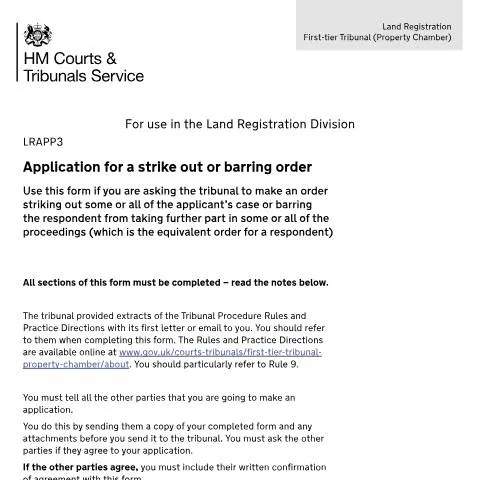
When disputes arise in property matters, it is not uncommon for parties to seek resolution through the First-tier Tribunal (Property Chamber). The LRAPP3 form, officially known as the Application for a Strike Out or Barring Order, plays a crucial role in these proceedings. This document allows parties to request that the tribunal dismiss (strike out) some or all of the opposing party's claims or, conversely, to bar a respondent from participating in the proceedings. Understanding how to navigate this form is essential for any applicant or representative involved in a property dispute.
Understanding the Timeline of Your Application
The journey begins with the initiation of proceedings and can lead to several critical deadlines that applicants must adhere to. The process is not only about filling out the form but also about understanding when to file and what subsequent steps to expect.
Key Dates to Keep in Mind
- Filing the LRAPP3: You must submit the LRAPP3 application as soon as it becomes clear that a strike out or barring order is necessary. There is no specific deadline for submitting this form, but it should be done before the hearing date.
- Notifying Other Parties: Prior to submitting your application, you are required to inform all other involved parties by sending them a complete copy of the form. This step ensures transparency and allows the other parties the opportunity to agree or contest your application.
- Hearing Dates: If there are upcoming hearing dates, it is prudent to file the application well in advance. Ensure you account for the time needed for the tribunal to process your application and respond.
After you submit the LRAPP3 form, you will await a decision from the tribunal. Depending on the complexity of your case, this may take several weeks.
Who Needs to Complete the LRAPP3 Form?
The LRAPP3 form is relevant for various parties involved in land registration disputes, and understanding who qualifies as an applicant or respondent is critical.
Defining the Parties Involved
- Applicant: This is typically the party who initiates the application for the strike out or barring order. This could be an individual or a representative acting on behalf of the applicants.
- Respondent: This includes any party that is being challenged within the tribunal proceedings. Similar to applicants, respondents can also be individuals or their representatives.
- Representatives: Legal representatives may file on behalf of either the applicant or respondent. This includes solicitors or licensed conveyancers who are duly registered.
Understanding the roles of each party helps clarify the responsibilities associated with completing the form accurately.
Step-by-Step: Completing the LRAPP3 Form
Once you ascertain your role, the next step is to complete the LRAPP3 form itself. Each section of the form is crafted to collect specific information that the tribunal requires to assess your application.
Section Breakdown
- Case Reference Number: Begin by providing the tribunal case reference number, which is critical for the tribunal to locate your file.
- Party Identification: Clearly state whether you are the applicant, representative, respondent, or other. This section helps the tribunal understand who is making the request.
- Details of the Application: Specify the order you are requesting, focusing on whether it concerns the whole case or just a specific part. This clarity is essential for the tribunal to consider your application accurately.
- Grounds for Application: This is perhaps the most crucial section. You must outline the grounds under Rule 9(3) of the Tribunal Procedure Rules that justify why the tribunal should grant the strike out or barring order. Each ground requires a thorough explanation and, in some cases, supporting evidence.
It is critical that all sections are completed accurately. Failing to provide comprehensive information can delay the processing of your application or result in rejection.
The Importance of Supporting Evidence
A well-prepared application includes robust supporting evidence, which is essential for persuading the tribunal to grant your request.
Types of Supporting Evidence
- Witness Statements: If you are basing your application on the ground of no real prospect of success for the other side (Rule 9(3)(e)), attaching a witness statement is mandatory. This statement should include a signed statement of truth and detailed facts supporting your claims.
- Documentation: Include any relevant documents that may bolster your argument. This could involve previous tribunal orders, correspondence, or any evidence that substantiates your request.
- Party Agreement: If the other parties agree to your application, include their written confirmation. This agreement can significantly strengthen your position and expedite the tribunal’s deliberation.
Failure to attach necessary evidence may hinder your chances of a favorable outcome.
Communicating with Other Parties
One of the most vital aspects of the LRAPP3 process is keeping other parties informed about your application.
Ensuring Transparency and Complying with Protocols
- Notification Requirement: Before submitting your application to the tribunal, you must provide a copy to all other parties involved. This practice promotes fairness and allows those parties to prepare their response or objections.
- Agreement vs. Objection: Determine whether the other parties agree with your application. If they do, include their written confirmation in your submission. If they disagree, inform them that they should send objections to both you and the tribunal.
- Documentation of Communication: Maintain a record of all communications sent to other parties. This documentation serves as proof that you have complied with the notification requirements outlined in the tribunal rules.
Open communication with all involved parties can significantly affect the flow of your application and influence the tribunal's decision-making process.
The Outcome and Next Steps
Once the LRAPP3 form is submitted along with all supporting documents, the tribunal will review your application and make a determination.
What Happens Next?
- Tribunal’s Decision: The decision can vary; the tribunal may grant the strike out or barring order, dismiss your application, or request further information. Be prepared for any of these outcomes.
- Responding to the Decision: If the tribunal grants your application, the proceedings may be halted for the respondent regarding the struck-out claims. Conversely, if your application is denied, you may need to continue preparing for the tribunal hearings.
- Follow-Up Actions: Depending on the outcome, you might need to take further steps, such as preparing for the hearing or appealing the tribunal's decision if applicable.
This stage requires diligence and readiness to adapt to the tribunal's directions, ensuring that you remain compliant with all procedural requirements.
Final Considerations Before Submission
Before hitting “send” on your LRAPP3 form, take a moment to ensure everything is in order.
Checklist Before Submission
- Completed Application: Verify that all sections of the form are completed accurately.
- Supporting Documentation: Ensure all necessary supporting documents, including witness statements and evidence, are attached.
- Communication to Other Parties: Confirm that all other involved parties have been notified about your application.
- Proof of Truth: Remember to sign and date the statement of truth at the end of the form, reaffirming the accuracy of your claims.
The LRAPP3 form is a pivotal component in navigating property disputes within the First-tier Tribunal. By approaching the form with a thorough understanding of its requirements and implications, parties can enhance their chances of a favorable outcome. This preparation not only reflects competence but also ensures adherence to the tribunal's procedural expectations, ultimately contributing to a more efficient resolution of disputes.
Understanding the Grounds for Strike Out or Barring Applications
When considering a strike out or barring application under Form LRAPP3, it's crucial to understand the grounds on which such applications can be made. This understanding will not only help in formulating your application but also in anticipating possible objections from the other party.
Lack of Merit: One of the primary grounds for a strike out application is that the claim or defence lacks any reasonable prospect of success. This means that upon review, the court finds that even if all the facts presented are taken as true, there is no legal basis for the claim or defence to proceed. For instance, if a claimant is bringing a personal injury case without sufficient evidence of negligence, a defendant may seek to strike out the case on these grounds.
Abuse of Process: Applications may also be made on the grounds of abuse of process. This can encompass situations where a party is attempting to relitigate matters that have already been settled, or where the claim is being pursued in a manner that is oppressive or harassing to the other party. The court has a duty to prevent its processes from being misused, and a strong argument can be made if the circumstances suggest that continuing with the proceedings would be unjust.
Non-Compliance with Precedent Orders: If a party has failed to comply with court orders or directions, the other party may apply to strike out their claim or defence. This could include situations where deadlines for filing documents have not been met or where parties have failed to attend court hearings without reasonable cause.
Procedural Irregularity: In cases where there are significant procedural issues, such as improper service of documents or lack of jurisdiction, a barring order may be sought. It’s important to demonstrate that these irregularities have prejudiced the ability of a party to defend themselves to the extent that it would be unjust to allow the proceedings to continue.
Understanding these grounds is essential as you formulate your application. Each ground comes with its own evidentiary requirements and legal standards, which can vary based on the specifics of the case, the jurisdiction, and even the presiding judge’s preferences. Therefore, it is advisable to conduct thorough legal research or consult a qualified solicitor to enhance your chances of success.
The Process of Preparing Your Form LRAPP3 Application
Filing an application using Form LRAPP3 is not merely about filling in the required details; it involves a well-structured process to ensure that your application is compelling and adheres to court protocols. Here’s a detailed breakdown of the steps involved in preparing your application:
Gather Relevant Documents: Start by collecting all the documents related to your case. This may include pleadings, witness statements, and any previous court orders that highlight the basis for your strike out or barring application. A well-organised application is key to making a strong argument to the court.
Drafting Your Statement of Case: Along with Form LRAPP3, you will need to submit a statement of case that outlines the reasons for your application. This should not only set forth the grounds as discussed earlier but must also provide specific facts and evidence supporting your claims. Clarity and precision are crucial; ambiguous language can lead to misinterpretation or dismissal of your application.
Legal Considerations: Ensure that your application complies with the Civil Procedure Rules (CPR), particularly those sections that address strike out applications (CPR Part 3). Familiarise yourself with any relevant practice directions, as these will guide the format and content of your application.
Seek Legal Advice: Given the complexities involved in legal proceedings, it may be prudent to seek advice from a solicitor who specializes in civil litigation. They can provide tailored guidance and support, particularly in assessing the likelihood of success for your application and in ensuring that your submission effectively meets legal standards.
Filing and Serving Your Application: Once your application and accompanying documents are prepared, the next step is to file them with the court. Ensure that you file your documents in accordance with Part 7 of the CPR, which outlines the process for commencing proceedings. After filing, you are required to serve copies of the application on all other parties involved. Proper service is essential, as failure to do so can lead to delays or even dismissal of your application.
Preparing for Hearing: If your application proceeds to a hearing, be ready to present your case succinctly. Prepare a brief outline of your arguments and rehearse them to ensure clarity during the presentation. Also, be ready to address any questions or counterarguments from the opposing party or the judge.
Preparation is key, as an incomplete or poorly articulated application can undermine your case, leading to adverse outcomes. Legal proceedings can be daunting, but a systematic approach to preparing your Form LRAPP3 application can enhance your chances of success.
Potential Challenges and How to Overcome Them
While applying for a strike out or barring order via Form LRAPP3 can be an effective way to deal with unmeritorious claims, it is also important to be aware of the potential challenges you may face during this process. Understanding these challenges will empower you to devise strategies to overcome them effectively.
Opposition from the Other Party: One of the most significant challenges is the likelihood of facing strong opposition from the other side. The party against whom you are making the application may argue vigorously in defence of their claim or position. They may file counterarguments or submit additional evidence to dispute your claims. To counter this, ensure that your application is thoroughly prepared and substantiated with compelling evidence. Conduct a risk assessment of the possible counterarguments and prepare responses in advance.
Court’s Discretion: The court has significant discretion when considering applications for strike out or barring orders. A judge may be hesitant to strike out a claim if they believe it is in the interest of justice to allow the case to proceed. This is particularly true in cases where the opposing party may have a reasonable chance of success or if the legal principles at stake are of public interest. To mitigate this risk, focus on articulating why allowing the claim to proceed would be unjust or against public interest, and emphasize any legal precedents that support your position.
Not Meeting Legal Standards: Failure to meet the legal standards outlined in the CPR can lead to dismissal of your application. Be sure to familiarize yourself with the specific criteria that need to be satisfied for a strike out or barring order. Ensure that every assertion in your application is backed by legal precedent or statutory authority. Consulting legal resources or seeking professional legal assistance can help you navigate these complexities effectively.
Costs Implications: There may also be costs implications associated with filing an application under Form LRAPP3. If the court dismisses your application, you may be ordered to pay costs to the opposing party. To safeguard against this, consider whether there is a strong likelihood of success for your application before proceeding. A cost-benefit analysis can be useful here; if the potential costs outweigh the benefits, it may be worth reconsidering your approach.
Emotional and Psychological Strain: Engaging in legal proceedings can be stressful and emotionally taxing. The challenge of articulating your case and navigating court procedures can take a toll. Consider seeking support from professional services that can help you manage the emotional aspects of the process. Whether through legal support groups or mental health professionals, safeguarding your well-being is critical during this time.
By anticipating these challenges and preparing strategies to address them, you can improve your overall chances of successfully obtaining a strike out or barring order through Form LRAPP3. Taking proactive steps and engaging appropriate expertise can make a significant difference in the outcome of your application.