Navigating the Appeal Process for Refusal of Consent on SSSIs
When encountering refusal for work on a Site of Special Scientific Interest (SSSI), understanding the appeal process is crucial. This process is governed by the Wildlife and Countryside Act 1981 and the Countryside and Rights of Way Act 2000. The appeal form, known as the Appeal Form – consent, serves as the formal mechanism for contesting a decision made by Natural England regarding consent for proposed work on designated SSSIs.
The Context: Why This Appeal Matters
SSSIs are protected areas due to their unique ecological and geological features. The refusal of consent for any proposed work can often lead to frustration, particularly if the applicant believes the work could enhance the site's conservation. This appeal process not only serves to provide a platform for challenging decisions but also reinforces the importance of accountability within environmental governance.
Understanding the Appeal Form Sections
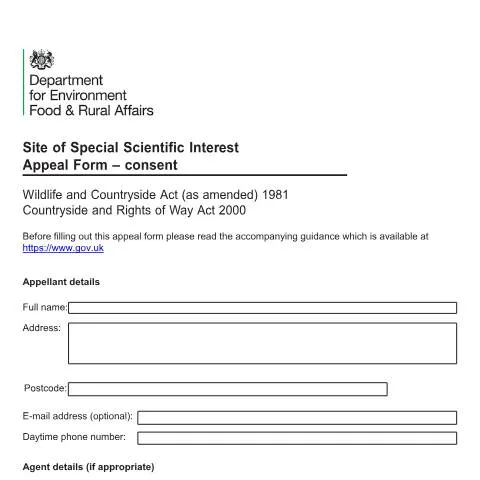
The appeal form is structured into distinct sections, each designed to gather specific information crucial for the processing of your appeal. Below is a breakdown of the form's sections and vital considerations when completing them:
Appellant Details
- Full Name: Ensure your name is spelled correctly. This name will be used in all correspondence.
- Address: Provide your full address including postcode. This is essential for any postal communications.
- Email Address: While optional, including an email address can facilitate quicker communication.
- Daytime Phone Number: This ensures the appeal body can contact you directly if needed.
Agent Details (if applicable)
If you are using an agent to manage your appeal, ensure all their details are filled accurately as failures here can result in delays. The agent needs to be well-informed about the process and prepared to engage with Natural England on your behalf.
Grounds for Appeal
Articulating your grounds for appeal is perhaps the most critical aspect of this form. Here's a step-by-step approach:
- Specificity: Clearly specify which aspects of the refusal you are appealing against. Vagueness could lead to dismissal of your appeal.
- Evidence: Include any supporting information or background evidence that bolsters your case.
- Continuity: You can expand upon these arguments later, but introducing new issues post-submission is not permitted.
Choosing the Right Hearing Method
The appeal can be addressed through three different procedures. It is vital to select the most suitable method for your case:
- Written Representation: This is a written submission where you present your case clearly and concisely.
- Hearing: This is an informal meeting where you can present your case in person, and it may involve questioning from an inspector.
- Inquiry: This is a more formal procedure, akin to a legal hearing, where evidence is presented and witnesses may be called.
Consulting the accompanying guidance is pivotal to understanding which option aligns best with your circumstances.
Submitting Your Appeal: Important Dates and Timelines
The timeline for submitting your appeal is strictly regulated. Typically, you must submit your appeal within a given timeframe from the date of refusal. Key dates include:
- Date of Refusal: Mark this date clearly, as it is the starting point for your appeal timeline.
- Submission Deadline: Generally, you have a window of 28 days to submit your appeal. Missing this could jeopardise your chances of appeal.
- Post-Submission Timeline: Once your appeal is submitted, the appeal body will confirm receipt and outline the next steps, including any waiting periods for hearings or decisions.
What Happens Next?
After submission, your appeal will be reviewed. If additional information is required, Natural England will reach out to you. It’s essential to monitor communications promptly and respond to any queries to avoid unnecessary delays.
Profiles of Appellants: Who Should Consider This Process?
The appeal process is not confined to a singular profile. Various scenarios may apply:
- Landowners: If you own land designated as SSSI and seek to make modifications, this process is vital for your rights.
- Environmental Groups: Organizations may appeal on behalf of local interests or projects that could benefit from planned works.
- Developers: If you're in the development sector, understanding this appeal process can mitigate project delays and foster better environmental outcomes.
Special Considerations
It’s important to recognize that appeals may also differ based on the nature of the work proposed. For example, construction, agricultural practices, or conservation efforts may all present unique challenges and necessitate tailored approaches in your appeal considerations.
Responding to Refusals: Next Steps and Corrections
Should you receive a refusal, it’s natural to feel concerned. Here’s how to navigate this:
- Review the Decision: Carefully read Natural England’s statement outlining the reasons for refusal.
- Correct Errors: If you believe there was a mistake in the decision, document this clearly in your appeal.
- Gather Supportive Evidence: This could include expert opinions, scientific data, or testimonies that argue against the decision.
Dealing with Missing Documents
In instances where your appeal submission is incomplete due to missing documents, it’s crucial to act quickly. Reach out to Natural England to clarify the missing items and submit them as soon as possible. Document all communications to maintain a record of your efforts to comply with the requirements.
A Chronological Journey: From Initiation to Decision
Understanding the entire chronological flow from the moment you decide to appeal can empower you through the process:
- Initiation: The moment you receive the refusal is your starting point. Take immediate action to gather necessary documentation.
- Completing the Appeal Form: Carefully fill out the appeal form, being mindful of every requirement.
- Submission: Send the completed form along with any supporting documents before the submission deadline.
- Review Phase: Await acknowledgment from Natural England, who will inform you about the next steps.
- Decision Notification: Post-review, you will receive a formal decision regarding your appeal along with the rationale behind it.
Post-Decision Actions
If the decision is in your favour, congratulations are in order. However, should it again be a refusal, you might consider judicial review depending on the grounds of the refusal and if there’s substantial evidence of procedural errors.
Final Thoughts: Preparing for Potential Outcomes
No matter the outcome, being fully prepared and well-informed about the appeal process will not only bolster your chances of success but will also contribute to a more informed and engaged approach to environmental stewardship. Before initiating your appeal, always ensure to consult the accompanying guidance and consider seeking expert advice tailored to your situation. Your commitment to preserving the integrity of SSSIs is paramount, and navigating this process effectively is a step in the right direction.
Understanding the Legal Framework Surrounding SSSIs
Sites of Special Scientific Interest (SSSIs) are designated under the Wildlife and Countryside Act 1981 to protect areas of land that are of special interest due to their fauna, flora, geological or physiographical features. The legal framework governing SSSIs is essential for understanding why consent may be refused for proposed works. The designation of SSSIs ensures that these areas are conserved and not adversely affected by development activities.
When considering an appeal against a refusal of consent for work on a SSSI, it is crucial to grasp the various legal statutes involved. These may include guidance documents from Natural England, which oversees SSSI management, and other relevant legislative instruments. The Environmental Impact Assessment (EIA) regulations may also be applicable if the proposed works are considered significant. This includes projects that could potentially impact the environment or the ecological integrity of the site. Familiarising yourself with these regulations can provide insight into your standing in the appeal process.
Fill in your form directly online
No printing: type your details into the boxes of the official form, tick, then download the PDF ready to send.
- 1Type into the form boxes
- 2Tick in one click
- 3Save and download the PDF
Moreover, it's important to note that specific protected species may also have legal protections that must be accounted for in the decision-making process. The Conservation of Habitats and Species Regulations 2017, which implements the EU Habitats Directive within the UK, may impact the workings of SSSIs. Understanding these interconnections is vital when contesting a refusal of consent.
The Role of Local Authorities in SSSI Consent Decisions
Local authorities play a significant role in the decision-making process related to works on SSSIs. When an application for consent is submitted, local planning authorities are often required to assess the potential impact of the proposed works on the SSSI, alongside other statutory bodies like Natural England. Their evaluations can take into account local biodiversity plans and conservation strategies, ensuring that decisions reflect both local priorities and national conservation goals.
It’s important to engage with your local authority early in the process. Understanding their criteria for consent and the specific environmental policies they adhere to can help tailor your proposal in a manner that addresses their concerns proactively. Often, local authorities have a detailed understanding of the ecological significance of the SSSI and can provide insight into how certain works might be perceived in terms of sustainability and conservation.
Moreover, local authorities are expected to follow the principles outlined in the National Planning Policy Framework (NPPF), which promotes sustainable development and the protection of natural assets. This means that any appeal against a refusal should not only contest the specific refusal but also incorporate arguments that align with broader sustainability objectives put forth by local government policies.
Best Practices for Preparing Your Appeal Submission
When crafting your appeal against a refusal of consent for work on a SSSI, preparation is key. The appeal should be structured and detailed, addressing every point raised in the refusal notice. Begin by reviewing the refusal letter carefully to identify specific reasons for the decision. Each point you wish to challenge should be backed by evidence, whether that’s scientific data, expert testimonials, or examples of similar successful projects elsewhere.
Incorporating ecological assessments can significantly strengthen your case. If applicable, consider employing an ecological consultant to carry out a detailed survey of the SSSI. This assessment should highlight how the proposed works can be mitigated to avoid adverse impacts on the site. Additionally, suggest practical measures or management plans that could ameliorate potential concerns raised by the authorities.
It’s also advisable to engage with stakeholders who may support your appeal, such as local environmental groups or ecological experts. Their backing can add weight to your submission and demonstrate wider community interest in the project. Furthermore, addressing any public concerns transparently and proactively can foster a more favourable perception of your appeal.
Finally, ensure that your appeal is submitted within the statutory time frame and in accordance with the guidelines provided by the relevant authority. Attention to detail in the submission process can avert unnecessary delays and help keep your appeal on track.