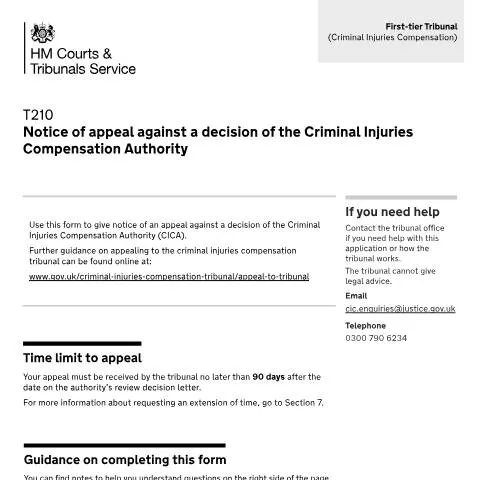
Understanding the Notice of Appeal Against a Decision of the Criminal Injuries Compensation Authority: Form T210
The Form T210 is an official document issued by the HM Courts & Tribunals Service that enables individuals to formally appeal a decision made by the Criminal Injuries Compensation Authority (CICA). This guide provides a detailed overview of the purpose, scope, and procedural aspects of submitting an appeal using this form, ensuring applicants understand their rights and responsibilities in the process.
Objective and Scope of the Form T210
The primary purpose of the Form T210 is to serve as a formal notice of appeal against a decision issued by CICA. When the authority determines the level of compensation or denies a claim altogether, the affected individual has the right to challenge this decision. The form is designed to collect essential information from appellants, including personal details, reasons for appeal, and any supporting evidence or circumstances that warrant reconsideration.
This form is applicable to individuals who have been directly impacted by a criminal injury and have received a review decision from CICA within the last 90 days. It is also used for appeals on behalf of minors or following a bereavement, ensuring that the process accommodates different circumstances related to victims of crime.
Key Elements and How to Complete the Form
1. Appeal Identification
- CICA reference number: This unique identifier begins with the letter X or G and relates to the original claim or review decision.
- Date of review decision: The specific date when CICA issued its decision, which is being challenged.
2. Personal Details of the Appellant
- Name, date of birth, and National Insurance number: These details verify the identity of the individual making the appeal.
- Address and contact information: For correspondence purposes, including options for receiving notices via email or post.
3. Representation and Circumstances
- Appeal on behalf of: The form provides options for minors, individuals who have experienced bereavement, or self-initiated appeals.
- Representative details: If an individual appoints a solicitor or advocacy service, their contact information and reference numbers are recorded.
4. Reasons for Appeal
Applicants must clearly state the grounds for challenging the CICA decision. This includes explaining why they believe the decision was incorrect, providing relevant evidence, or highlighting any procedural issues. Failing to include detailed reasons may result in the rejection of the appeal.
Procedural Considerations and Deadlines
The deadline for submitting the appeal is 90 days from the date of the review decision letter. Applicants seeking an extension of time must provide valid reasons, such as awaiting additional medical reports or other relevant evidence, and may need to request this via the tribunal’s procedures.
It is important to note that the tribunal cannot provide legal advice. For assistance in understanding the process or completing the form, applicants are encouraged to contact the tribunal office directly. Contact details include an email address and a telephone number dedicated to inquiries related to criminal injuries compensation appeals.
Fill in your form directly online
No printing: type your details into the boxes of the official form, tick, then download the PDF ready to send.
- 1Type into the form boxes
- 2Tick in one click
- 3Save and download the PDF
Additional Support and Hearing Arrangements
Applicants can specify if they require an interpreter or any support during the hearing, such as wheelchair access or hearing assistance. They can also consent to a short notice hearing if they agree to a quicker process, which may involve less than 14 days' notice.
Conclusion
The Form T210 is a crucial step for individuals seeking to challenge a decision made by CICA. Understanding the form's sections and requirements helps ensure that appeals are properly submitted and considered. It is vital to adhere to the specified deadlines and provide comprehensive reasons to facilitate a fair review of the case by the First-tier Tribunal (Criminal Injuries Compensation).