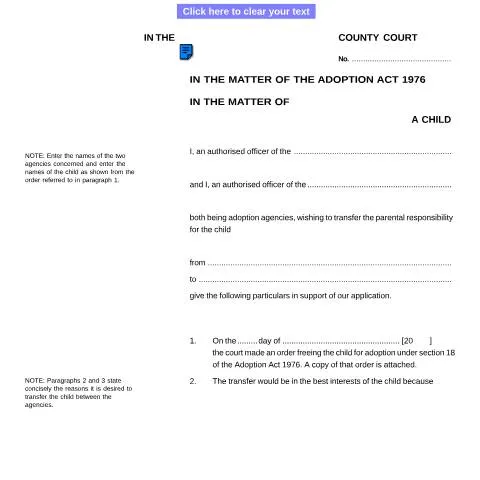
Understanding Form A5: A Critical Step in Adoption Agency Substitution
The process of adoption is a profound journey, laden with emotional complexities and legal stipulations. Form A5, officially titled "Application for substitution of one adoption agency for another," serves as a vital instrument for authorized adoption agencies wishing to transfer their responsibility for a child. This form is not just a procedural necessity; it embodies the core values of child welfare and legal due process as stipulated by the Adoption Act 1976. This article delves into the intricacies of Form A5, guiding you through its purpose, completion, submission, and the subsequent journey through the courts.
Historical Context and Legal Framework Surrounding Form A5
The formulation of the Adoption Act 1976 marked a significant shift in how adoption cases were handled in the UK. This legislation established a framework ensuring that children’s best interests are prioritized in all adoption procedures. Form A5 aligns with this legal backdrop, facilitating a formal request for the transfer of parental responsibility from one adoption agency to another.
Section 18 of the Adoption Act 1976, referenced in the form, outlines the conditions under which a child can be freed for adoption. When an authorized officer from one adoption agency wishes to transfer parental rights to another, Form A5 becomes essential. It encapsulates not only the administrative procedure but also the emotive essence of ensuring that children are placed in environments that serve their best interests.
Who Needs to File Form A5 and Why?
Form A5 is specifically designed for use by authorized representatives of adoption agencies. This form is typically filed when there is a consensus among two or more licensed agencies to transfer the responsibility for a child, which might arise from various situations, such as:
- A change in an agency’s operational capacity or focus.
- The child's best interests being served by a different agency with more appropriate resources.
- Administrative changes that necessitate the transfer of responsibility.
It is essential that only authorized officers of the involved agencies complete and submit this form, thereby ensuring that all legal and procedural norms are upheld. Individual adopters or parents are not permitted to submit this form on their own behalf.
Completing Form A5: A Step-by-Step Guide
Filling out Form A5 requires careful attention to detail and a thorough understanding of the child’s circumstances. Below are the general steps to ensure the form is completed accurately:
- Identify the Agencies: Clearly state the names of the two adoption agencies involved in the transfer. Ensure the names are correct and match those used in previous court orders.
- Provide Child Details: Enter the name of the child as recorded in previous court documents. Accurate identification is crucial for legal clarity.
- Reference Court Orders: Indicate the date when the court freed the child for adoption. Attach a copy of the court order as evidence.
- Articulate the Reasons: Clearly outline the reasons for the transfer. This includes both the best interests of the child and any administrative considerations that support the transfer.
- Sign and Date: Both authorized officers must sign the form. Ensure the date is correct to avoid any delays in processing.
Submission Pathways: Navigating the Filing Process
Once Form A5 is completed, the next step involves submitting it to the relevant court. The submission pathways can vary, and it is crucial to choose the method that aligns with your agency's operational protocols.
- Online Submission: While some jurisdictions may allow online submissions, verify if the HM Courts & Tribunals Service has enabled this feature for adoption cases.
- Postal Submission: If filing by post, ensure the form is sent to the correct court, as outlined in the instructions accompanying the form.
- In-Person Submission: For cases requiring immediate attention, you may opt to submit the form in person. Check the court’s opening hours and any requirements for in-person visits.
Regardless of the submission method, it is advisable to retain a copy of the submitted form and any accompanying documents for your own records.
Timelines: What to Expect After Filing
Understanding the timeline involved in the processing of Form A5 is crucial for managing expectations. Here’s how the process typically unfolds:
| Stage | Timeframe |
|---|---|
| Filing of Form A5 | Day 0 |
| Initial Court Review | 1-3 weeks |
| Decision Notification | 2-4 weeks post-review |
| Transfer of Parental Responsibility | Upon court approval |
It is important to note that the above timelines can vary based on court workload, complexity of the case, and other contextual factors. Agencies should prepare for potential delays and communicate them to relevant stakeholders.
What to Do in Case of Rejection or Missing Information
Should Form A5 be rejected or if additional information is required, agencies must respond promptly. Here are the steps to take:
- Review the Feedback: Carefully read the reasons for rejection provided by the court.
- Gather Required Information: If the rejection is due to missing documents, compile the necessary paperwork as soon as possible.
- Resubmit Form A5: Complete the form again if needed, attaching any supplementary information requested by the court.
- Seek Legal Advice: If unsure about the next steps or if complications arise, consulting with a legal expert specializing in adoption law can provide clarity and direction.
Addressing rejections proactively can help mitigate delays and ensure that the best interests of the child remain the focal point throughout the process.
Considerations for Special Cases: Urgent Transfers and Complex Situations
In certain circumstances, the standard process may not suffice. Special considerations for urgent cases might include:
- Emergency Placements: If immediate transfer is necessary for the child's safety, state the urgency clearly in the application.
- International Agencies: If one of the agencies is based outside the UK, additional legal considerations may apply, including compliance with international adoption laws.
- Children with Special Needs: Extra documentation may be required to demonstrate how the transfer aligns with the child's specific needs.
In these special cases, it might be beneficial to involve court representatives early in the process to guide you through the additional requirements.
Essential Documentation for a Smooth Process
Ensuring that the correct documentation accompanies Form A5 is critical for a smooth process. The following documents are commonly required:
- A copy of the court order freeing the child for adoption.
- Evidence of communication with former parents or guardians, if applicable.
- Any prior assessments or reports that provide context for the transfer.
Each case may present unique documentation needs, so agencies should maintain open communication and checklists to avoid missing critical documents.
Understanding the Adoption Process in the UK
The adoption process in the UK is a multifaceted journey that involves various stages and entities, culminating in the placement of a child into a new family. Primarily, the adoption process is governed by the Adoption and Children Act 2002, which provides the legal framework for adoption across England and Wales. Each stage is critical, ensuring that the best interests of the child are at the forefront of each decision.
The initial stage typically involves prospective adopters attending an information session, followed by an application to an adoption agency. This agency, either voluntary or local authority-based, will conduct detailed assessments of the adopters. These assessments, often referred to as home studies, include background checks, interviews, and home visits to ascertain the suitability of the prospective parents. It's essential for adopters to understand that this process can be lengthy, often taking several months to complete.
After the assessment is complete, if the agency approves the application, the adopters are officially matched with a child. This is a crucial phase where the child's needs, background, and the adopters' parenting capabilities are considered. Once a match is made, a series of introductions ensue, allowing the child to gradually acclimatize to their new family. This period is often referred to as the 'transition period' and can last several weeks or even months.
Upon successful transition, the adopters can apply for an Adoption Order. This legal order finalizes the adoption and gives the adopters full parental rights. However, if at any point during this process there is a need to substitute one adoption agency for another, the Form A5 application becomes relevant, ensuring that the transition between agencies is carried out smoothly and without disruption to the child's welfare.
The Role of Adoption Agencies in the Substitution Process
Adoption agencies play a pivotal role in the adoption process, especially when it comes to substituting one agency for another. Agencies possess the authority and expertise to assess, approve, and supervise the process of adoption. Their responsibilities extend beyond mere administrative functions; they are tasked with ensuring that all parties involved are acting in the best interests of the child.
When an adopter seeks to transfer from one agency to another, it’s crucial to understand the protocols involved. The rationale for the substitution can vary. It could stem from geographical relocation, dissatisfaction with the previous agency's services, or even a change in personal circumstances. Regardless of the reason, the adopting parents must communicate their intentions clearly to the original agency, and they will typically provide a written notice along with the reasoning behind the request.
The current agency will then release relevant documents and assessments to the new agency. This information is vital to ensure continuity in care and support during the transition. Both agencies will collaborate to facilitate a seamless transfer while maintaining compliance with the Data Protection Act 2018 and UK GDPR, ensuring that personal data is handled appropriately throughout this process.
In cases where the adoption involves sibling groups or children with special needs, the complexity of this transfer increases, as both agencies must work diligently to guarantee that the unique needs of the child or children are met during the transition. The new agency must conduct its own assessment and may request additional information to ensure that all aspects of the child's background are understood and accommodated.
Furthermore, prospective adopters should be aware that each agency may have different policies regarding their involvement in the substitution process. Therefore, it is prudent to conduct thorough research on the new agency’s methodologies and philosophies to ensure alignment with the adopters' expectations and the needs of the child.
Key Considerations During the Application for Substitution
Applying for the substitution of one adoption agency for another through Form A5 requires careful consideration of several key factors that could significantly impact both the adopters and the child involved. Prospective adopters must approach this application with a clear understanding of the implications, and here’s what to take into account:
1. Reason for Substitution: Providing a comprehensive explanation for the substitution request is paramount. The application must outline the specific factors prompting this decision. This could range from geographical issues to differences in agency practices or philosophies. Demonstrating transparency and thoughtfulness in the reasoning can facilitate a smoother transition.
2. Documentation: Alongside Form A5, it’s essential to gather all supporting documents from the previous agency, including assessment reports and relevant correspondence. This documentation acts not only as a bridge between agencies but also demonstrates a commitment to ensuring that the child’s best interests remain prioritized during the transition.
3. Child’s Well-Being: The primary concern during any substitution process must always be the child’s well-being. It is vital for the adopters to reflect on how the agency change will affect the child emotionally and psychologically. Engaging the new agency in discussions about existing relationships, support systems, and the child’s previous experiences will help in crafting a supportive environment for the child.
4. Timelines and Expectations: Understanding the timeline associated with the substitution process is crucial. It is recommended to engage in conversations with both the current and new agency to gain clarity on what to expect during the transition period. This includes understanding the time it will take for the new agency to review the application and how long it might take to finalize the transfer.
5. Legal Obligations: Be aware of any legal obligations that may arise from the substitution process. Engaging with legal professionals or specialists in adoption can aid in navigating any complex legal landscapes that may present themselves during the agency transition.
6. Post-Substitution Support: Finally, adopters should inquire about the support systems in place from the new agency once the transition is complete. It’s important to ensure that the new agency provides post-adoption support, including counseling and resources, to help the family adjust to their new dynamics.