Navigating the EE FM02: A Vital Document for European Economic Interest Groupings
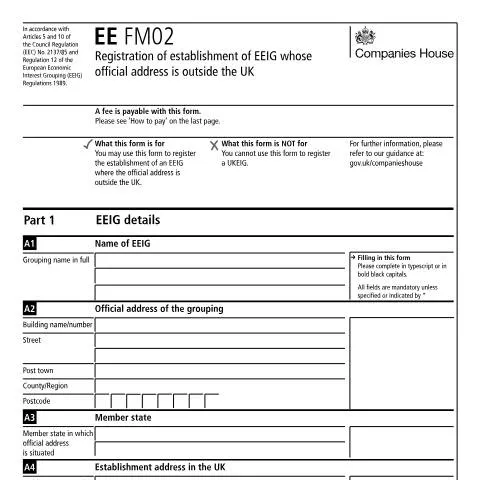
When engaging in cross-border economic activities within the European Union, businesses often seek collaboration to enhance their operations. One of the pivotal steps in this process is the establishment of a European Economic Interest Grouping (EEIG) whose official address is located outside the United Kingdom. The EE FM02 form, issued by Companies House, plays a crucial role in this registration procedure, ensuring that your group is recognized legally and can operate effectively within the UK.
The Strategic Importance of Registering an EEIG
Establishing an EEIG allows businesses from different Member States to collaborate without the burden of national barriers. This form not only facilitates the registration of your grouping but also opens up a range of rights and obligations under EU law. Specifically, it allows members to:
- Share resources, knowledge, and skills efficiently across borders.
- Minimize tax liabilities through collective operations.
- Engage in joint activities for economic, scientific, or cultural purposes.
Failure to correctly register can lead to significant legal issues, including the inability to enforce contracts or participate in grants and funding opportunities. Therefore, understanding the intricacies of the EE FM02 form is of utmost importance for any prospective grouping.
Understanding the Legal Framework Behind the EE FM02
The EE FM02 form is anchored in the Council Regulation (EEC) No. 2137/85 and the European Economic Interest Grouping (EEIG) Regulations 1989. These regulations were designed to facilitate cooperation between economic operators, thereby enhancing the competitiveness of small and medium-sized enterprises (SMEs) within the EU. This legal framework sets the parameters within which an EEIG must operate, ensuring transparency and accountability.
Key Regulations to Note
It is essential to be familiar with the following articles:
- Article 5: Outlines the conditions for the establishment of an EEIG, including the need for at least two members from different Member States.
- Article 10: Details reporting and disclosure obligations to ensure compliance with national laws.
By adhering to these regulations, groups can protect their operations and build trust with stakeholders, both local and international.
The Step-by-Step Process of Completing the EE FM02 Form
Completing the EE FM02 form requires careful attention to detail. Here’s how to navigate through the process:
- Gather Required Information: Before starting, ensure you have all necessary details, including the grouping's name, official address outside the UK, and the contract establishing the grouping.
- Complete the Form: Fill out the form in typescript or bold black capitals. All fields are mandatory unless specified otherwise. Key sections include:
- A1: Name of the EEIG
- A4: Establishment address in the UK
- B1: Member details, including names and service addresses
- Attach Documentation: A certified copy of the contract must accompany the EE FM02 form. If the contract is in a language other than English, provide a certified translation.
- Check for Completeness: Use the checklist on the last page of the form to ensure all necessary information is included.
Remember, any omissions or errors could result in delays or rejection of your application.
Where and How to Submit the EE FM02 Form
Once the form is completed, you need to determine the submission method. Here are the available options:
| Submission Method | Details |
|---|---|
| Online Submission | Companies House offers an electronic filing system. This is typically faster and may provide immediate confirmation of receipt. |
| Paper Submission | You can also mail the completed form and accompanying documents to Companies House. Ensure you keep a copy for your records. |
| In-person Submission | Submissions can be made directly at designated Companies House offices. This might be preferred by groups wanting immediate feedback. |
Regardless of the method chosen, remember to attach the correct fee as outlined in the guidance notes. This fee is necessary for processing your application.
Post-Submission: What Happens Next?
After submission, Companies House will take the following actions:
- Review: The provided information and documents will undergo a scrutiny process to ensure compliance with regulations.
- Confirmation: If everything is in order, Companies House will issue a registration certificate for your EEIG, which will allow it to operate legally in the UK.
- Public Record: All details provided will be entered into the public record, which ensures transparency. It is crucial to keep this information updated, particularly if there are changes in membership or address.
Timeliness is essential. If there’s any discrepancy or further information required, Companies House will contact the registered contact person as indicated on the form.
Understanding Obligations and Responsibilities Post-Registration
Once registered, the EEIG must adhere to specific obligations to maintain its legal status. These include:
- Regular reporting as stipulated under UK law, ensuring economic activities are transparent and compliant.
- Maintaining a physical address in the UK for correspondence and document delivery.
- Notifying Companies House of any changes in membership, structure, or official address.
Failing to meet these obligations can result in penalties or, in severe cases, dissolution of the EEIG.
Key Takeaways for Future Applicants
Registering an EEIG is a vital step for businesses looking to expand their reach and collaborate internationally. The EE FM02 form, while straightforward, demands thorough preparation and attention to detail. Here are some essential reminders:
- Double-check your documents for accuracy and completeness.
- Stay informed about your rights and obligations under UK and EU law.
- Maintain a proactive approach to compliance and reporting to avoid complications.
By understanding the significance of the EE FM02 form and the steps involved in its submission and compliance, businesses can ensure a smoother path toward international collaboration and growth. Always refer to the latest guidance from Companies House for updates on the process.
Understanding the European Economic Interest Grouping (EEIG) Structure
The European Economic Interest Grouping (EEIG) is a legal framework established by the European Union to facilitate cross-border cooperation between businesses from different member states. Unlike traditional business structures, such as limited companies, an EEIG allows its members to pool resources and enhance their economic activities without being a separate legal entity like a corporation. The primary aim of the EEIG is to support its members in carrying out their business activities more effectively in a European context.
An important aspect of the EEIG is that it must have at least two members from different EU member states. The members can be natural or legal persons, meaning individuals or companies. They must contribute to the EEIG’s activities, whether through financial investments, sharing expertise, or other resources. This collaborative approach not only fosters stronger ties between member states but also encourages innovation and enterprise by allowing businesses to leverage diverse skills and experiences.
Another distinctive feature of the EEIG is its flexibility. Members can decide on the specific regulations governing their grouping, making it a highly adaptable structure. This autonomy allows for conditions tailored to meet the unique needs of the participating members. However, all EEIGs must comply with the regulations established under EU law, including the requirement to maintain proper accounting records and file annual accounts.
Implications of Registering an EEIG with an Address Outside the UK
For businesses based in the UK that wish to establish an EEIG with an official address outside the UK, there are specific implications and considerations that must be addressed. First, it's crucial to understand the legal jurisdiction under which the EEIG will operate. The laws of the country where the EEIG is registered will govern its operations, which may differ significantly from UK regulations.
This international dimension can lead to complexities regarding taxation and compliance. For instance, while the UK has a self-assessment tax system, the tax obligations for an EEIG operating from another EU country may follow different procedures and timelines. It's vital for members to consult legal experts familiar with international business laws to navigate potential pitfalls effectively.
Additionally, the members of the EEIG must ensure compliance with the Data Protection Act 2018 and UK GDPR, particularly if they are processing personal data of individuals across borders. Each member must maintain compliance with the data protection laws applicable in the jurisdictions where they operate, which could include additional requirements beyond those stipulated by UK law.
Furthermore, navigating the regulatory landscape may require establishing a local presence or appointing representatives in the country where the EEIG is registered. This is essential for addressing local regulatory requirements and facilitating smoother interactions with local authorities.
Steps for UK Businesses to Register an EEIG with an Address Outside the UK
Registering an EEIG with an address outside the UK involves several detailed steps that businesses need to carefully consider. Here’s a comprehensive breakdown of the process:
- Choose Your Jurisdiction: Before proceeding, determine which EU country you wish to register the EEIG in. Each country has varying registration procedures, fees, and requirements. Research thoroughly to make an informed decision based on the nature of your business activities.
- Gather Necessary Documentation: Assemble all required documents, which typically include identification for all members, proof of residence, and any relevant company registration documents. Depending on the country of registration, additional local documentation may be needed.
- Draft the EEIG Agreement: Create a comprehensive EEIG agreement that outlines the rights and responsibilities of the members, the purpose of the grouping, and the financial arrangements. This agreement is crucial and must adhere to the legal standards of the country where the EEIG is being registered.
- Submit Application for Registration: File the registration application with the relevant authority in the chosen jurisdiction. Ensure that all forms are accurately completed and that the submission includes the EEIG agreement and other necessary documentation.
- Comply with Local Regulations: After registration, your EEIG must comply with the local laws of the jurisdiction, including any operational and reporting requirements. This may involve regular filings and adherence to local employment laws if you plan to hire staff.
- Obtain a Tax Identification Number: Lastly, apply for a tax identification number in the jurisdiction where the EEIG is registered. This is essential for tax compliance and should not be overlooked.
Overall, while registering an EEIG with an official address outside the UK can open new business opportunities, it also demands careful attention to legalities and operational practices in the chosen jurisdiction.