Navigating the Objection to a Civil Penalty for Biometric Registration: A Practical Guide
Receiving a civil penalty notice for failing to comply with biometric registration can be an overwhelming experience. Many individuals find themselves facing unexpected financial burdens and legal challenges. The good news is that the UK immigration framework allows for an objection process, providing a pathway for those who believe the penalty is unjust. Understanding the intricacies of Object to Fine for Not Giving Biometric Information is crucial. This guide will walk you through the essential aspects of this official document, from preparation to submission.
Understanding the Context: The UK Borders Act 2007
The legal foundation for the biometric registration system stems from the UK Borders Act 2007, which mandates the collection of biometric information as part of immigration control. This act facilitates the identification of individuals entering or remaining in the UK. It aims to enhance national security and streamline immigration processes.
Failure to comply with these regulations can result in a civil penalty, which serves as a deterrent to non-compliance. However, it's essential to remember that penalties can sometimes be issued in error or may not reflect a fair assessment of individual circumstances. The objection process exists to challenge such penalties effectively.
Who Files an Objection?
The objection to a civil penalty notice can be filed by any individual who has received such a notice, or by a responsible adult on behalf of a child. Understanding the eligibility criteria is vital:
- Individuals Directly Affected: If you received a civil penalty notice naming you, you are eligible to file an objection.
- Legal Guardians: If the notice was issued to a minor, a parent or guardian can file the objection on their behalf.
Preparing to File Your Objection
Preparation is key when filing an objection against a civil penalty notice. Gathering all necessary documentation and evidence will strengthen your case and facilitate a smoother process. Here’s what you should consider:
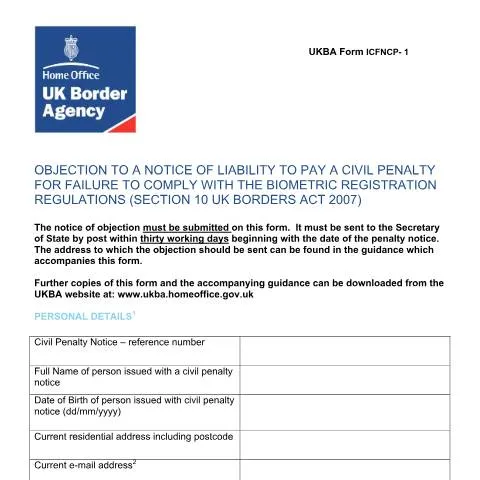
Personal Details
Complete the personal information section accurately. This includes:
- Full Name
- Date of Birth (dd/mm/yyyy)
- Current Residential Address (including postcode)
- Contact Information: Email and telephone (optional but recommended)
Inaccuracies in this section can lead to delays or even dismissal of your objection.
Grounds for Objection
You must clearly state the reason for your objection. This could include:
- Failure to comply with biometric registration requirements.
- Unreasonable penalty demands.
- Excessive penalty amounts.
Providing detailed explanations or additional context can enhance your argument. If necessary, continue your objections on a separate sheet.
Supporting Evidence
Documenting your case is crucial. When listing supporting evidence, consider the following:
- Financial Hardship: If applicable, evidence demonstrating financial difficulties may lead to more favourable payment arrangements.
- Relevant Documentation: Include any documents that substantiate your claims, such as emails, notices, or eyewitness accounts.
Ensure all evidence is clearly labeled and referenced within your objection.
Submitting Your Objection: Timelines and Addresses
The objection must be sent to the Secretary of State within thirty working days from the date of the penalty notice. It's crucial to adhere to this timeline to ensure your objection is considered valid. Here’s how to proceed:
- Check the Deadline: Mark your calendar to ensure you submit your objection in time.
- Prepare the Envelope: Address your objection to the Secretary of State as per the guidance accompanying your penalty notice.
- Keep Copies: Make copies of all documents before sending them to retain for your records.
Failure to submit your objection within the allotted time frame can result in the penalty being upheld, so act promptly.
After Submission: What to Expect
Once you have submitted your objection, the administrative process begins. Understanding what happens next can alleviate some anxiety:
Processing Your Objection
The UK Visas and Immigration team will review your objection and supporting evidence. The time frame for this review can vary; however, the team aims to respond as quickly as possible. During this time:
- Communication: You may be contacted for additional information or clarification, so ensure your contact details are accurate.
- Decision Notification: You will receive a written response detailing the outcome of your objection.
Outcomes of Your Objection
There are several possible outcomes following the review of your objection:
| Outcome | Description |
|---|---|
| Objection Upheld | Your penalty is cancelled, and you will be notified accordingly. |
| Partial Success | The penalty amount is reduced based on the evidence provided. |
| Objection Rejected | The penalty stands, and you may be advised of the next steps, including appeals. |
What If Your Objection Is Rejected?
Being notified that your objection has been rejected is disheartening, but there are further options available:
Right to Appeal
If your objection is denied, you may have the right to appeal this decision. The appeal must be lodged with a county or sheriff court. Important points to note:
- Timeliness: Ensure your appeal is submitted within the time limits specified in the rejection notice.
- Documentation: Prepare a comprehensive appeal, citing your reasons and supporting evidence.
Financial Considerations
If paying the penalty poses a financial burden, do not hesitate to address this during the appeal process. Courts may consider your ability to pay when making their decisions.
Key Takeaways for a Successful Objection
Filing an objection to a civil penalty notice regarding biometric registration can be a daunting task, but with careful preparation and understanding, you can navigate the process effectively. Here are some crucial tips:
- Thorough Preparation: Ensure all personal details and grounds for objection are clearly articulated.
- Evidence is Key: Support your claims with relevant documentation to bolster your case.
- Timeliness Matters: Pay close attention to deadlines to ensure your objection is heard.
- Stay Informed: Familiarize yourself with the appeals process should your objection be rejected.
The process for objecting to a civil penalty may seem complex, but you are not alone in this journey. Understanding the procedural requirements and keeping organized records will significantly boost your chances of a favorable outcome.
Understanding the Notification of Fine for Biometric Information Non-Compliance
When you receive a notification regarding a fine for not providing biometric information, it’s crucial to first understand the basis on which this fine has been imposed. The legal framework surrounding biometric data collection in the UK is primarily governed by the Immigration Act 2014, which mandates specific requirements for non-UK nationals applying for visas or extensions. Biometric information typically includes fingerprints and a facial image, which are collected to verify identity and background checks.
If you have been fined, it is essential to review the correspondence you received from the relevant authority, such as UK Visas and Immigration (UKVI). This document should detail the reasons for the fine, including any deadlines you may have missed for submitting your biometric information. Common reasons for non-compliance may include not attending a biometric appointment, failing to submit required documents alongside your application, or providing incorrect information during the application process.
Moreover, it’s important to note that procedural errors might occur—this could involve mistakes on the part of the authorities themselves. Review any communication you received to ensure that there were no discrepancies in the processing of your application. If you believe a genuine error has occurred, this can form the basis of your objection.
Gathering Evidence for Your Objection
Once you understand the specifics of the fine imposed for not providing biometric information, the next step involves gathering evidence to support your objection. Evidence can significantly strengthen your case and may include:
Appointment Records: If you received an appointment to provide your biometric information, include any emails or letters that confirm this appointment. Documenting your attendance is vital—if you attended but were unable to submit your biometric information due to administrative errors at the location, this should be clearly outlined.
Communication Correspondence: Maintain records of any communication you had with the UKVI or other relevant authorities. Email chains, chat logs, or recorded phone calls can help demonstrate your proactive approach to comply with the requirements.
Supporting Documentation: If you submitted any additional documents that were relevant to your application or compliance with the biometric requirements, make copies of these. This documentation could include your identification proofs, previous visa applications, or any letters confirming your status.
Witness Statements: If there were third parties present at your biometric appointment or if you communicated with someone who can support your claim, consider getting written statements from them. Such testimonials can help to corroborate your narrative.
Legal Advice: Depending on the complexity of your situation, consulting a legal professional who specializes in immigration law can provide guidance on how to frame your objection effectively. They can help tailor your appeal to legal standards and ensure that all necessary evidence is presented comprehensively.
Submission Process for Your Objection
Once you've compiled your evidence, the next step is submitting your objection against the fine. This process generally involves several key stages:
Drafting Your Objection Letter: Your objection should be concise yet detailed, addressing the reasons for the fine and providing the evidence you've gathered. Be sure to include your full name, address, National Insurance number (if applicable), and any reference number associated with your fine. State clearly that you are formally objecting to the fine and provide specific reasons supporting your case.
Submitting Your Appeal: Follow the guidelines set forth in the notification of the fine for submission methods. Some appeals can be made online, while others may require sending a physical letter to the designated address. Ensure you send the appeal via a method that provides proof of delivery, such as recorded or registered post, to have a record of your submission.
Awaiting Response: After submitting your objection, you will typically receive an acknowledgment from the authority confirming receipt of your appeal. The processing time can vary, but you should expect a response within a few weeks. During this period, ensure you keep an eye on any additional correspondence that may be sent regarding your case.
Follow-up Actions: If you do not receive a response within a reasonable timeframe (which may vary based on the specific authority), it is advisable to follow up with them. Maintain records of all follow-up communication to ensure you can provide evidence of your persistence in resolving the matter.
Potential Further Actions: If your objection is unsuccessful, you may have the right to escalate the matter through further legal avenues, such as tribunals or judicial reviews. In such cases, consulting with a legal professional is highly recommended to navigate these proceedings effectively.