When Help to Buy Repayments Become Automated: Understanding the Direct Debit Setup Process
Help to Buy participants face a critical transition point when their equity loan moves from its initial interest-free period to regular monthly repayments. This shift requires establishing a reliable payment mechanism, typically through Direct Debit arrangements managed by Equiniti Gateway Limited on behalf of Homes England. The Set up a Direct Debit to pay your Help to Buy fees and interest form represents more than just a payment instruction—it's the cornerstone of ongoing loan management that can determine whether borrowers maintain good standing or face escalating complications.
The timing of this setup often coincides with the end of the five-year interest-free period, though circumstances such as early repayment plans, property sales, or changes in financial arrangements may trigger the need earlier. Understanding when and how to complete this process effectively can prevent payment delays that might affect credit ratings or trigger additional charges.
The Mechanics of Help to Buy Direct Debit Authorisation
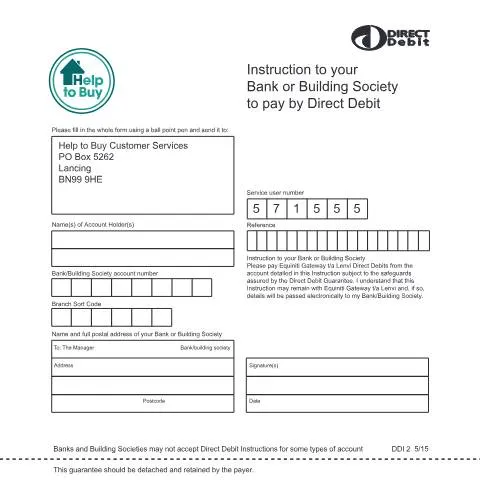
The Direct Debit instruction form follows the standard UK banking format, designated as DDI 2, but carries specific adaptations for Help to Buy arrangements. The service user number 571555 identifies Equiniti Gateway Limited as the authorised collector acting for Homes England, distinguishing these payments from other government or housing-related Direct Debits borrowers might hold.
Completion requires precise bank account details, including the full sort code and account number of the designated payment account. The form demands ballpoint pen completion—a requirement that reflects the document's role as a legal instruction to financial institutions. Digital signatures or pencil entries risk rejection by banks, potentially delaying the setup process by several weeks.
Critical Information Requirements
- Account holder names: Must match exactly with bank records, including any middle names or initials as they appear on statements
- Full postal address of the bank: Branch-specific details rather than head office addresses ensure proper routing
- Reference details: Help to Buy loan reference numbers link the Direct Debit to specific equity loan accounts
- Signature requirements: All named account holders must sign where the account operates under joint mandates
The form's design reflects standard Direct Debit protocols, but Help to Buy participants should understand that payment amounts and frequencies depend on their specific loan terms, current interest rates, and any partial repayments made. Unlike fixed monthly payments, Help to Buy charges can fluctuate based on government interest rate adjustments.
Postal Submission and Processing Timelines
The designated submission address—Help to Buy Customer Services, PO Box 5262, Lancing, BN99 9HE—serves as the central processing point for all Direct Debit instructions. This postal-only submission requirement reflects security protocols for banking instructions, though it can create timing challenges for borrowers approaching payment due dates.
Processing typically requires 10-15 working days from receipt, though this timeline can extend during peak periods such as the end of financial years when many Help to Buy loans transition to interest-bearing status. Banks require additional time to validate instructions, particularly for newer account types or where account details have recently changed.
Submission Timing Strategies
Borrowers should submit Direct Debit instructions well before their first payment becomes due. Those approaching the end of their interest-free period receive advance notification from Homes England, but proactive setup prevents gaps that might result in missed payments or manual payment requirements.
| Situation | Recommended Submission Timing | Risk Level |
|---|---|---|
| End of interest-free period | 8-12 weeks before first payment | Low |
| Change of bank account | 4-6 weeks before next payment | Medium |
| Payment issues requiring new setup | Immediate submission | High |
| Property sale preparation | 6-8 weeks before completion | Low |
The Direct Debit Guarantee Framework and Borrower Protections
The Direct Debit Guarantee attached to the form provides crucial protections that extend beyond standard banking arrangements. For Help to Buy participants, these protections become particularly relevant given the variable nature of equity loan charges and potential for administrative errors during the complex calculations involved.
Equiniti Gateway Limited must provide 10 working days' advance notice of any changes to payment amounts, dates, or frequencies. This notification requirement protects borrowers from unexpected debits, particularly important when interest rate adjustments affect monthly payments or when partial repayments alter ongoing obligations.
Error Resolution and Refund Processes
The guarantee ensures immediate refunds for incorrect payments, whether caused by Equiniti Gateway Limited, Homes England systems, or banking errors. However, borrowers must understand that legitimate refunds create corresponding obligations—any amounts received in error must be repaid when requested, and the underlying Help to Buy charges remain due regardless of payment processing issues.
Cancellation rights allow borrowers to terminate Direct Debit arrangements at any time through their bank, but this doesn't eliminate Help to Buy obligations. Alternative payment arrangements must be established promptly to avoid late payment consequences, including potential impact on future housing scheme eligibility.
Account Compatibility and Banking Restrictions
Not all bank accounts accept Direct Debit instructions, a limitation that can affect Help to Buy borrowers with specialist banking arrangements. Basic bank accounts, certain business accounts, and some international banking products may reject Direct Debit setups, requiring alternative payment methods.
Joint account holders face specific considerations when one party holds the Help to Buy loan individually. While the Direct Debit can operate from a joint account, all account holders must sign the instruction, and disputes between account holders don't affect Homes England's right to collect payments.
Alternative Account Arrangements
- Current accounts: Standard choice for most borrowers, offering full Direct Debit functionality
- Savings accounts: Some accept Direct Debits but may have transaction limits affecting large payments
- Business accounts: Generally accepted but may require additional authorisation procedures
- International accounts: UK-based branches typically accepted, but overseas accounts require manual payment arrangements
Borrowers should verify Direct Debit acceptance with their bank before completing the form, as rejection after submission can delay payment setup by several weeks while alternative arrangements are established.
Integration with Broader Help to Buy Administration
The Direct Debit setup connects with wider Help to Buy loan management systems, including annual statements, interest rate notifications, and repayment calculations. Successful Direct Debit operation enables automated processing of complex calculations involving partial repayments, interest adjustments, and final settlement amounts.
This automation becomes crucial during property sales, where precise daily interest calculations and final payment amounts require coordination between solicitors, Homes England systems, and banking arrangements. Manual payment processes can introduce delays that affect completion timelines and potentially impact sale agreements.
System Integration Benefits
Automated payments enable real-time loan balance updates, accurate interest calculations, and seamless processing of overpayments or partial redemptions. Borrowers with established Direct Debits can access enhanced online account management features and receive more detailed payment breakdowns.
The integration also supports more sophisticated repayment strategies, including percentage-based partial repayments calculated automatically from property valuations, and flexible payment scheduling around irregular income patterns for self-employed borrowers.
Troubleshooting Failed Instructions and Payment Disruptions
Direct Debit failures can occur for various reasons, from simple data entry errors to complex banking compatibility issues. Understanding common failure points helps borrowers identify and resolve problems quickly, minimising disruption to their Help to Buy arrangements.
Bank sort code errors represent the most frequent cause of rejection, particularly when borrowers provide head office codes rather than specific branch details. Account number transposition errors and signature discrepancies also commonly trigger rejections, requiring complete resubmission rather than simple corrections.
Resolution Procedures
Failed instructions require new form completion rather than amendments to rejected submissions. Homes England systems cannot process partial corrections, meaning even minor errors necessitate starting the entire process again. This requirement emphasises the importance of careful initial completion and verification.
Borrowers experiencing repeated rejections should contact their bank directly to verify account details and Direct Debit compatibility before resubmitting instructions. Some account types or recent banking changes may require internal bank processes before Direct Debit instructions can be accepted.
Emergency payment arrangements may be necessary while Direct Debit setup proceeds, particularly for borrowers approaching payment due dates. These typically involve manual bank transfers using specific reference codes provided by Help to Buy Customer Services, ensuring payments are correctly allocated despite the absence of automated collection.
Long-term Management and Ongoing Obligations
Once established, Direct Debit arrangements continue until loan completion, requiring minimal ongoing management but occasional review and updates. Changes in banking arrangements, payment disputes, or financial difficulties may necessitate modification or temporary suspension of automated payments.
Borrowers should maintain awareness of their Direct Debit status, particularly during periods of interest rate changes or when making partial repayments that affect ongoing obligations. The automated nature of payments can sometimes mask underlying changes in loan terms or payment requirements that require active borrower attention.
The form's role extends beyond initial setup to encompass the entire relationship between borrowers and the Help to Buy scheme's financial infrastructure. Understanding this broader context helps borrowers make informed decisions about payment management strategies and maintain compliance with their equity loan obligations throughout the loan term.
Managing Direct Debit Variations and Payment Adjustments
Your Help to Buy equity loan repayments through Direct Debit aren't always fixed amounts, particularly as your circumstances change over the loan's lifetime. Understanding how payment variations work helps you maintain proper financial planning and avoid unexpected account impacts.
Variable Payment Scenarios
Several situations trigger payment amount changes in your Direct Debit arrangement. When you make partial equity repayments, your monthly fee calculation adjusts immediately for the following collection period. If you've paid down from a £60,000 equity loan to £45,000, your 1.75% annual fee reduces proportionally, reflected in your next Direct Debit collection.
Interest rate changes also affect your payments when applicable. While most Help to Buy loans remain fee-based for the first five years, any interest-bearing portions adjust according to the terms set by Homes England. Rate changes typically align with Bank of England base rate movements, though specific triggers depend on your loan agreement's small print.
Property revaluations can significantly impact your payment obligations, particularly if you've requested an early repayment calculation. When Homes England commissions a new property valuation, any increase in your home's value affects the equity percentage calculation, potentially raising your monthly obligations even without additional borrowing.
Advance Notice Requirements
Homes England must provide minimum notice periods before implementing payment changes through your Direct Debit. For standard fee adjustments following partial repayments, expect at least 14 days' written notice before the new amount takes effect. This notice period allows you to review your bank account balance and ensure sufficient funds are available.
More substantial changes, such as those resulting from property revaluations or significant loan restructuring, typically require 30 days' notice. During this period, you can challenge calculations if you believe errors have occurred, though you'll need supporting documentation such as independent property valuations or evidence of calculation mistakes.
Keep detailed records of all payment change notifications. If Homes England fails to provide adequate notice and your account incurs charges due to insufficient funds, you may have grounds to claim reimbursement for bank charges directly caused by their administrative oversight.
Handling Payment Disputes
When you disagree with payment amount changes, follow Homes England's formal dispute process before the Direct Debit collection date. Submit your challenge in writing, clearly stating the specific amounts you're disputing and providing supporting evidence such as property valuations, previous payment calculations, or loan documentation.
During dispute resolution, your Direct Debit continues collecting at the previously established amount unless you formally request a temporary suspension. However, suspending payments may result in interest or late fee accumulation, so weigh this decision carefully against your confidence in the dispute's outcome.
If internal dispute resolution proves unsatisfactory, escalate to the Financial Ombudsman Service. As a government-backed scheme administrator, Homes England falls within the Ombudsman's remit for payment administration disputes, though property valuation disagreements may require separate professional arbitration processes.
Direct Debit Security and Fraud Prevention Measures
Protecting your Help to Buy Direct Debit arrangement from unauthorised access and fraudulent activity requires understanding both your responsibilities and the security measures built into the system. Given the substantial amounts involved in equity loan payments, robust security protocols protect both you and Homes England from financial crime.
Authentication and Verification Protocols
When establishing your Direct Debit, Homes England implements multi-layer verification to confirm your identity and banking details. Beyond standard bank account verification, they cross-reference your details against your original Help to Buy application, ensuring consistency in personal information such as your National Insurance number and registered property address.
Any subsequent changes to your Direct Debit arrangement trigger additional authentication requirements. If you need to switch bank accounts, expect to provide fresh bank statements, proof of identity, and potentially attend a phone verification call where you'll answer security questions based on your loan history and personal circumstances.
For online account management, two-factor authentication typically applies when accessing payment settings. This might involve SMS codes sent to your registered mobile number, email verification links, or authentication app integration, depending on Homes England's current digital security infrastructure.
Recognising Fraudulent Communications
Scammers increasingly target government scheme participants, including Help to Buy borrowers, with sophisticated phishing attempts designed to steal banking credentials or personal information. Legitimate communications from Homes England always include specific loan reference numbers, your property address, and official letterhead with recognisable government branding.
Be particularly wary of unexpected emails or text messages requesting immediate Direct Debit changes, especially those creating urgency around payment failures or account suspensions. Homes England never requests banking passwords, PIN numbers, or full card details through unsecured communications channels.
If you receive suspicious communications claiming to be from Homes England regarding your Direct Debit, don't click embedded links or download attachments. Instead, log into your official account through the government website or call the verified customer service number from your original loan documentation to verify any claimed issues.
Monitoring and Reporting Irregular Activity
Regular monitoring of your bank statements helps identify unauthorised Direct Debit collections or unusual payment patterns that might indicate system compromise. While Help to Buy payments follow predictable schedules, any collections outside your expected dates or for incorrect amounts warrant immediate investigation.
Your bank's Direct Debit Guarantee provides protection against unauthorised collections, but you must report discrepancies promptly to maintain this protection. Most banks require notification within 13 months of the unauthorised transaction, though immediate reporting ensures faster resolution and prevents ongoing fraudulent activity.
Keep secure records of all legitimate Direct Debit authorisations, including original setup confirmations and any subsequent amendment confirmations. These documents prove essential when disputing unauthorised transactions or when banks require evidence of legitimate payment arrangements during fraud investigations.
Integration with Broader Financial Planning and Tax Implications
Your Help to Buy Direct Debit payments interact with various aspects of your broader financial picture, from tax calculations to mortgage applications and long-term wealth planning. Understanding these interconnections helps optimise your overall financial strategy while maintaining compliance with relevant obligations.
Tax Treatment of Help to Buy Payments
Help to Buy equity loan fees and interest payments don't qualify for tax relief in the same way as mortgage interest historically did for buy-to-let properties. These payments come from your after-tax income, with no offsetting available against your income tax liability through Self Assessment or PAYE adjustments.
However, when you eventually sell your property, the equity loan repayment calculations may affect your Capital Gains Tax position. If your property has appreciated significantly, the government's share of that appreciation (repaid through the equity loan settlement) might influence your overall gain calculation, particularly if you're liable for CGT due to the property not being your main residence throughout ownership.
Keep detailed records of all Help to Buy payments made through Direct Debit, as these demonstrate your ongoing compliance with the loan terms and may prove relevant during any future tax investigations or property transaction due diligence processes.
Impact on Future Mortgage Applications
When applying for additional borrowing or remortgaging, lenders scrutinise your Help to Buy Direct Debit commitments as part of their affordability assessments. These regular payments reduce your available income for new mortgage commitments, potentially affecting the maximum loan amounts lenders will offer.
The ongoing nature of Help to Buy payments until full equity repayment means lenders must factor these into their stress testing calculations. Unlike standard mortgages with defined end dates, Help to Buy equity loans can theoretically continue indefinitely, making them perpetual commitments in affordability models unless you demonstrate concrete repayment plans.
Prepare comprehensive documentation of your Help to Buy arrangement when seeking new mortgage products. Include your original loan agreement, recent payment history from Direct Debit records, and current property valuations if available. This transparency helps lenders make informed decisions and may improve your chances of securing competitive rates.
Estate Planning and Inheritance Considerations
Help to Buy equity loans create complex inheritance scenarios that your Direct Debit payment history helps document. If you pass away with an outstanding equity loan, your estate must settle the government's share based on the property's value at that time, regardless of your payment history during your lifetime.
Your beneficiaries need access to comprehensive records of all Direct Debit payments made throughout the loan term. These records demonstrate compliance with the loan agreement and help estate administrators calculate any outstanding obligations or dispute resolution requirements during probate proceedings.
Consider discussing Help to Buy implications with your solicitor when updating your will or establishing lasting powers of attorney. The ongoing payment obligations and eventual settlement requirements may influence your estate planning strategy, particularly if you want to ensure your beneficiaries can retain the property rather than being forced to sell to settle the equity loan.
Long-term Wealth Accumulation Strategies
Regular Help to Buy payments through Direct Debit represent a significant ongoing financial commitment that affects your capacity for other wealth-building activities. Calculating the total cost of your equity loan over its full term helps inform decisions about early repayment versus alternative investment strategies.
Some borrowers find that maintaining the Help to Buy loan while investing equivalent funds in ISAs or pension contributions produces better long-term outcomes, particularly during periods when property appreciation rates exceed the equity loan's cost. However, this strategy requires careful cash flow management and assumes continued ability to service the Direct Debit payments.
Review your Help to Buy payment strategy regularly as your financial circumstances evolve. Career progression, inheritance receipts, or other windfalls might create opportunities for beneficial early repayment, while economic changes could make maintaining the loan more attractive than alternative strategies. Your consistent Direct Debit payment history demonstrates financial reliability that supports either approach when the time comes to make strategic decisions.