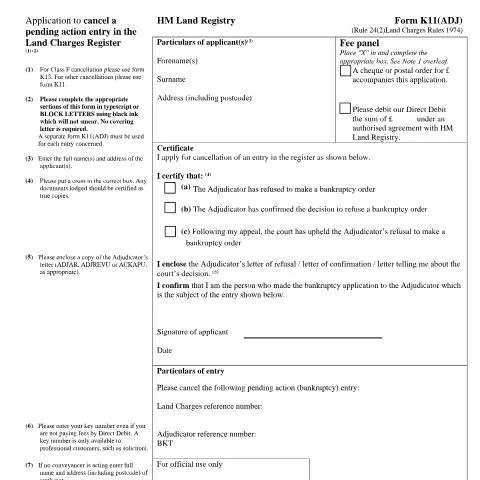
Understanding the Significance of the K11(ADJ) Cancellation Form
The K11(ADJ) form is a pivotal document within the realm of the UK's Land Charges Register, specifically designed to facilitate the cancellation of pending action entries, predominantly related to bankruptcy. When an individual or entity finds themselves embroiled in a bankruptcy application, it is crucial that they take the necessary steps to ensure that any entries related to this are duly cancelled if the adjudicator has refused to make an order. This cancellation is not merely procedural; it holds significant implications for the rights and obligations of the parties involved and can influence future financial dealings.
Who Needs to File the K11(ADJ)?
This form is primarily intended for use by applicants who have previously made a bankruptcy application that resulted in a pending entry on the Land Charges Register. It is essential for both individuals and professionals, such as solicitors, who are acting on behalf of applicants. To clarify:
- Individuals: If you have applied for bankruptcy and have received a refusal from the adjudicator, you will need to complete this form to remove the entry.
- Solicitors: Legal representatives can also file this form on behalf of their clients, provided they use the appropriate key number for processing.
The Role of the K11(ADJ) in Bankruptcy Proceedings
The K11(ADJ) form plays a critical role in the administrative process surrounding bankruptcy applications. It enables applicants to formally request the cancellation of a pending action entry that might otherwise hinder their financial recovery or future transactions. The form acts as a bridge between the adjudicator's decision and the Land Charges Register, ensuring that the record accurately reflects the current legal standing. This process underscores the importance of maintaining accurate records within the registry, which not only protects individual rights but also upholds the integrity of the financial system.
Implications of Failing to Submit the K11(ADJ)
Neglecting to file the K11(ADJ) could lead to several adverse consequences for the applicant:
- Obstructed Transactions: Any pending action entry can complicate future borrowing or property transactions, as potential lenders may view the entry unfavourably.
- Increased Financial Scrutiny: A pending bankruptcy entry may subject the individual to further scrutiny from credit agencies, impacting their credit score.
- Legal Repercussions: Failure to act may have legal implications, particularly if creditors pursue claims against the individual based on outdated information.
Completing the K11(ADJ) Form: A Detailed Walkthrough
Filling out the K11(ADJ) form requires meticulous attention to detail. Each section of the form must be completed accurately to avoid delays or rejections. Here’s a step-by-step guide:
- Applicant Information:
Provide full names and addresses, including postcodes, for all applicants involved. This is crucial for identification and processing.
- Entry Cancellation Request:
Indicate the specific entry being cancelled by providing the Land Charges reference number and the Adjudicator reference number.
- Fee Submission:
Include a cheque or postal order for the relevant fee, or alternatively, specify that the payment should be debited via Direct Debit.
- Certification of Adjudicator’s Decision:
It is imperative to select the appropriate box indicating the outcome of the adjudicator’s decision regarding the bankruptcy order and enclose the corresponding letter.
- Signature and Date:
Ensure the form is signed and dated by the applicant to validate the request.
Common Pitfalls When Filling Out the K11(ADJ)
While filling out the form may seem straightforward, there are common issues that can lead to complications:
- Incorrect Details: Mismatched names or addresses may result in delays as the HM Land Registry attempts to verify the information.
- Missing Documentation: Failing to include the required adjudicator's letter will lead to immediate rejection of the application.
- Fee Oversights: Ensure that the specified amount is correct and that payment methods are clearly indicated; any discrepancies can stall the process.
Submission Channels for the K11(ADJ) Form
Applicants have several avenues for submitting the K11(ADJ) form, each with its own considerations:
- Mail: The completed form can be sent to the Land Charges Department, Cancellation Section, PO Box 292, Plymouth PL1 9JG. Ensure that you use a standard window envelope for ease of processing.
- Direct Submission: For those in proximity to the HM Land Registry, in-person submissions may expedite the process, allowing for immediate feedback.
Regardless of the method chosen, be sure to keep copies of everything submitted for your records.
When Things Go Awry: Handling Rejections and Missing Pieces
Receiving a notification of rejection or a request for additional information regarding your K11(ADJ) submission can be disheartening. However, it is essential to understand the recourse available:
- Clarification Requests: If the HM Land Registry requires further information, respond promptly with the requested documentation to avoid delays.
- Right to Appeal: If your application is rejected, you have the right to appeal the decision. Review the reasons provided and prepare a response addressing any concerns raised.
Follow-Up Procedures
Once you have submitted your K11(ADJ) form, it is advisable to monitor your application:
- Acknowledgement of Receipt: You should receive an acknowledgment from the HM Land Registry. If this does not appear within a reasonable timeframe, do not hesitate to contact them for confirmation.
- Tracking Application Status: Use any reference numbers provided in correspondence to track the status of your cancellation request.
Legal Framework Surrounding the K11(ADJ)
The use of the K11(ADJ) form is governed by the Land Charges Rules 1974, which outline the regulations pertaining to land charges and related processes. Understanding this framework can aid applicants in appreciating the importance of compliance with the rules:
- Data Protection Act 2018: This act ensures the protection of personal data processed during the filing of the K11(ADJ) form, dictating how HM Land Registry handles sensitive information.
- Legal Precedents: History has shown that failure to adhere to proper procedures can lead to legal ramifications, including financial loss or prolonged bankruptcy proceedings.
The Distinction Between K11(ADJ) and Other Related Forms
In the realm of land registration, it is easy to conflate different forms and their purposes. Thus, distinguishing between the K11(ADJ) and similar documents is crucial:
| Form Code | Purpose | Notes |
|---|---|---|
| K11(ADJ) | Cancellation of pending bankruptcy entries | Used following adjudicator refusals |
| K13 | Class F cancellations | For specific cancellations outside of bankruptcy |
Practical Tips for a Successful Submission
To maximise the likelihood of a successful K11(ADJ) submission, consider the following practical tips:
- Double-Check Your Entries: Before submitting, review your form thoroughly to ensure all information is accurate and complete.
- Stay Informed: Regularly check the HM Land Registry website for any updates or changes in procedures that might affect your submission.
- Seek Professional Guidance: If uncertain, consider consulting with a legal professional experienced in land charges and bankruptcy applications to ensure correct completion and submission.
Understanding Land Charges and Their Implications
Before diving into the process of cancelling an entry on the Land Charges Register, it's essential to understand what land charges are and how they can affect property ownership. A land charge is an official notice recorded against a property that can affect its title, often used to secure loans or other financial obligations. These charges can range from mortgages to specific restrictions put in place by local authorities or other entities.
In the UK, the registration of land charges is managed through the Land Charges Registry, which is designed to protect the interests of creditors and provide potential buyers with full transparency regarding any financial obligations tied to a property. If a property has a land charge, anyone interested in purchasing it should be aware that these charges may need to be settled or cleared before the sale can proceed.
In some instances, land charges may become outdated or irrelevant, such as once a debt is paid off or a specific condition is fulfilled. In such cases, cancelling the entry can be crucial for property owners looking to sell or remortgage their property. Understanding the implications and processes involved in land charges can help ensure that property transactions proceed smoothly.
The Process of Cancelling a Land Charge Entry
To cancel an entry on the Land Charges Register, particularly using form K11(ADJ), it is vital to ensure that you meet the necessary criteria. This involves providing sufficient evidence that the underlying obligation tied to the charge has been fulfilled. The process can vary depending on the type of charge in question.
1. Gathering Required Documentation: The first step involves compiling all relevant documents that demonstrate the discharge of the obligation associated with the land charge. This could include a letter from the lender confirming that the mortgage has been paid off or a court order regarding the removal of a restrictive covenant.
2. Completing Form K11(ADJ): After confirming that you have the necessary documents, the next step is to complete the K11(ADJ) form. Ensure that all sections are filled out accurately. Any discrepancies may lead to delays in processing your application. It’s advisable to seek guidance from a legal professional if you are uncertain about any part of the form.
3. Submitting Your Application: Once the form is completed, you must submit it to the Land Charges Registry along with the supporting documents. You can do this via post or, in some cases, electronically if your situation permits.
4. Awaiting Confirmation: After submission, the Land Charges Registry will review your application. If everything is in order, they will issue a cancellation of the land charge, which will then be reflected on the register. It is important to keep a copy of the confirmation for your records.
This process may take several weeks, so it is advisable to account for this timeline if you are working towards a sale or remortgage.
Common Challenges and How to Overcome Them
While cancelling a land charge entry may seem straightforward, several challenges can arise during the process. Understanding these potential pitfalls and how to navigate them can significantly ease your experience.
1. Insufficient Documentation: A common issue is the submission of incomplete or incorrect documentation. Ensure that all papers are in order and that they relate directly to the land charge in question. Double-check that you have included any required signatures or stamps that may be necessary.
2. Disputes Over Charges: In some cases, there may be disputes regarding the validity of the land charge. If a creditor contests your claim to cancel the charge, it may lead to a lengthy negotiation or legal process. Keeping thorough records and communication with your creditors can help resolve these disputes more efficiently.
3. Delays in Processing: The Land Charges Registry may experience backlogs, which can delay the processing of your application. To mitigate this risk, submit your application as early as possible and consider following up with the registry to check on its status.
4. Legal Advice: When in doubt, don’t hesitate to seek legal assistance. A solicitor experienced in property law will be able to guide you through the nuances of cancelling a land charge and help ensure that your rights as a property owner are fully protected.
5. Understanding Your Rights: Familiarize yourself with your rights concerning land charges and the cancellation process. The UK has specific regulations regarding property that can protect you from unjust charges or disputes. Being informed can empower you when dealing with creditors or the registry.