Navigating the PAH1V Form: A Comprehensive Guide to Reporting Your Medical Condition
Imagine being at a crossroads in your life, where your health condition could impact your ability to drive. For those diagnosed with conditions such as Pulmonary Arterial Hypertension (PAH), filling out the Report your medical condition (form PAH1V) becomes a crucial step in maintaining road safety and ensuring the well-being of all road users. This document, issued by the Driver and Vehicle Licensing Agency (DVLA), plays a pivotal role in assessing fitness to drive and managing your driving licence appropriately.
The Significance of the PAH1V Form in Driving Assessments
The PAH1V form is not merely a bureaucratic obligation but a vital component in the broader context of road safety regulations in the UK. When health conditions, such as PAH, affect your ability to drive safely, it is essential to report these to the DVLA.
Why Reporting is Critical?
- Public Safety: The primary aim of reporting your medical condition is to ensure the safety of all road users. The DVLA assesses whether your condition poses a risk while driving.
- Legal Compliance: Not reporting relevant medical conditions can result in serious legal implications. You are required by law to inform the DVLA about any condition that may affect your ability to drive.
- Personal Responsibility: Completing the PAH1V form demonstrates your commitment to responsible driving and adherence to road safety laws.
Understanding Your Obligations and Rights
Completing the PAH1V form involves not just filling out a series of questions but also understanding your rights as an applicant. According to the Data Protection Act 2018 and UK GDPR, your personal data is protected, and you have the right to know how it will be processed and used by the DVLA.
Your Rights Explained
- Transparency: You have the right to be informed about how your health information will be handled.
- Access: You can request access to the information that the DVLA holds about you.
- Data Correction: If you believe that the data held is incorrect, you can request corrections.
Completion Guidelines for Form PAH1V
The integrity of the information you provide in the PAH1V form directly impacts the outcome of your driving assessment. Here’s how to navigate through it effectively.
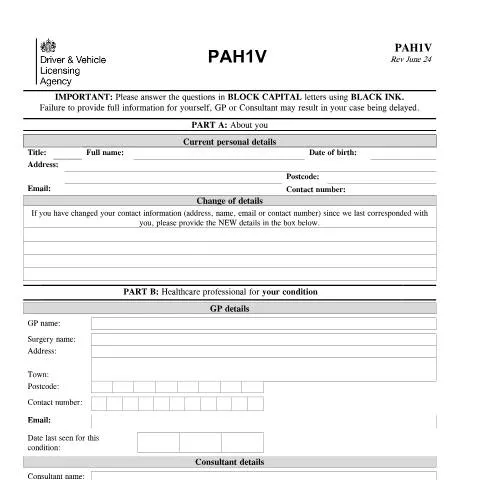
Personal Details Section
Begin by filling out your personal details accurately. The DVLA requires the following:
- Full Name: Ensure the name matches your driving licence.
- Date of Birth: This helps verify your identity.
- Address: Provide up-to-date information, as any discrepancies can delay processing.
Healthcare Professional Information
You need to provide information about your healthcare professionals, typically your GP and any consultants you are seeing regarding your condition. Accuracy is key:
- GP Details: Include the full name, surgery name, address, and contact information.
- Consultant Details: If you're under a specialist, include their information along with the hospital name and address.
- Date Last Seen: Document the date when you last consulted the healthcare professional for your condition.
Health Condition Details
This section is pivotal in assessing your fitness to drive. You will need to answer questions related to your diagnosis and any symptoms that may affect your driving:
- Diagnosis: Confirm whether you have PAH or related conditions.
- Blackout Episodes: Disclose any fainting episodes or loss of consciousness.
- Treatment Details: Be as specific as possible regarding any treatment received to prevent further episodes.
Submission Channels: How and Where to Send Your Form
Once you have diligently filled out the form, you need to decide how to submit it. The DVLA offers multiple channels, each with its own pros and cons.
Online Submission
While the PAH1V form is primarily a paper-based submission, certain medical declarations can now be made online if you have access to the DVLA's digital services. However, check the official DVLA website for updates on which forms can be submitted online.
Postal Submission
For those opting for traditional methods, here’s how to submit your PAH1V form via post:
- Ensure Completeness: Double-check that all sections are filled out completely, with no gaps.
- Use Secure Packaging: Consider using a secure envelope to protect your personal information.
- Post Address: Send to the address specified by the DVLA, ensuring you retain proof of posting.
| Method of Submission | Advantages | Considerations |
|---|---|---|
| Online | Convenient, fast processing | Not all forms may be accepted online |
| Postal | Traditional method, ensures a paper trail | Longer processing time, potential for postal delays |
Understanding the Timeline: What Happens Next?
After you submit the PAH1V form, it’s crucial to understand the timeline and what to expect:
Processing Times
Typically, the DVLA aims to process forms within 15 working days. However, this can vary based on the complexity of your case. Here’s a breakdown of what you can expect:
- Initial Acknowledgment: You may receive an acknowledgment of your submission.
- Medical Assessment: If required, you may be asked to undergo further medical assessments.
- Decision Notification: Once a decision is made, you will be informed whether you can continue driving or if restrictions apply.
Potential Outcomes
The outcome of the assessment can vary:
- Fitness to Drive Confirmed: You may receive confirmation that you can continue driving.
- Restrictions Applied: In some cases, you may be required to adhere to specific driving restrictions.
- Further Investigation: The DVLA may request additional information or assessments if your health condition raises concerns.
Seeking Guidance and Support Throughout the Process
Filling out the PAH1V form can be daunting, especially when considering the implications on your driving privileges. It’s wise to seek support:
Consulting with Healthcare Professionals
Before submitting the form, consulting with your GP or specialist can provide clarity on how to answer questions related to your health.
Contacting the DVLA Directly
If you have any uncertainties, do not hesitate to reach out to the DVLA helpline. They can offer guidance tailored to your specific situation.
Utilising Support Networks
Connecting with support groups for individuals with PAH can provide additional insights and shared experiences related to filling out medical forms.
Your Commitment to Road Safety
Completing the PAH1V form is not merely a formality; it is a testament to your commitment to road safety. By responsibly reporting your medical condition, you play a pivotal role in ensuring that roads remain safe for all. As you take this important step, remember that your health and the safety of others on the road should always come first.
With accurate information and timely submission, you can navigate through the process seamlessly, ensuring that your driving privileges are assessed fairly and responsibly.
Understanding the Purpose of Form PAH1V
Form PAH1V, also known as the 'Report Your Medical Condition' form, is a vital document in the UK that allows individuals to report specific medical conditions to the Department for Work and Pensions (DWP). This form is particularly relevant for those who are applying for or receiving benefits where health conditions may impact their ability to work or perform daily activities. The information provided on this form is essential for the DWP to assess your eligibility for various support schemes, including Personal Independence Payment (PIP) and Employment and Support Allowance (ESA).
Understanding the context in which you need to complete the PAH1V form is crucial. This form is designed to gather comprehensive details about the nature of your medical condition, its severity, and how it affects your overall functionality. For instance, if you have a chronic illness that limits your mobility or requires ongoing treatment, the information you provide can significantly influence the support you receive from the DWP. Completing the form accurately and thoroughly is imperative; otherwise, it may lead to delays or complications in receiving your entitled benefits.
Completing Form PAH1V: Step-by-Step Guidance
Filling out form PAH1V can initially seem daunting, but breaking it down into manageable components can simplify the process. Below is a step-by-step guide that outlines how to effectively complete this form:
1. Gather Necessary Information: Before you start filling out the form, gather all relevant personal information, such as your National Insurance number, and details about your medical condition. It can be helpful to have any medical reports or letters from your healthcare provider on hand to ensure accuracy.
2. Personal Information: The first section usually requires your personal details, including your name, address, and date of birth. Make sure that all details match official documents to avoid any inconsistencies.
3. Details of Your Medical Condition: This section is the core of the PAH1V form. Describe your medical condition in detail, including when it was diagnosed, symptoms you experience, and how it impacts your daily life. Be honest and specific—if you have multiple conditions, mention each one and how they interact.
4. Daily Living Activities: The DWP is keenly interested in how your medical condition affects your ability to perform daily tasks. Use this section to elaborate on any difficulties you face, such as cooking, cleaning, or personal care. The more descriptive you are, the better your chances of receiving appropriate support.
5. Sign and Date the Form: Once you have completed the form, don’t forget to sign and date it. An unsigned form may be returned, causing delays.
6. Submission of the Form: Finally, ensure you know how to submit the form—whether online, by post, or through another method as indicated by the DWP. If mailing the form, consider using recorded delivery to track its arrival.
Common Challenges and Solutions When Reporting a Medical Condition
Reporting a medical condition via form PAH1V can come with its own set of challenges. Understanding these common difficulties can save you time and frustration as you navigate the process.
1. Lack of Medical Evidence: One of the primary challenges individuals face is providing insufficient medical evidence to support their claims. To overcome this, it’s advisable to proactively schedule appointments with your healthcare provider to discuss your condition. Request comprehensive letters that detail your diagnosis, treatment, and the impact of the condition on your life. This documentation will bolster your application and provide the DWP with necessary context.
2. Misunderstanding the Requirements: Some individuals may not fully grasp what information is required on the form, leading to incomplete submissions. To mitigate this, take the time to read the instructions thoroughly. If needed, seek assistance from advocacy groups or organisations that specialise in benefits advice. They can help clarify the expectations and ensure that you present the most robust case possible.
3. Anxiety About the Process: The thought of reporting a medical condition can cause anxiety for many. To alleviate this feeling, consider practicing your responses with a trusted friend or family member. Familiarising yourself with the kinds of questions you will face can make the process seem less intimidating.
4. Deadlines and Timeliness: Another pressing concern is the importance of adhering to deadlines. Missing a submission deadline can lead to a rejection of your claim. Always be aware of any timeframes given in your correspondence with the DWP and make a plan to complete and submit your form well in advance of any deadlines.
By being mindful of these potential roadblocks, you can better prepare yourself for the process of reporting your medical condition using form PAH1V. Each step you take to ensure a complete and accurate submission can significantly enhance your experience and the outcome of your claim.