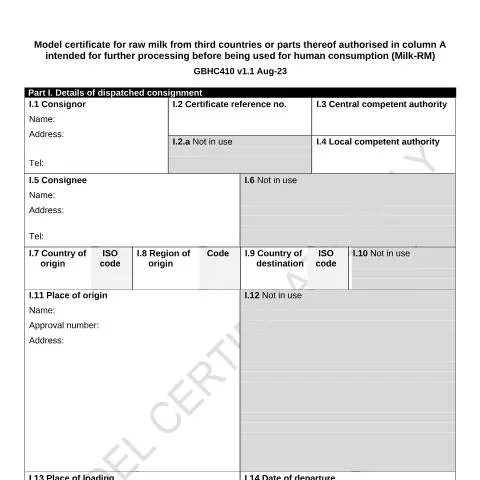
Understanding the GBHC410 Certificate for Raw Milk Imports
When dairy businesses seek to import raw milk from third countries into Great Britain for further processing, they encounter a complex web of health and safety requirements designed to protect both livestock and consumers. The GBHC410 model health certificate, developed by the Animal and Plant Health Agency (APHA) under the Department for Environment, Food & Rural Affairs (DEFRA), serves as the critical documentation ensuring these imports meet stringent British standards before entering the supply chain.
This certificate represents far more than bureaucratic paperwork—it embodies a comprehensive verification system that traces milk from farm to border, ensuring every batch meets both animal health protocols and public health standards. For importers handling raw milk destined for processing facilities across England, Scotland, and Wales, understanding the intricacies of this certification process can mean the difference between smooth customs clearance and costly delays at border control posts.
Regulatory Framework Governing Raw Milk Certification
The GBHC410 certificate operates within the framework of retained EU legislation, specifically drawing from Regulation (EU) No 605/2010, which has been incorporated into British law following Brexit. This regulatory foundation establishes the legal basis for health certification requirements, ensuring that third-country milk imports maintain the same standards that would apply to domestic production.
The certificate's authority stems from two distinct but interconnected regulatory domains. Animal health provisions focus on preventing the introduction of diseases such as foot-and-mouth disease and rinderpest, while public health requirements address hygiene standards, residue monitoring, and contamination control. This dual approach reflects the comprehensive nature of food safety oversight in the modern dairy industry.
Under the current framework, only raw milk originating from countries or territories specifically authorised in Column A of the official milk and milk products documentation published on GOV.UK may enter Great Britain using this certificate. This list is regularly updated to reflect changing international health situations and bilateral trade arrangements, making it essential for importers to verify current authorisations before initiating any shipment.
Legal Implications and Compliance Requirements
The certificate carries significant legal weight, with the certifying official veterinarian and inspector assuming personal responsibility for the accuracy of their attestations. False certification can result in serious consequences, including suspension of import privileges, financial penalties, and potential criminal charges under food safety legislation.
For importing businesses, possession of a valid GBHC410 certificate does not guarantee automatic entry. Border Control Posts (BCPs) retain the authority to conduct additional inspections, particularly for consignments from regions with recent health concerns or for first-time importers without established track records.
Eligibility Criteria for Third-Country Suppliers
The certification process begins long before milk reaches British shores, with stringent requirements governing the source establishments and territories eligible for export. Only holdings operating under the direct supervision of the official veterinary service in the country of origin qualify for certification, ensuring consistent oversight throughout the production chain.
Territory-level requirements demand that the country or region of origin maintain freedom from foot-and-mouth disease and rinderpest for a minimum of 12 consecutive months prior to certification. Crucially, vaccination programmes against foot-and-mouth disease during this period disqualify the territory, reflecting the disease-free status required for British import approval.
| Requirement Category | Specific Criteria | Monitoring Authority |
|---|---|---|
| Territory Status | 12 months disease-free (FMD, rinderpest) | National veterinary authority |
| Vaccination Policy | No FMD vaccination in 12-month period | Official veterinary service |
| Establishment Approval | Registered with competent authority | Local inspection services |
| Hygiene Standards | GB-equivalent regulations compliance | Official inspector certification |
Production Facility Requirements
Individual dairy operations must demonstrate compliance with British-equivalent hygiene regulations, including specific plate count and somatic cell count criteria that mirror domestic standards. These microbiological parameters serve as key indicators of milk quality and safety, with regular testing required to maintain certification eligibility.
The approval number referenced in section I.11 of the certificate represents a unique identifier assigned by the competent authority in the country of origin. This number links the specific establishment to its inspection history, previous export performance, and current compliance status, enabling British authorities to track the source of any issues that may arise.
Detailed Certification Process and Documentation Requirements
The certification journey involves multiple stages, beginning with pre-export veterinary inspection and culminating in official attestation by qualified veterinary and public health authorities. The process typically commences 48 to 72 hours before the intended departure date, allowing sufficient time for thorough examination and documentation completion.
Official veterinarians conducting the animal health assessment must verify that source animals remain under continuous official supervision and that no restrictions affecting the holding exist at the time of certification. This includes confirming the absence of any quarantine measures, movement restrictions, or disease investigation protocols that might compromise the health status of the milk.
The public health component requires certification by an official inspector with specific expertise in dairy hygiene and food safety protocols. This professional must verify compliance with residue monitoring plans, maximum residue limits for veterinary medicines, pesticide residue levels, and contaminant thresholds established in British regulations.
Critical Documentation Elements
Each certificate must contain precise identification of the consignment, including batch numbers, net weights, and packaging details that enable full traceability throughout the import process. The means of transport section requires specific identification codes—flight numbers for air cargo, vessel names for maritime shipments, or registration numbers for road and rail transport.
Temperature maintenance requirements during transport receive particular attention, with the certificate specifying whether the product travels under ambient, chilled, or frozen conditions. This information proves crucial for border inspection authorities assessing the integrity of the cold chain and the continued safety of the product upon arrival.
Processing and Validation Timeline
The standard processing timeline for GBHC410 certification typically spans 5 to 10 working days from initial application to final signature, though this can vary significantly based on the complexity of the consignment and the efficiency of the certifying authority. Peak export periods, particularly during seasonal production cycles, may extend processing times due to increased demand for certification services.
Expedited processing options exist in some third countries, though these typically incur additional fees and require compelling justification for urgency. Emergency certification procedures may apply in cases where production schedules or shipping arrangements create time-sensitive situations, but these remain exceptional and subject to additional scrutiny.
Once issued, certificates maintain validity for the duration of the specific journey identified in the documentation. Unlike some other health certificates with fixed validity periods, the GBHC410 remains valid until the consignment reaches its declared destination or until circumstances arise that compromise the integrity of the shipment.
Amendment and Correction Procedures
Minor corrections to non-critical information may be possible through endorsement by the original certifying authority, provided the fundamental health attestations remain unchanged. However, material alterations affecting animal health status, product quantities, or destination details typically require complete re-certification to maintain the document's legal validity.
Split shipments present particular challenges, as the original certificate cannot be divided between multiple consignments. Each separate shipment requires its own certification process, even when originating from the same production batch, ensuring that health attestations remain accurate for each individual consignment.
Border Control Procedures and Entry Requirements
Upon arrival at designated Border Control Posts, GBHC410-certified consignments undergo systematic documentary and identity checks, with the possibility of physical examination based on risk assessment protocols. The certificate must accompany the shipment in its original form, as photocopies or electronic versions alone do not satisfy legal requirements for physical goods clearance.
Border inspection officers verify that certificate details match the actual consignment, paying particular attention to seal numbers, packaging quantities, and temperature maintenance records. Any discrepancies between the certificate and the physical shipment can result in detention pending investigation, highlighting the importance of accurate initial certification.
The entry BCP specified in section I.16 must correspond to a facility equipped and authorised to handle dairy imports, as not all ports of entry possess the necessary inspection capabilities for raw milk products. Attempting to clear goods through unauthorised entry points results in automatic rejection and potential return of the entire consignment.
Post-Entry Obligations and Traceability
Following successful clearance, importing businesses must maintain detailed records linking the certificate to subsequent processing activities, enabling full traceability should food safety concerns arise. These records form part of the broader food safety management system and remain subject to inspection by local authority enforcement officers.
The requirement for further processing before human consumption, explicitly stated in the certificate's scope, means that raw milk certified under GBHC410 cannot be sold directly to consumers or used in products intended for immediate consumption without undergoing approved treatment processes.
Troubleshooting Common Certification Challenges
Certification delays frequently arise from incomplete residue monitoring documentation, particularly when third-country testing programmes do not align precisely with British requirements. Importers can mitigate these issues by establishing clear communication channels with overseas suppliers and ensuring comprehensive understanding of current British standards before initiating certification requests.
Transport-related complications often emerge when shipping arrangements change after certification, as the certificate remains tied to the specific journey details declared during the application process. Last-minute alterations to routing, carriers, or departure dates may necessitate re-certification, emphasising the importance of confirmed logistics before beginning the certification process.
Seasonal variations in disease status can affect certification eligibility, particularly in regions where endemic diseases show cyclical patterns. Importers operating ongoing supply arrangements should maintain regular contact with veterinary authorities in source countries to anticipate potential disruptions to certification availability.
Quality Assurance and Continuous Monitoring
Successful importers often establish quality assurance partnerships with overseas suppliers, involving regular audits of production facilities and ongoing monitoring of compliance standards. These proactive approaches help identify potential certification issues before they impact shipment schedules and contribute to building strong relationships with certifying authorities.
The dynamic nature of international health regulations means that certification requirements can evolve rapidly in response to emerging disease threats or changes in scientific understanding. Staying informed through official channels, including APHA notifications and DEFRA guidance updates, ensures that importers maintain awareness of current requirements and can adapt their procedures accordingly.
Strategic Considerations for Dairy Import Operations
The GBHC410 certificate represents just one component of a comprehensive import strategy that must account for commercial, logistical, and regulatory factors. Successful dairy importers typically develop diversified supplier bases across multiple approved territories, reducing dependence on single sources and providing flexibility when regional health issues affect certification availability.
Long-term supply relationships benefit from collaborative approaches to certification, where importers work closely with overseas partners to optimise production and certification schedules. This coordination can include aligning production cycles with shipping schedules, pre-positioning documentation, and establishing contingency plans for certification delays.
The certificate's focus on further processing requirements opens opportunities for value-added import strategies, where raw milk serves as an input for specialised dairy products that benefit from specific geographic origins or production methods. Understanding the full scope of permitted processing activities enables importers to maximise the commercial value of their certified imports while maintaining full compliance with British regulations.
Health Certificate Validation and Verification Procedures
The validation process for dairy and milk health certificates involves multiple verification stages, each designed to ensure compliance with UK food safety standards and traceability requirements. Understanding these procedures is essential for importers, exporters, and domestic producers operating within the UK dairy supply chain.
When submitting health certificates through the TRACES system, competent authorities must verify that all mandatory fields contain accurate information corresponding to the actual consignment. This includes cross-referencing batch numbers with production records, confirming that laboratory test results align with sampling dates, and ensuring that the certifying veterinarian holds valid accreditation for the specific product categories being certified.
The Animal and Plant Health Agency (APHA) conducts random audits of submitted certificates, typically examining 15-20% of all dairy imports from third countries. During these audits, inspectors may request additional documentation such as feed certificates, water quality reports, or veterinary treatment records dating back up to six months prior to the certification date. Producers should maintain comprehensive records to facilitate these verification processes.
For organic dairy products, additional validation requirements apply under Regulation (EU) 2018/848, which remains applicable in Great Britain through retained EU law. Organic certification bodies must provide supplementary documentation confirming compliance with organic production standards, including pasture management records and feed composition certificates. These documents undergo separate verification by DEFRA-approved organic control bodies.
Certificate amendments require specific procedures depending on the nature of the correction. Minor clerical errors, such as typographical mistakes in addresses or contact details, may be corrected through the TRACES amendment function within 24 hours of initial submission. However, substantive changes affecting product specifications, quantities, or test results necessitate complete certificate withdrawal and resubmission with fresh veterinary attestation.
The validation timeline varies significantly based on the complexity of the consignment and origin country risk assessment. Certificates from EU member states typically receive automated validation within 2-4 hours, while submissions from third countries may require manual review lasting 24-72 hours. During peak import periods, such as the pre-Christmas dairy surge, processing times may extend to five working days.
Rejection rates for dairy health certificates average 8-12% across all import categories, with the most common grounds being incomplete laboratory testing panels, expired veterinary accreditation, or discrepancies between declared and actual product compositions. Rejected certificates trigger automatic notifications to both the exporting competent authority and the UK importer, who must address deficiencies before resubmission.
Specific Requirements for Artisanal and Specialty Dairy Products
Artisanal and specialty dairy products present unique certification challenges due to their diverse production methods, traditional processing techniques, and often limited batch sizes. These products require tailored health certificate approaches that accommodate small-scale production while maintaining rigorous food safety standards.
Raw milk cheeses aged less than 60 days face particularly stringent certification requirements. Health certificates must include specific attestations regarding Listeria monocytogenes testing protocols, with samples taken at multiple production stages including pre-aging, mid-aging, and final product. The certifying veterinarian must confirm that the production facility implements validated HACCP procedures specifically designed for raw milk cheese production, including temperature monitoring throughout the aging process.
Traditional Protected Designation of Origin (PDO) and Protected Geographical Indication (PGI) dairy products require additional certification elements beyond standard health attestations. Certificates must include references to the relevant PDO or PGI specification, confirmation that production occurred within the designated geographical area, and verification that traditional production methods were followed. For products such as Roquefort or Parmigiano-Reggiano, this includes specific attestations regarding cave aging conditions, traditional starter cultures, and compliance with time-honoured production protocols.
Fermented dairy products containing live cultures present specific certification challenges, particularly regarding shelf-life declarations and viable organism counts. Health certificates must specify the minimum viable count of beneficial bacteria at the time of certification, typically expressed as colony-forming units per millilitre (CFU/ml). The certifying authority must confirm that the declared shelf-life allows for adequate viable counts throughout the product's intended lifespan, considering storage and transport conditions.
Seasonal dairy products, such as those produced from grass-fed animals during specific grazing periods, require temporal attestations within health certificates. These must confirm the production period aligns with declared seasonal parameters, supported by pasture management documentation and feed records. For products claiming seasonal provenance, certificates must include attestations regarding grass composition, grazing period duration, and absence of supplementary feeding during designated periods.
Artisanal butter and cream products often involve traditional churning or processing methods that require specific certification approaches. Health certificates must address the hygiene standards of traditional equipment, water quality used in processing, and temperature control during extended processing periods. Where traditional wooden vessels or copper equipment are used, additional attestations regarding cleaning protocols and material safety become necessary.
Small-batch dairy producers frequently encounter challenges with laboratory testing requirements, particularly where minimum sample sizes exceed production volumes. In such cases, composite sampling protocols may be acceptable, provided the health certificate clearly identifies the sampling methodology and confirms that all batches within the composite sample originated from the same production run and storage conditions.
Post-Certification Compliance and Monitoring Obligations
The responsibilities associated with dairy health certificates extend well beyond the initial certification process, encompassing ongoing compliance monitoring, corrective action protocols, and long-term record-keeping obligations that form integral components of the UK's food safety framework.
Certificate holders must maintain comprehensive traceability systems that link health certificate data with downstream distribution records. This includes maintaining detailed logs of product movements from the point of certification through to final retail or food service distribution. These records must be readily accessible for inspection by Food Standards Agency (FSA) officers and local authority environmental health departments for a minimum period of three years following the certificate expiry date.
Temperature monitoring represents a critical post-certification obligation, particularly for products requiring specific storage conditions as outlined in health certificates. Automated temperature logging systems must record continuous data throughout storage and transport phases, with alert mechanisms triggering immediate notifications when temperatures deviate beyond acceptable parameters. Where temperature excursions occur, certificate holders must implement documented investigation procedures and may need to notify the certifying authority if product safety could be compromised.
Batch recall procedures must be established and regularly tested to ensure rapid response capabilities in the event of food safety concerns. Health certificates provide essential reference data for recall activities, including batch identification codes, production dates, and distribution patterns. Certificate holders must demonstrate capability to identify and isolate affected products within four hours of recall initiation, supported by the traceability systems established during the certification process.
Regular compliance audits by competent authorities may occur without prior notification, particularly for high-risk product categories or following consumer complaints. During these audits, inspectors examine the correlation between health certificate attestations and actual operational practices. Common audit focus areas include verification of laboratory testing protocols, review of HACCP implementation, and assessment of staff training records related to food safety procedures outlined in health certificates.
Non-compliance incidents trigger specific reporting obligations that vary based on the severity and potential public health impact. Minor deviations, such as temporary storage temperature variations within acceptable limits, require internal documentation and corrective action implementation. However, significant non-compliance events, including detection of pathogenic organisms or chemical contamination, necessitate immediate notification to the FSA through the Food Safety Incident Response Protocol.
Certificate renewal processes require demonstration of continued compliance with all original certification criteria. This includes providing updated laboratory test results, confirming ongoing validity of veterinary accreditation, and demonstrating maintenance of facility hygiene standards. Renewal applications must be submitted at least 30 days prior to certificate expiry to ensure continuity of operations, though complex cases may require extended processing periods.
Data protection obligations under UK GDPR require certificate holders to implement appropriate security measures for personal data contained within health certificates, including contact details of responsible persons and certifying veterinarians. This includes establishing data retention schedules, implementing access controls, and ensuring secure disposal of certificate-related documentation at the end of required retention periods.