When Laboratory Findings Require Expert Analysis: Understanding the Healthcare Pathogens Request Process
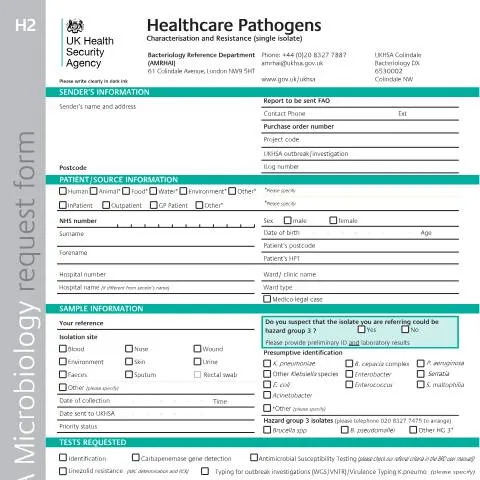
In the intricate landscape of antimicrobial resistance and emerging healthcare threats, hospital laboratories occasionally encounter bacterial isolates that defy conventional identification or exhibit concerning resistance patterns. When routine diagnostic capabilities reach their limits, the UK Health Security Agency's Bacteriology Reference Department provides specialised analysis through their Healthcare Pathogens request form for single isolates. This sophisticated referral mechanism bridges the gap between frontline clinical microbiology and national surveillance, enabling healthcare professionals to access advanced molecular diagnostics and expert interpretation when patient safety or outbreak prevention hangs in the balance.
The form BRDW0140.05, effective from November 2024, represents more than a simple laboratory request—it serves as a critical gateway for complex antimicrobial resistance investigations, outbreak characterisation, and therapeutic guidance when conventional approaches prove insufficient. Understanding its proper utilisation can mean the difference between delayed diagnosis and timely intervention in cases involving carbapenemase-producing organisms, unusual resistance mechanisms, or potential bioterrorism agents.
Navigating the Referral Landscape: Who Initiates These Specialised Requests
The Healthcare Pathogens request form operates within a carefully structured referral network that reflects the hierarchical nature of UK diagnostic microbiology. Primary users include consultant microbiologists at NHS foundation trusts, specialist registrars in medical microbiology, and senior biomedical scientists authorised to make referral decisions within their laboratory's governance framework.
Hospital infection control teams frequently initiate requests when investigating suspected nosocomial outbreaks, particularly those involving multi-drug resistant organisms that require molecular typing for source identification. Public Health England regional laboratories may also submit isolates when their enhanced diagnostic capabilities still fall short of the molecular characterisation needed for epidemiological investigations.
Private healthcare laboratories, though less common users, can access these services when treating patients whose infections pose broader public health implications. However, all submissions must demonstrate clear clinical or epidemiological justification, as the UKHSA's capacity prioritises cases with national surveillance significance or those requiring therapeutic guidance unavailable through conventional testing.
Specialist Scenarios Warranting Referral
- Carbapenemase detection: When phenotypic screening suggests carbapenem resistance but gene identification requires PCR confirmation
- Linezolid resistance investigations: Particularly relevant for VRE or MRSA isolates showing reduced susceptibility to last-resort antibiotics
- Outbreak typing: Whole genome sequencing or VNTR analysis to establish clonal relationships between isolates
- Hazard Group 3 organisms: Suspected Brucella species, Burkholderia pseudomallei, or other biosafety level 3 pathogens requiring specialised handling
Decoding Clinical Contexts: Matching Request Reasons to Laboratory Capabilities
The form's structured approach to reasons for request reflects the UKHSA's dual role in providing diagnostic services and maintaining national surveillance. Each category triggers specific laboratory workflows and determines processing priorities, making accurate selection crucial for appropriate service delivery.
| Request Category | Typical Processing Time | Laboratory Methods | Clinical Application |
|---|---|---|---|
| Confirmation of results | 5-7 working days | Repeat susceptibility testing, quality assurance | Verification of unusual resistance patterns |
| Therapeutic guidance | 2-3 working days | MIC determination, synergy testing | Treatment optimisation for severe infections |
| Outbreak investigation | 7-14 working days | WGS, MLST, PFGE | Source identification and transmission mapping |
| Unusual resistance | 10-14 working days | PCR, sequencing, mechanism characterisation | Novel resistance mechanism identification |
Pseudobacteraemia investigations represent a particularly nuanced category, where the UKHSA's expertise helps distinguish genuine bloodstream infections from contamination events that might otherwise trigger unnecessary antimicrobial therapy or infection control measures. These cases often involve coagulase-negative staphylococci or environmental organisms where clinical significance remains uncertain.
Epidemiological Context Selection
The distinction between hospital-acquired, community-acquired, and inter-hospital transfer categories influences both processing approaches and surveillance reporting. Hospital-acquired cases may trigger enhanced molecular typing to identify environmental reservoirs, while community-acquired resistant organisms often undergo expanded antimicrobial susceptibility testing to guide empirical therapy protocols.
Technical Prerequisites: Laboratory Data Requirements and Quality Standards
Successful UKHSA referrals depend heavily on comprehensive preliminary characterisation by the referring laboratory. The form's detailed requirements for sender's laboratory results reflect the reference laboratory's need to build upon, rather than duplicate, initial diagnostic work.
MALDI-TOF identification scores provide crucial quality metrics—isolates with scores below 2.0 may require additional morphological characterisation before molecular analysis proceeds. The Gram stain morphology section serves as both a quality check and a safety verification, particularly important when hazard group classification remains uncertain.
Antimicrobial Susceptibility Testing Documentation
The form explicitly references the BRD user manual's referral criteria, acknowledging that not all resistance patterns warrant specialist investigation. Referring laboratories must demonstrate they have exhausted their diagnostic capabilities and can justify why standard susceptibility testing proves insufficient for clinical management.
Key principle: The UKHSA expects preliminary identification attempts and basic antimicrobial susceptibility testing before accepting referrals, ensuring efficient use of specialist resources while maintaining quality standards.
Critical Laboratory Parameters
- Growth requirements: Atmospheric conditions, temperature preferences, and nutritional dependencies
- Biochemical characteristics: Oxidase and catalase reactions provide baseline identification support
- Preliminary species identification: Must demonstrate reasonable confidence levels or explain identification difficulties
- Antimicrobial susceptibility patterns: Complete profiles for first-line agents relevant to the presumptive organism
Biosafety Protocols: Managing Hazard Group 3 Organism Referrals
The form's prominent hazard group 3 section reflects serious biosafety considerations that extend beyond routine laboratory operations. Suspected Brucella species, Burkholderia pseudomallei, and other category 3 pathogens require telephone consultation before submission, ensuring appropriate packaging, transport, and receiving laboratory preparation.
The telephone requirement (020 8327 7475) serves multiple functions: immediate risk assessment, transport arrangement coordination, and preliminary case discussion that may influence testing priorities. These conversations often reveal epidemiological factors—recent foreign travel, occupational exposures, or clinical presentations—that significantly impact both laboratory safety protocols and diagnostic approaches.
Foreign Travel Implications
Travel history documentation proves particularly crucial for tropical pathogen identification and antimicrobial resistance pattern interpretation. Organisms acquired in regions with high carbapenemase prevalence may exhibit resistance mechanisms uncommon in UK healthcare settings, requiring specialised molecular characterisation for appropriate therapy selection.
The country specification enables the UKHSA to apply region-specific diagnostic algorithms—for example, suspected melioidosis from Southeast Asian travel triggers different testing protocols than potential glanders exposure from Middle Eastern regions.
Administrative Mechanics: Submission Pathways and Processing Requirements
Physical submission to the Bacteriology Reference Department at 61 Colindale Avenue requires careful attention to transport regulations and packaging standards. The DX postal system (6530002 Colindale NW) provides secure transport for routine submissions, while hazard group 3 organisms necessitate specialised courier arrangements coordinated through the preliminary telephone consultation.
Purchase order numbers and project codes reflect the UKHSA's cost recovery mechanisms for non-NHS submissions. Private laboratories and research institutions must establish financial agreements before submission, while NHS laboratories typically operate under established service level agreements that cover routine referral costs.
Priority Status Determinations
Priority classifications directly influence processing sequences and reporting timelines. Urgent clinical cases—particularly those involving septic shock, endocarditis, or immunocompromised patients—may receive expedited processing, while surveillance-related submissions follow standard workflows unless outbreak implications emerge.
The UKHSA outbreak/investigation number field links submissions to existing epidemiological investigations, enabling coordinated laboratory analysis across multiple healthcare settings. These reference numbers facilitate data integration and ensure that individual isolate results contribute to broader surveillance objectives.
Patient Data Governance: Balancing Clinical Needs with Privacy Protection
The comprehensive patient information requirements reflect the dual clinical and surveillance functions that characterise UKHSA operations. NHS numbers enable integration with national surveillance databases, while detailed demographic data supports epidemiological analysis and contact tracing when necessary.
Hospital Patient Transport (HPT) codes provide crucial epidemiological context, distinguishing between inpatient acquisitions, outpatient exposures, and community-onset infections. This classification influences both laboratory interpretation and public health response protocols, particularly for organisms with outbreak potential.
Data Protection Compliance
All patient data processing operates under Data Protection Act 2018 and UK GDPR frameworks, with the UKHSA's legal basis typically resting on public health protection provisions. However, referring laboratories must ensure appropriate patient consent or legal justification exists, particularly for non-NHS submissions where commercial laboratory agreements may complicate data sharing arrangements.
The ward type specification—intensive care, haematology, transplant units—provides risk stratification context that influences both laboratory analysis priorities and infection control recommendations. High-risk clinical environments may trigger enhanced molecular characterisation even for organisms that would receive routine processing in general ward settings.
Interpreting Results and Clinical Integration
UKHSA reports extend far beyond simple organism identification or antimicrobial susceptibility results. Expert interpretation often includes therapeutic recommendations, infection control guidance, and epidemiological significance assessment that directly influences patient management decisions.
Carbapenemase gene detection results, for example, typically include specific gene identification (KPC, NDM, OXA-48 family), plasmid characterisation when relevant, and therapeutic guidance reflecting the resistance mechanism's clinical implications. These detailed analyses enable targeted therapy selection and inform infection control protocols specific to the identified resistance determinants.
Outbreak typing results provide phylogenetic analysis that establishes transmission relationships between isolates, enabling healthcare teams to identify infection sources, assess control measure effectiveness, and predict future transmission risks. Whole genome sequencing data increasingly supports these investigations, offering unprecedented resolution for epidemiological reconstruction.
Long-term Surveillance Integration
Individual referral results contribute to national surveillance programmes monitoring antimicrobial resistance trends, emerging pathogen distribution, and outbreak patterns across UK healthcare settings. This dual benefit—immediate clinical support and long-term population health protection—justifies the comprehensive data collection requirements and sophisticated analytical approaches that characterise the Healthcare Pathogens request system.
The form represents a critical intersection between clinical microbiology and public health surveillance, where individual patient care needs align with broader population health protection objectives. Understanding its proper utilisation ensures that healthcare professionals can access the UKHSA's specialist capabilities effectively while contributing to the national surveillance infrastructure that protects against emerging infectious disease threats.
Laboratory Quality Assurance and Accreditation Requirements
Healthcare pathogen testing laboratories submitting single isolate requests must meet stringent quality assurance standards mandated by the UK Health Security Agency. All participating laboratories require ISO 15189 accreditation for medical laboratory testing, with specific competency requirements for microbiology and virology departments handling pathogen identification.
The accreditation process involves annual assessments by the United Kingdom Accreditation Service (UKAS), evaluating laboratory procedures, staff qualifications, equipment calibration, and quality control measures. Laboratories must demonstrate proficiency in pathogen isolation techniques, maintaining viable cultures, and proper specimen handling protocols that preserve genetic integrity for downstream analysis.
Quality control measures include participation in External Quality Assessment (EQA) schemes operated by organisations such as the National External Quality Assessment Service (NEQAS). These programmes distribute blinded reference samples quarterly, requiring laboratories to demonstrate consistent identification accuracy across common and rare pathogens. Performance below acceptable thresholds may result in temporary suspension from the national surveillance network.
Documentation requirements extend beyond the initial request form. Laboratories must maintain detailed chain of custody records, including specimen collection timestamps, storage conditions, processing delays, and any deviations from standard protocols. These records become particularly crucial when isolates contribute to outbreak investigations or antimicrobial resistance surveillance programmes.
Staff competency verification involves annual assessments of technical personnel performing pathogen identification. This includes practical evaluations of culture techniques, biochemical testing interpretation, and molecular identification methods. Only qualified personnel with demonstrated competency may authorise single isolate submissions to reference laboratories.
Data Integration with National Surveillance Systems
Single isolate submissions integrate seamlessly with multiple national surveillance databases, creating a comprehensive picture of pathogen distribution and antimicrobial resistance patterns across healthcare settings. The primary integration occurs through the Laboratory Information Management System (LIMS), which automatically populates relevant surveillance databases upon form submission.
The National Healthcare-Associated Infections Data Capture System receives real-time notifications for healthcare-associated pathogens, enabling rapid identification of potential outbreaks or clusters. This system cross-references patient movement data, ward locations, and temporal patterns to identify epidemiological links between cases that might otherwise remain undetected.
Antimicrobial resistance data flows directly into the English Surveillance Programme for Antimicrobial Utilisation and Resistance (ESPAUR), contributing to annual resistance reports and informing national prescribing guidelines. The system flags unusual resistance patterns or emerging mechanisms, triggering enhanced surveillance protocols and expert review by specialist reference laboratories.
Genomic sequencing data, when available, uploads to the National Pathogen Genome Project database, enabling molecular epidemiology studies and transmission pathway analysis. This integration proves particularly valuable for tracking methicillin-resistant Staphylococcus aureus (MRSA), Clostridioides difficile, and carbapenem-resistant Enterobacteriaceae across healthcare networks.
Regional Health Protection Teams receive automated alerts for notifiable diseases and high-risk pathogens, enabling immediate implementation of infection control measures. The alert system considers patient location, pathogen type, resistance profile, and local epidemiological context to determine appropriate response levels.
Data sharing agreements with devolved administrations ensure pathogen surveillance extends across England, Scotland, Wales, and Northern Ireland borders. This coordination proves essential for managing cross-border healthcare provision and tracking pathogen transmission in border communities.
Specialized Processing Pathways for High-Risk Pathogens
Certain pathogen categories require enhanced processing protocols that extend beyond standard single isolate submission procedures. Hazard Group 3 organisms, including Mycobacterium tuberculosis complex, Brucella species, and Francisella tularensis, follow specialized containment and transport requirements outlined in the Advisory Committee on Dangerous Pathogens (ACDP) guidelines.
Biosafety level 3 (BSL-3) pathogens require triple packaging systems compliant with UN3373 regulations for biological substances. Transport must occur through approved courier services with specialized training in hazardous material handling. Documentation includes detailed risk assessments, emergency contact information, and specific handling instructions for receiving laboratories.
Tuberculosis isolates undergo mandatory drug susceptibility testing at regional Mycobacterium Reference Units before submission to the National Mycobacterium Reference Laboratory. This tiered approach ensures rapid identification of multidrug-resistant (MDR) and extensively drug-resistant (XDR) strains while maintaining appropriate biosafety protocols throughout the testing pathway.
Viral haemorrhagic fever suspects require immediate consultation with the Imported Fever Service before any laboratory processing. These cases follow strict protocols involving the High Level Isolation Unit network and specialized reference laboratories equipped with maximum containment facilities.
Carbapenemase-producing Enterobacteriaceae (CPE) isolates trigger enhanced surveillance protocols including whole genome sequencing and epidemiological investigation. The submission form automatically generates alerts to local infection prevention and control teams, enabling immediate implementation of enhanced screening and isolation precautions.
Novel or unusual resistance mechanisms identified during routine testing require mandatory submission to specialist reference laboratories for confirmatory testing and molecular characterization. These submissions contribute to early warning systems for emerging resistance threats and inform national antimicrobial stewardship programmes.
Outbreak-associated isolates follow expedited processing pathways with guaranteed turnaround times for identification and typing results. Priority handling ensures rapid availability of epidemiological data necessary for effective outbreak control measures, including environmental sampling recommendations and enhanced infection control protocols.