Understanding the Role of Form SEND15AYP in Special Educational Needs
Form SEND15AYP serves a critical purpose within the realm of Special Educational Needs and Disability (SEND) tribunals. Designed for young claimants, this document plays a vital role in enabling them to recover expenses incurred while attending tribunal hearings. The significance of this form extends beyond mere financial reimbursement; it empowers young individuals and their families to effectively navigate the complexities of the tribunal process, ensuring that they are not financially burdened when seeking justice.
The Context of SEND Tribunal Hearings
When families feel that their child’s educational needs are not being adequately met, they may appeal to the Special Educational Needs and Disability Tribunal. The hearings can be daunting, often requiring travel and associated costs. This is where the SEND15AYP form becomes indispensable. By claiming expenses, young individuals can focus on their case without the additional worry of travel costs.
The Importance of Timelines in Expense Claims
Understanding the timeline surrounding the submission of Form SEND15AYP is essential. Claims must be submitted promptly following the tribunal hearing to avoid potential complications.
Claim Submission Deadlines
- Post-Hearing Submission: Expenses must typically be claimed no later than 28 days after the hearing date.
- Early Claims: If you anticipate expenses before the hearing, it’s wise to keep records and receipts from the outset.
After submission, applicants should expect a reasonable time frame for processing. Communication from the tribunal regarding the status of the claim is vital, as it ensures transparency and accountability.
Who Should Complete the SEND15AYP Form?
This form is expressly designed for young persons attending hearings, typically under the age of 25. However, understanding who is eligible to file a claim is crucial for proper utilization of the form.
Eligibility Criteria
- Age Requirement: The applicant must be a young person, typically defined as someone under the age of 25.
- Nature of the Appeal: Only expenses arising from SEND tribunal hearings are eligible for reimbursement.
- Accompaniment: If a young person requires assistance from a parent or guardian, claims can still be made on their behalf, provided all documentation is completed accurately.
In cases where a young person is unable to complete the form due to disability or other reasons, a parent or guardian may assist in filling out the necessary sections, ensuring all claims are legitimate and supported by proper documentation.
A Deep Dive into the Form: Navigating the Sections
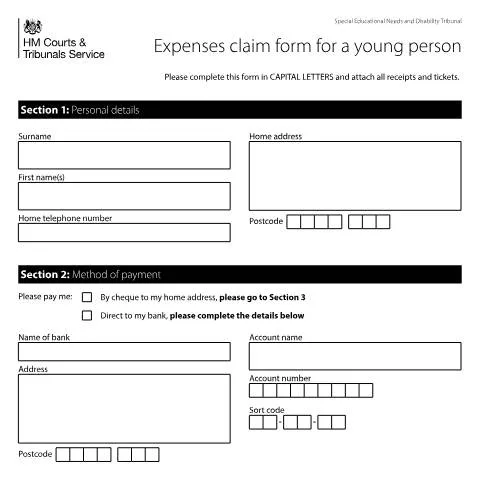
Form SEND15AYP is relatively straightforward, but attention to detail is essential in each section to ensure successful claims. Below is a breakdown of the form's core sections and crucial tips for completion.
Section 1: Personal Details
- Full Name: Ensure that the name matches the identity as recorded in the tribunal.
- Contact Information: Provide a reliable home telephone number and address, as this is where correspondence will be sent.
Section 2: Method of Payment
In this section, you’ll need to specify how you would like to receive your payment. There are two options:
- Cheque: This option requires you to confirm your home address.
- Direct Bank Transfer: You must provide your bank details, so accuracy is paramount.
Section 3: Hearing Details
Clearly state the date of the hearing and the appeal or claim number, ensuring that this information is correctly transcribed from tribunal documents. It’s beneficial to keep a copy of this section for your records.
Section 4: Travel Expenses
This is often the most complex section, as it involves calculating the total expenses incurred during travel to and from the tribunal. Here are some tips:
- Document Your Journey: Include the starting point, destination, and method of transport.
- Mileage Claims: If claiming for personal vehicle use, you must accurately calculate the distance travelled. The current rate is set at 23.8p per mile.
- Receipts Required: If any tickets or receipts are missing, you must provide a valid explanation. Lack of documentation can delay or invalidate a claim.
Section 5: Declaration
The declaration confirms the legitimacy of the claim. Ensure that all details are correct before signing and dating the form. Signing this declaration means you agree to the terms outlined, indicating no other claims for these expenses have been submitted.
Processing and Following Up on Your Claim
Once you submit Form SEND15AYP, it enters the administrative process managed by the HM Courts & Tribunals Service. Understanding this process is vital to ensure you stay informed about your claim status.
Processing Timing
Processing times can vary based on the volume of claims being handled. However, applicants can typically expect to receive a response within several weeks. If you do not hear back within this timeframe, it is advisable to follow up directly with the tribunal.
Contacting the Tribunal
For follow-up inquiries, use the contact details provided on the form:
- Telephone: 01325 289350
- Fax: 0870 739 4017
Being proactive in communicating with the tribunal can help clarify any uncertainties and expedite the resolution of your claim.
The Broader Picture: Form SEND15AYP in the Context of SEND Processes
Understanding how the SEND15AYP form fits into the wider framework of SEND processes is vital for families. It is not merely a standalone document but part of a continuum of legal and administrative efforts to secure educational rights for young people.
Interplay with Other Forms and Processes
Form SEND15AYP is one of several forms used within SEND tribunals. Other related forms may include:
- Form SEND1: Used for initial appeals.
- Form SEND2: For submitting additional evidence.
This interconnectedness means it is crucial to maintain organized records of all forms submitted, including any correspondence with the tribunal.
Conclusion: The Importance of a Thoughtful Approach
Completing the SEND15AYP requires not only attention to detail but also an understanding of the broader implications of every claim made. As young individuals navigate their rights within the education system, this form stands as a vital tool in overcoming financial barriers associated with seeking justice. By following the guidance outlined above and understanding the nuances of the process, young claimants can effectively advocate for their needs without the added stress of financial concerns.
Understanding the SEND15AYP Form: A Comprehensive Overview
The SEND15AYP form is specifically designed for young individuals seeking to claim expenses related to special educational needs and disabilities (SEND) in the UK. Understanding the intricacies of this form is essential for both applicants and guardians to navigate the claims process effectively. This form is part of the broader framework established by local authorities to support young people with SEND. The SEND15AYP is critical in ensuring that eligible young individuals are provided with necessary financial support to cover costs related to their education and associated needs.
The claim process begins with determining eligibility. Generally, young people aged 16 to 25 who have a Statement of Special Educational Needs or an Education, Health and Care (EHC) Plan may apply. This eligibility is verified through documentation that outlines the individual’s needs and the associated costs incurred. Guardians or caregivers are encouraged to assist young claimants in gathering the required documents, which may include invoices, receipts, or letters from educational establishments outlining the required expenses.
It’s important to note that the SEND15AYP form requires detailed information about the expenses to be claimed. Applicants must include the nature of the expense, the total amount, and how it directly relates to their educational needs. Common claims may include transportation costs to and from educational settings, special equipment necessary for learning (like computers or software), and additional tutoring or support services that exceed what the educational institution typically provides.
Once the form is filled out, it should be submitted to the relevant local authority for processing. Depending on the local council's policies and workload, the processing time may vary. Therefore, applicants are advised to submit their forms as early as possible to avoid delays that could impact their educational progress. An essential aspect of the SEND15AYP claims process is maintaining clear communication with the local authority, including following up on the status of the claim and providing any additional information requested.
Common Challenges and How to Overcome Them
Claiming expenses using the SEND15AYP form can pose several challenges, particularly for young people and their guardians who may be unfamiliar with the bureaucracy involved. Here are some common challenges and practical solutions to help navigate them.
- Insufficient Documentation: One of the most frequent issues encountered is the lack of proper documentation to support the claims. It’s crucial to keep all receipts and invoices related to any educational expenses, as these documents provide evidence of the incurred costs. Guardians should consider establishing a dedicated folder—either physical or digital—to store all relevant documents securely.
- Understanding Eligible Expenses: Applicants sometimes struggle to understand what constitutes an eligible expense. Expenses directly related to the educational needs of the young person, such as specialized teaching materials or transport costs for attending educational sessions, are typically eligible. Guardians should consult the local authority's website or contact them directly to clarify any uncertainties regarding eligible expenses.
- Time Constraints: The time it takes to complete and submit the SEND15AYP form can be daunting, particularly for those managing multiple responsibilities. To mitigate this, set a timeline for gathering documents and filling out the form. Dividing the process into manageable tasks and setting deadlines for each can help streamline the experience.
- Delays in Processing: After submission, delays can occur due to high volumes of requests or administrative backlogs. To deal with this, applicants are encouraged to maintain proactive communication with their local authority and to keep a record of when they submitted their claims. Following up periodically can help ensure that the claim is being processed in a timely manner.
Building a support network can also be beneficial. Involving educational professionals who understand the SEND framework can provide further insights on navigating the claims process. Schools, colleges, and local support groups often have resources or personnel to assist families and young people in completing the SEND15AYP form effectively.
Post-Claim Experience: What to Expect After Submission
Once the SEND15AYP form has been submitted, applicants enter a phase where they will await feedback from their local authority. Understanding what to expect during this phase can alleviate anxiety and help applicants prepare for the next steps.
The first step after submission is typically the acknowledgment of receipt of the claim. Most local authorities aim to respond within a specific timeframe, often around 10 to 15 working days. However, this varies depending on the local council, and during busy periods, it might take longer. After the claim has been acknowledged, the local authority will review the submitted documents to determine the eligibility of the claimed expenses.
If further information or clarification is needed, the local authority may reach out to the applicant or their guardians. This process can sometimes be the cause of delays; therefore, it is essential to respond promptly to any requests to expedite the review process.
Once the claim has been assessed, applicants will receive a decision. If approved, the local authority will outline the amount that will be reimbursed and any conditions attached to the claim (e.g., specific expenses that are fully covered and any that may have been partially approved). It’s essential to review this decision carefully and ensure that it aligns with the expenses outlined in the initial claim.
In instances where a claim is denied, the local authority is required to provide a reason for the decision. Understanding the rationale behind a denial is crucial, as it offers insight into either missing documentation or misunderstandings regarding eligible expenses. Applicants always have the right to appeal such decisions. The appeal process involves submitting a request for reconsideration of the claim, alongside any additional documentation that may support the case.
Ultimately, staying informed and engaged throughout the post-claim process is essential. This not only ensures that applicants receive the support they require but also fosters a positive relationship with the local authority, which can be beneficial for future claims or support requests.