Navigating the PA3 Woodland Management Plan Application: Your Gateway to Forestry Funding
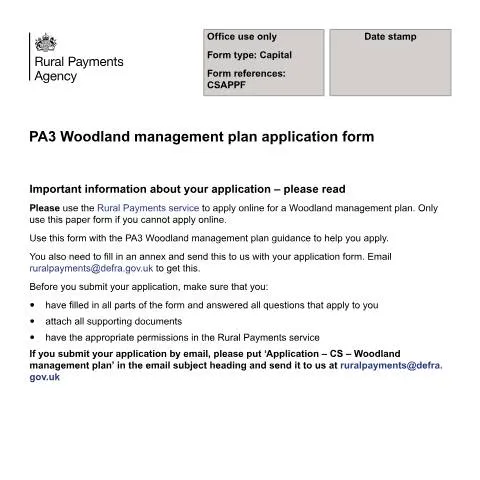
Woodland owners across England seeking financial support for their forestry management activities must engage with the Rural Payments Agency's PA3 Woodland Management Plan application process. This capital grant scheme represents a significant opportunity for landowners to access funding whilst contributing to England's environmental objectives, yet the application pathway demands careful navigation through both digital and paper-based channels.
The PA3 application sits within the broader Countryside Stewardship framework, specifically targeting woodland areas that require structured management plans to enhance their environmental value. Unlike standard agricultural grants, this scheme recognises the unique challenges facing woodland proprietors who must balance commercial forestry interests with conservation objectives over extended timeframes.
What distinguishes the PA3 from other Rural Payments Agency offerings is its focus on comprehensive woodland management planning rather than simple land use changes. Applicants aren't merely seeking permission for tree planting or felling; they're committing to multi-year management strategies that align with national forestry policy whilst meeting stringent environmental criteria.
Understanding Management Control: The Foundation of Your Application
The PA3 application hinges on demonstrating management control over woodland areas—a requirement that extends far beyond simple ownership documentation. The Rural Payments Agency requires applicants to possess decision-making authority over land management practices for the entire agreement duration, which can span multiple years depending on the management plan's scope.
This control requirement creates particular challenges for tenant farmers, partnership arrangements, and complex ownership structures. Where applicants lack complete management control, the Land Ownership and Control (LOC) form becomes essential. This supplementary document requires landlord countersignature, effectively binding property owners into the applicant's management commitments.
| Ownership Scenario | Required Documentation | Key Considerations |
|---|---|---|
| Sole ownership | PA3 form only | Full management authority assumed |
| Tenant farming | PA3 + LOC form | Landlord agreement essential |
| Partnership | PA3 + partnership documentation | All partners must consent |
| Limited company | PA3 + director authorisation | Board resolution may be required |
The LOC requirement frequently becomes a stumbling block for applicants who assume informal agreements with landowners suffice. The Rural Payments Agency's insistence on formal documentation reflects the scheme's long-term nature and the significant public investment involved in woodland management grants.
Digital-First Strategy: When Paper Applications Remain Necessary
The Rural Payments Agency's preference for online applications through the Rural Payments service reflects broader government digitisation initiatives, yet paper applications remain available for specific circumstances. Understanding when digital submission proves impossible—and when paper alternatives become essential—can determine application success.
The online Rural Payments service requires appropriate user permissions, which must be established before application submission. These permissions link directly to Single Business Identifier (SBI) numbers, creating potential complications for new applicants or those with complex business structures. Where permission issues cannot be resolved promptly, paper applications provide an essential fallback option.
Technical accessibility represents another legitimate reason for paper submission. Rural woodland areas often experience poor internet connectivity, making online form completion impractical. Similarly, applicants unfamiliar with digital government services may find paper applications more manageable, particularly given the PA3's complexity.
Email submission of paper applications requires specific subject line formatting: 'Application – CS – Woodland management plan' must appear exactly as specified. This formatting enables the Rural Payments Agency to process applications efficiently through their digital workflow systems, even when submitted via email rather than online portals.
VAT Registration Implications: Financial Planning for Woodland Projects
The PA3 application's VAT registration question carries significant implications for project financial planning, particularly affecting how applicants calculate grant amounts and project costs. Understanding VAT treatment within woodland management schemes requires careful consideration of both current registration status and future business development plans.
VAT-registered applicants can typically reclaim VAT through standard HMRC procedures, meaning grant calculations should exclude VAT elements. However, non-VAT registered applicants may include VAT in their grant claims, provided they demonstrate inability to reclaim VAT from HMRC through alternative means.
The requirement for independent accountant verification creates an additional compliance layer for non-VAT registered applicants. This verification must confirm the applicant's inability to reclaim VAT, rather than simply confirming non-registration status. The distinction proves crucial, as some non-registered businesses may still access VAT reclaim procedures under specific circumstances.
Woodland management projects often involve substantial capital expenditure on equipment, infrastructure, and professional services. VAT treatment can significantly impact project viability, making accurate assessment essential during application preparation. Applicants should consider whether VAT registration might become beneficial during the agreement period, potentially affecting their grant entitlement.
The Annex Requirement: Accessing Essential Supporting Documentation
The PA3 application process includes a mandatory annex that must accompany the main application form, yet this document requires separate request from the Rural Payments Agency. This two-stage documentation process reflects the scheme's complexity and the need for tailored supporting materials based on specific woodland management objectives.
Requesting the annex through [email protected] should occur early in the application preparation process, as the annex content directly influences how applicants complete the main PA3 form. The annex typically contains detailed technical requirements, mapping specifications, and management plan templates that inform the overall application strategy.
The annex requirement creates potential delays for applicants unaware of this additional documentation need. Unlike standard forms available for immediate download, the annex system ensures applicants receive current versions aligned with latest scheme requirements and policy updates.
Timing coordination between annex receipt and application submission becomes crucial, particularly given the scheme's competitive nature and potential funding rounds. Applicants should factor annex request time into their overall application timeline, avoiding last-minute submission pressures that could compromise application quality.
Rural Payments Service Integration: Digital Infrastructure Requirements
Successful PA3 applications depend on accurate Rural Payments service registration, with land details requiring complete verification before application submission. This integration reflects the government's drive toward unified digital agriculture services, yet creates dependencies that can affect application timing and success.
The Single Business Identifier (SBI) number serves as the primary link between PA3 applications and existing Rural Payments service records. Discrepancies between PA3 applications and registered land details can trigger application rejection or significant processing delays. Applicants must ensure their Rural Payments service records accurately reflect current land holdings, including recent acquisitions or boundary changes.
Land registration updates require submission through rural land change requests or RLE1 forms, which carry their own processing timeframes. These updates must be completed before PA3 submission, as applications referencing unregistered or incorrectly registered land parcels face automatic rejection.
The declaration requirements explicitly state that applicants must verify land registration accuracy "at the date of submitting this application." This temporal specification means applicants cannot rely on pending updates or assume registration corrections will be processed alongside PA3 applications.
Compliance Framework: Declarations, Undertakings, and Legal Obligations
The PA3 application's declaration and undertakings section establishes legally binding commitments extending throughout the agreement duration. These obligations create enforceable requirements that affect day-to-day woodland management practices, making careful review essential before application submission.
Access rights granted to Rural Payments Agency and Forestry Commission representatives extend beyond simple site visits. Applicants commit to providing access to "any land and any relevant records," creating broad inspection powers that may affect commercial operations and privacy expectations. These access rights continue throughout the agreement period, not merely during initial assessment phases.
The undertaking to "disclose all information relevant to this application" creates ongoing disclosure obligations that may extend beyond the original application scope. Subsequent changes in land use, ownership, or management practices may require proactive notification to maintain compliance with these undertakings.
Monitoring and evaluation participation requirements commit applicants to cooperate with research studies and economic assessments conducted by government agencies or their appointed representatives. These commitments can involve significant time investments and may affect commercial confidentiality considerations.
The warning regarding false statements carries serious consequences, including prosecution risks, agreement termination, payment recovery, and exclusion from other Defra schemes for up to two years. These penalties reflect the substantial public investment involved in woodland management grants and the government's commitment to preventing fraud within agricultural support schemes.
Submission Protocols: Paper, Email, and Processing Considerations
PA3 submission methods affect processing timelines and verification requirements, with signature obligations varying between paper and electronic submission routes. Understanding these procedural differences ensures applications meet formal requirements whilst optimising processing efficiency.
Paper applications require physical signatures from authorised representatives, with signature capacity clearly identified as sole trader, company director, or agent. This requirement creates authentication trails that support fraud prevention whilst establishing clear accountability for application commitments.
Email submissions eliminate signature requirements, relying instead on email authentication and Rural Payments service permissions for applicant verification. This streamlined approach reduces administrative burden whilst maintaining security through digital identity management systems.
The specified email address—[email protected]—serves multiple functions within the Rural Payments Agency's processing workflow. Using alternative email addresses or incorrect subject line formatting can result in processing delays or applications being misdirected within government systems.
Supporting document attachment requirements apply equally to both submission methods, though email submissions may face file size limitations that require document compression or multiple email submissions. Applicants should verify attachment completeness before submission, as incomplete applications typically face rejection rather than requests for additional documentation.
The Rural Payments Agency's processing systems integrate PA3 applications with broader Countryside Stewardship workflows, meaning submission timing can affect assessment scheduling and funding allocation. Understanding these systemic considerations helps applicants optimise their submission strategy for maximum success probability.
Managing Deadlines and Application Processing Times
Understanding the PA3 application timeline is crucial for effective woodland management planning. The Rural Payments Agency typically processes applications within 12-16 weeks from receipt, though this can extend during peak submission periods between January and March. Applications submitted after the annual scheme deadline—usually 15 May—may face delays or rejection for that payment year.
Your application enters a multi-stage review process upon submission. Initial administrative checks verify completeness and eligibility within 2-3 weeks. Technical assessment follows, where forestry specialists evaluate your management plan against scheme objectives. This stage often generates queries requiring clarification or additional documentation, potentially adding 4-6 weeks to processing time.
Payment schedules vary significantly depending on your chosen options. Annual management payments typically commence 6-8 months after approval, with the first instalment covering the period from your application's effective date. Capital grants for infrastructure improvements may require staged payments linked to completion milestones, necessitating progress reports and site inspections.
Monitor your application status through the Rural Payments service online portal. Email notifications alert you to status changes, but proactive checking prevents missed deadlines for responding to queries. Failure to respond within the specified timeframe—typically 20 working days—can result in application withdrawal.
Consider seasonal factors affecting processing. Applications involving protected species surveys must align with optimal survey windows. Bat surveys, for instance, are only valid between May and September, potentially delaying applications submitted outside this period. Similarly, bird nesting season restrictions may influence the timing of approved management activities.
Compliance Monitoring and Inspection Procedures
Once your PA3 application receives approval, you enter a compliance monitoring framework lasting throughout your agreement period. The Rural Payments Agency conducts both desk-based reviews and physical site inspections to verify adherence to your approved management plan.
Annual declaration submissions become mandatory, typically due by 15 May each year. These declarations confirm continued compliance with your management prescriptions and report any variations from planned activities. Late submissions incur automatic penalties, reducing your annual payments by 1% per day up to a maximum 20% reduction.
Site inspections occur on approximately 5% of agreements annually, selected through risk-based algorithms and random sampling. Inspectors arrive with 24-48 hours' notice, though emergency inspections following complaints or satellite imagery anomalies may occur without advance warning. Prepare for inspections by maintaining detailed management records, photographic evidence of activities, and receipts for any capital expenditure claimed.
Common compliance failures include exceeding permitted extraction volumes, conducting operations outside approved timeframes, and inadequate protection of designated features. Penalties range from payment reductions to full agreement termination with clawback of previous payments. Minor infractions typically result in warnings and corrective action requirements, while serious breaches can trigger criminal prosecution under forestry legislation.
Document all management activities meticulously. GPS-marked photographs proving compliance with buffer zones around water courses or archaeological features provide invaluable evidence during inspections. Maintain contractor certificates, machinery maintenance records, and chemical application logs where relevant to your management prescriptions.
Cross-compliance obligations extend beyond your specific PA3 commitments. Statutory Management Requirements covering areas like pesticide usage, nitrate pollution, and worker welfare apply regardless of your agreement terms. Breaches in these areas can affect payments across all your agri-environment schemes, not just the PA3 agreement.
Integration with Other Woodland Schemes and Designations
PA3 applications often interact with multiple regulatory frameworks and funding streams, requiring careful coordination to maximise benefits while avoiding conflicts. Understanding these interactions prevents inadvertent compliance breaches and identifies opportunities for enhanced funding.
Forestry Commission licensing requirements may overlap with your PA3 management activities. Felling licences become necessary for operations exceeding 5 cubic metres per quarter, with applications processed separately from your PA3 submission. Coordinate timing carefully—felling licence delays can prevent implementation of PA3-funded activities within required timeframes, risking payment penalties.
Environmental Impact Assessment regulations apply to afforestation projects exceeding 2 hectares or deforestation activities in sensitive areas. These assessments must conclude before PA3 implementation begins, potentially requiring 12-16 weeks additional planning time. Screening opinions from your local planning authority determine whether full assessments are necessary.
Sites with statutory designations face additional constraints affecting PA3 implementation. Special Areas of Conservation require Habitats Regulations Assessments for any management activities potentially affecting qualifying features. Site of Special Scientific Interest consent from Natural England becomes mandatory for operations within designated boundaries, with processing times extending 8-12 weeks beyond standard PA3 approval.
Tree Preservation Orders within your woodland require separate planning permission for any management activities affecting protected trees. Local planning authorities maintain TPO registers, though orders can be imposed at short notice following development pressures or public objections. Check current status before finalising PA3 management prescriptions to avoid costly plan revisions.
Integration with Countryside Stewardship schemes offers enhanced funding opportunities but requires careful boundary management. Overlapping areas must clearly delineate which scheme covers specific management activities to prevent double-funding allegations. Buffer zones between scheme areas may be necessary to satisfy both sets of requirements.
Carbon sequestration projects increasingly intersect with traditional woodland management. Woodland Carbon Code registration can complement PA3 funding, though additionality requirements may restrict management options. Carbon credits generated through PA3-funded activities typically belong to the landowner, but specific agreement terms should clarify ownership rights.
Ancient Woodland Inventory status affects available management options within PA3 schemes. Restoration of Plantation on Ancient Woodland Sites attracts premium funding rates but requires specialist ecological input to develop appropriate prescriptions. Archaeological features within ancient woodlands face additional protection requirements, potentially limiting mechanised operations and access routes.