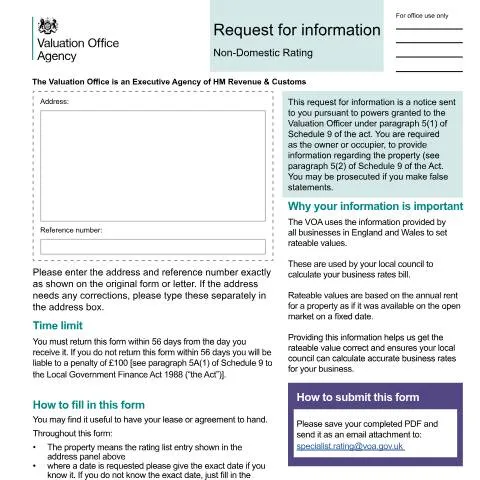
Understanding the VO 6060: A Crucial Step in Mineral Lease Compliance
In the intricate world of property management and taxation, the VO 6060 request for rental information: minerals (general) serves a vital function. This official document, utilized by the Valuation Office Agency (VOA), is essential for any individual or entity that owns or occupies non-domestic properties associated with mineral rights. Understanding its significance can prevent financial pitfalls and legal complications.
The Lifecycle of the VO 6060: From Notification to Submission
Upon receiving the VO 6060, the recipient must follow specified steps to ensure compliance. Here's a chronological breakdown of what to expect, starting from notification:
- Receipt of the Form: The VOA sends out this request under the authority of the Local Government Finance Act 1988. The recipient should read the document carefully to understand the required actions.
- Completion of the Form: Gather all necessary information, including lease agreements and any relevant documentation pertaining to the property.
- Submission Deadline: The completed form must be returned within 56 days to avoid a penalty of £100. Timeliness is crucial in maintaining compliance.
- Processing by the VOA: Once submitted, the VOA will use the information to assess the property’s rateable value, which affects local business rates.
- Follow-Up: Be prepared for any potential follow-up communications from the VOA if additional information is needed or if there are discrepancies in the submitted data.
Documenting Your Compliance: Key Information Sources
When completing the VO 6060, it is wise to consult various documents:
- Lease Agreements: These contain vital information regarding rental terms and any obligations you may have.
- Business Financial Records: They can provide insights into the economic aspects of the property occupation.
- Previous Correspondence: Any past communications with the VOA may offer guidance on completing the form accurately.
Dissecting the VO 6060: Essential Sections and Common Pitfalls
Each part of the VO 6060 is designed to collect specific information. Here’s a detailed look at significant sections and how to avoid common mistakes:
Part 1: Your Property and Connection
This section requests details about the property and the individual or business occupying it. Ensure you accurately fill the following:
- Property Use: Clearly define the property's primary usage (e.g., mining operations, landfill). Misclassification can lead to inaccuracies in rateable value.
- Occupant Information: List all occupants and their connection to the property with utmost clarity to avoid confusion.
- Landlord Details: If applicable, include the landlord's full name and address, especially if rent is paid through an agent. This is crucial for establishing formal connections.
Part 2: Financial Obligations
This part focuses on rental details. Pay special attention to:
- Current Rent: State the annual rent amount precisely; monthly figures should be converted to an annual sum to ensure compliance.
- Additional Charges: If applicable, delineate any extra costs associated with the property, like service charges or maintenance fees. Neglecting to include these can skew the calculation of the rateable value.
Potential Outcomes of Non-Compliance
Failure to submit the VO 6060 within the stipulated timeframe can lead to substantial ramifications:
- Financial Penalties: A £100 penalty is immediate if the form is not returned within 56 days. Continual non-compliance could lead to further investigations and larger penalties.
- Legal Consequences: The VOA may initiate enforcement actions against individuals who fail to comply with the request, potentially leading to court proceedings.
What Happens After Submission?
Once the form is submitted:
- Review Process: The VOA reviews the submitted information to ensure that the rateable value is accurate.
- Communication: Expect an official communication from the VOA regarding the outcome of the assessment. This may include a new rating list or confirmation of existing values.
- Objections: Should you disagree with the outcomes, there are procedures in place for appealing the VOA's decision. Familiarize yourself with these processes early on.
Contextualizing the VO 6060 in the Broader Regulatory Framework
The VO 6060 is more than just a standalone form; it plays a pivotal role within the broader regulatory context of business rates. Here’s how it fits in:
- Local Government Finance Act 1988: This legislation lays the groundwork for the non-domestic rating system, under which the VO 6060 is operated.
- Valuation Officer's Role: The VOA's mandate includes maintaining accurate rating lists, which directly rely on information gleaned from forms like the VO 6060.
- Data Protection Compliance: Given the sensitive nature of the information collected, adherence to the Data Protection Act 2018 and UK GDPR is essential. The VOA is committed to ensuring that all data is processed ethically and lawfully.
Implications for Business Owners
For business owners involved in non-domestic properties, understanding the implications of the VO 6060 is crucial:
- Financial Planning: Accurate rateable values inform business rates and thus influence financial forecasting and budgeting.
- Legal Responsibilities: Being informed about your legal obligations can prevent costly errors and enhance your business's reputation.
- Community Impact: The accuracy of your submitted data affects local council revenue, which in turn impacts public services and community infrastructure.
Real-Life Scenarios: Navigating the VO 6060
Consider a scenario where a mining company has received the VO 6060 request:
Fill in your form directly online
No printing: type your details into the boxes of the official form, tick, then download the PDF ready to send.
- 1Type into the form boxes
- 2Tick in one click
- 3Save and download the PDF
“Upon receiving the VO 6060, the finance manager of the company gathered all relevant documentation, including the leasing terms of the mining rights. They understood that any misrepresentation of the rental amount could not only lead to financial penalties but also impact the company's relationship with local authorities.”
This highlights the necessity of thorough documentation and understanding before completing the form.
Tips for Successful Completion of the VO 6060
Here are some practical tips to facilitate a smooth completion process:
- Gather Documentation: Collect all relevant documents, including leases and financial records, before starting.
- Stay Organized: Ensure that all information is current and accurately reported, as discrepancies can lead to delays.
- Seek Assistance if Needed: If uncertain about any details, consult with a professional who is familiar with property taxation and valuation.
Final Considerations: The Importance of Accuracy
Filing the VO 6060 accurately is not merely a bureaucratic exercise; it is critical for both regulatory compliance and financial strategy. Ensuring that the information provided is correct and comprehensive can significantly influence the financial health of a business operating in the non-domestic rental space.
Furthermore, as businesses evolve and circumstances change, staying informed about the requirements of the VO 6060 and other related documents is essential for sustained compliance and success. Proper understanding and proactive approach can aid in navigating the complexities of the UK's non-domestic rating system.