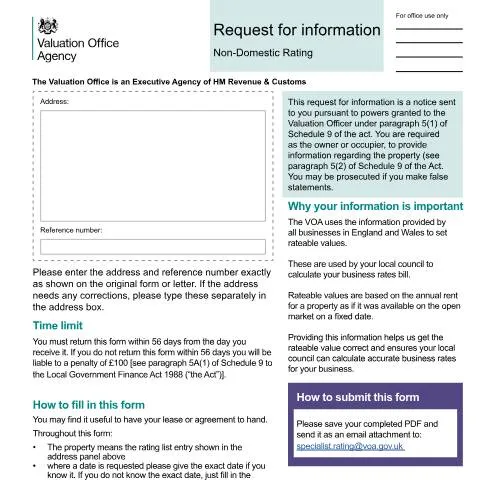
Understanding the Importance of VO 6057: A Key Document in Non-Domestic Rating
Navigating the complexities of the UK property and taxation system can be daunting, particularly for businesses operating in sectors like ferry transportation. The VO 6057 Request for Rental Information is a critical piece of documentation that plays a pivotal role in determining the rateable value of properties such as ferry terminals. This document, issued by the Valuation Office Agency (VOA), requires property owners or occupiers to provide essential rental data which directly influences business rates calculations.
The Chain of Events: When and Why You’ll Encounter VO 6057
The issuance of the VO 6057 typically follows a reassessment process or is triggered by a local council needing to verify the rateable value of properties in their jurisdiction. Here’s a breakdown of how this process works:
- Initial Assessment: The VOA periodically reviews properties to ensure that rateable values reflect current market conditions.
- Issuance of the VO 6057: If the VOA requires more information to complete this assessment, they will issue the VO 6057 to the property owner or occupier.
- Response Timeframe: Recipients must complete and return the VO 6057 within 56 days to avoid potential penalties.
- Analysis of Provided Data: Once the VOA receives the completed form, they analyze the data to adjust the rateable value as necessary.
- Final Decision: The new rateable value is then communicated to the local council, influencing future business rates calculations.
Who Needs to Fill Out This Form? Profiles and Responsibilities
Understanding who is responsible for completing the VO 6057 is crucial. Primarily, this document must be filled out by:
- Property Owners: Individuals or entities that own the ferry terminal.
- Occupiers: Those who occupy the property, which can include tenants or other forms of leaseholders.
- Management Companies: Companies that manage the property on behalf of the owners, particularly relevant in cases where the owner is not directly involved in the day-to-day operations.
Exceptions exist, such as when properties are unoccupied or under new ownership, in which case the incoming occupier may need to submit a new VO 6057 to facilitate the reassessment of the property's rateable value.
Special Circumstances: Handling Unique Situations
Various scenarios can complicate the completion of the VO 6057. Consider the following:
- New Ownership: If the property has recently changed hands, the new owner is responsible for submitting the VO 6057 as part of their obligations.
- Joint Tenancies: If more than one party occupies the property, it is essential that all parties are accurately represented on the form to avoid discrepancies.
- Ferry Terminal Specifics: Given the nature of ferry terminals, operators may need to provide specific traffic and financial data, making the accuracy of the information particularly critical.
The Vo 6057 Form: A Deep Dive into Its Structure and Content
The VO 6057 is structured to gather comprehensive information necessary for assessing the rateable value of the property accurately. Here’s a closer look at what the form entails:
Part A: Basic Property Information
This section requires basic details such as:
- Name of the current occupier.
- Relationship to the landlord if applicable.
- First date of occupation.
- Present use of the property (e.g., ferry terminal).
Part B: Traffic Data for the Last Three Years
Here, you'll need to provide detailed information about:
- Number of vehicle units and passengers over specified periods.
- Breakdown of traffic types, including cars, caravans, coaches, and more.
This data is crucial as it helps the VOA estimate the usage and, consequently, the value of the property.
Part C: Financial Performance Insights
This part delves into the financial aspects of the terminal, requiring:
- Gross receipts from all sources, excluding VAT.
- Total cost of sales and operating expenses, such as payroll costs, utilities, and maintenance.
A comprehensive understanding of your business's financial landscape is vital as it directly impacts rateable value calculations. The VOA uses this data to ensure that business rates reflect real operating conditions.
Demystifying the Submission Process: How to Return the VO 6057
Completing the VO 6057 is only half the battle; knowing how to submit it correctly is equally important. Follow these steps to ensure your form is received and processed without issues:
- Complete the Form: Ensure all sections are filled accurately, preferably using black ink or a typewriter.
- Review for Accuracy: Double-check the entered information against your lease agreements and records to avoid errors.
- Email Submission: Save your completed form and send it as a PDF attachment to [email protected].
- Document Retention: Keep a copy of the submitted form for your records and future reference.
Avoiding Penalties: Key Considerations
Failure to submit the VO 6057 within the stipulated 56-day timeframe may result in penalties. Understanding the implications of non-compliance is essential:
- Penalties can reach up to £100 for late submissions.
- A continued failure to provide requested information can lead to further fines or enforcement actions by the VOA.
- Establishing communication with the VOA if you anticipate difficulties in meeting deadlines is advisable.
After Submission: What Comes Next?
Once the VO 6057 is submitted, the process does not end there. Here’s what you can expect:
- Processing Time: The VOA will review your submission and may reach out for additional information if needed.
- Adjustment of Rateable Value: If necessary, the VOA will adjust the property’s rateable value based on the data provided, which can result in changes to business rates.
- Notification: A formal notification will be sent to inform you of any adjustments made or if further information is required.
The Wider Implications: Understanding Your Rights and Obligations
Completing the VO 6057 has broader implications for your business. Understanding your rights and obligations enhances your ability to manage your business efficiently:
- Right to Appeal: Should you disagree with the rateable value determined by the VOA, you have the right to appeal the decision, initiating a review process.
- Obligation to Provide Accurate Information: Ensuring that the data submitted is truthful is not just a legal requirement; it also helps maintain fair business rates.
- Impact on Local Services: The rateable value influences the local council's ability to fund services, affecting the community as a whole.
Conclusion: The Essential Role of Accurate Reporting
In essence, the VO 6057 is not just a bureaucratic formality; it serves a crucial function in the UK tax system that can significantly influence your ferry terminal's operational costs. By understanding the requirements and implications of this document, property owners and occupiers can navigate the complexities of non-domestic rating with confidence, ensuring that they contribute to a fair and equitable local taxation system.
Fill in your form directly online
No printing: type your details into the boxes of the official form, tick, then download the PDF ready to send.
- 1Type into the form boxes
- 2Tick in one click
- 3Save and download the PDF
Understanding the VO 6057 Form: What You Need to Know
The VO 6057 form is a crucial document when it comes to collecting rental information related to certain properties located near ferry terminals in the United Kingdom. This form is primarily used by the Valuation Office Agency (VOA) to gather details about rental values and occupancy rates, which can significantly influence council tax assessments and property valuations.
When filling out the VO 6057 form, you will be asked to provide comprehensive information about your rental property, including:
- Property Details: Address, type of property (e.g., residential, commercial), and its physical characteristics.
- Rental Information: The current rent being charged, any changes in rental rates over the last few years, and the tenancy duration.
- Occupancy Rates: How often the property is rented out, whether it is let on a short-term or long-term basis, and the demographic of tenants.
It is crucial to complete the VO 6057 accurately, as errors or omissions can lead to delays in processing your information or even penalties. Additionally, be aware that the information provided is subject to the provisions of the Data Protection Act 2018 and UK GDPR, which governs how personal data is processed and used by official agencies.
Navigating the Process: Submitting Your VO 6057 Form
Once you have completed the VO 6057 form, the next step is its submission. This can be done either through an online platform or by post, depending on the current guidelines set by the Valuation Office Agency. Here’s a step-by-step guide on how to submit your form:
- Check Submission Options: Visit the Valuation Office Agency’s official website to confirm whether they accept online submissions for the VO 6057 form or if paper submissions are preferred.
- Gather Necessary Documentation: Before submitting, ensure you have all supporting documents ready, including previous rental agreements, tenancy agreements, and any correspondence related to your property rentals.
- Complete the Form: Fill out the VO 6057 form meticulously, ensuring all fields are completed and all figures are accurate. Double-check for any typographical errors.
- Submit Your Form: If submitting online, follow the prompts to upload your form. For postal submissions, ensure you send it to the correct address as specified by the VOA.
- Keep a Copy: Always retain a copy of the submitted form and any supporting documents for your records. This can help if any queries arise later regarding the information provided.
After submission, the Valuation Office Agency will review your application. Be prepared for possible follow-up questions or requests for additional information to clarify any points regarding your rental property.
Impact of Ferry Terminal Proximity on Property Values and Rental Demand
The location of a property can significantly influence its rental value and demand. Properties near ferry terminals often see fluctuating rental rates due to various factors, including seasonal tourism, accessibility, and local amenities. Here’s a closer look at how ferry terminal proximity impacts property dynamics:
- Increased Demand During Peak Seasons: Properties located close to ferry terminals may experience higher rental demand during peak tourist seasons, leading landlords to increase rental prices accordingly. Understanding this trend can help landlords set competitive rates and maximize their rental income.
- Potential for Short-Term Rentals: Properties near ferry terminals may be more suitable for short-term rentals, catering to tourists and travelers. This can vary from serviced apartments to holiday homes, allowing property owners to diversify their rental strategies.
- Accessibility and Infrastructure: The efficiency of transport links and local infrastructure can greatly affect rental demand. Properties with easy access to ferry services may attract a higher number of renters, increasing their overall market value.
Additionally, properties in these areas may also need to consider local regulations related to short-term lettings, especially regarding safety standards and planning permissions. Staying informed about these regulations is vital for landlords to ensure compliance and avoid potential fines.