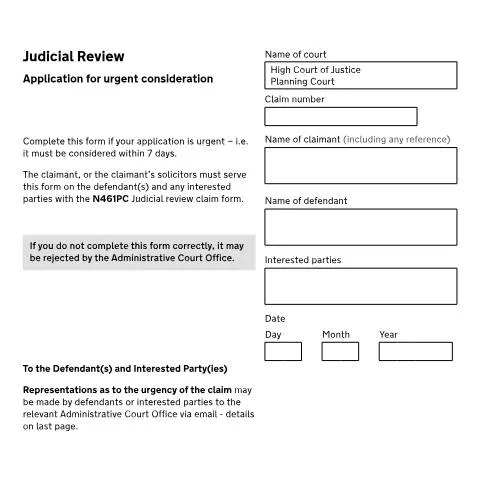
Understanding the Urgency: Navigating the N463PC Judicial Review Form
Picture a situation where a decision affecting your rights or interests is made, and you believe that it has been reached unlawfully or unfairly. In such instances, the Planning Court provides a pathway to seek redress through a judicial review. This is where the N463PC Form comes into play, acting as a crucial tool to expedite your application for urgent consideration. This form is specifically designed for situations requiring quick judicial intervention, facilitating necessary legal processes within a stringent timeframe of seven days.
The Role of the N463PC in Judicial Review Applications
The N463PC form serves a specific purpose within the wider context of judicial reviews. It allows claimants—or their legal representatives—to formally request that the court prioritise their case due to the urgency of the matter. The High Court of Justice, particularly the Planning Court, is the designated authority for reviewing such claims. By filling out this form, you effectively signal to the court that immediate attention is required.
Judicial reviews can emerge from various decisions made by public bodies, such as planning authorities, which significantly impact individuals or groups. The N463PC form, therefore, acts as a bridge between your grievance and the judicial system, ensuring that urgent matters do not languish in administrative processes.
Who Might Need to Use the N463PC Form?
The N463PC form is not for everyone; its use is specifically tailored for individuals or entities facing the immediate consequences of a decision that they believe warrants judicial scrutiny. Here are some typical profiles of potential claimants:
- Individuals: These could include residents affected by planning decisions that may infringe upon their rights or the use of their properties.
- Community Groups: Local organisations fighting against planning permissions that could harm the community interest.
- Businesses: Companies facing operational challenges due to planning decisions impacting their premises or activities.
- Local Authorities: In some cases, local authorities might need to challenge decisions made by higher-level governmental bodies.
Each claimant's circumstances can vary significantly, meaning that understanding your specific context is vital in determining whether the N463PC form is the appropriate course of action.
Completing the N463PC: Your Step-by-Step Guide
Completing the N463PC form is a task that demands precision and clarity. Below is a breakdown of the essential sections that must be filled out:
- Section 1: Reasons for Urgency. Clearly articulate why the application is urgent. This section sets the foundation for the necessity of expedited review.
- Section 2: Justification for Request for Urgent Consideration. Include the timeline when the urgency was first recognised and disclose any delays that may have occurred.
- Section 3: Proposed Timetable. Indicate how quickly you require the application to be considered, providing specific timeframes that reflect your urgency.
- Section 4: Grounds for Application. Provide a robust rationale for your claims, detailing both factual and legal bases for the interim order you seek.
- Section 5: Draft Order. This is a critical component where you must attach a draft order that the court is invited to consider. This should reflect your requested interim relief and articulate the directions sought from the court.
- Section 6: Service. Document how and when you served a copy of this application to the defendants and interested parties. Compliance with these requirements is crucial to ensure the process runs smoothly.
Completing the N463PC requires diligence; inaccuracies or omissions can lead to rejection by the Administrative Court Office. Therefore, ensuring that all facts are correctly presented is paramount.
Timelines and Urgency: The Critical Seven Days
The urgency of the N463PC application hinges on a critical seven-day timeline. If your application is deemed appropriate for urgent consideration, it will be processed swiftly, typically necessitating that decisions are rendered within seven days from the submission. This is a vital factor for claimants as it accentuates the need to act quickly and efficiently.
Should you miss this crucial timeline or fail to convincingly demonstrate the urgency of your situation, you may be required to submit your application using a different form, specifically the N244, which does not carry the same expedited consideration. The implications of this could be significant, particularly if your circumstances are time-sensitive.
What Happens After Submission of the N463PC Form?
Upon submission of the N463PC form alongside the requisite documents, the court will review your application. Here’s what typically follows:
- Initial Review: A judge will conduct an initial assessment to determine whether your application warrants an urgent hearing.
- Notification: If the judge decides that your case should be heard urgently, you will be notified of the date and time for the hearing.
- Legal Representation: At this point, having legal representation can significantly enhance the effectiveness of your presentation in court.
- Hearing: During the hearing, arguments will be presented regarding the merits of your claim. The judge will consider the grounds for urgency and the substantive legal issues raised.
- Judgment: Following the hearing, the court will issue a judgment, which may grant the interim relief sought or deny the application.
The outcome can have profound implications, either paving the way for a more thorough judicial review or potentially resulting in the dismissal of your claim.
Consequences of Errors: What to Avoid When Using the N463PC
Errors in the N463PC application can lead to significant repercussions. Here are some potential pitfalls to avoid:
- Incomplete Information: Omitting crucial details can lead to rejection of your application. Each section must be thoroughly completed to avoid delays.
- Insufficient Grounds for Urgency: Failing to convincingly argue why your application requires urgent consideration may result in the court treating your case with less priority.
- Incorrect Service: Not serving the application correctly to the defendants and relevant parties undermines the legal process and may jeopardise your claim.
- Poor Draft Order: Your attached draft order must be clear and actionable; anything less may confuse the court or lead to misinterpretation of your requests.
To mitigate these risks, consider engaging a solicitor with experience in public law and judicial reviews; their expertise can significantly enhance the quality of your application.
Further Steps: Beyond the N463PC Form
Once you have navigated the N463PC form and received a judgment, understanding the subsequent steps is crucial for effectively managing your case. Depending on the outcome, you may consider the following actions:
- Follow-Up Actions: If your urgent application is successful, prepare for the subsequent stages of the judicial review process, which may involve additional hearings and submissions.
- Appeals: Should your application be denied, you may have the option to appeal the decision. Understanding the grounds for appeal will be essential in determining your next steps.
- Legal Advice: Continuous legal support can help navigate the complexities of judicial review, ensuring adherence to procedural requirements and strategic decision-making.
- Public Engagement: If applicable, consider engaging with stakeholders or the media, especially if the case could impact public interest or community welfare.
Each of these steps requires careful consideration and strategic planning to ensure that your rights are protected and that you effectively leverage any opportunities presented through the judicial system.
Conclusion: The Importance of Preparation and Awareness
Utilising the N463PC form to request urgent consideration for a judicial review is an intricate process with significant implications. Preparation is key; ensuring that all documentation is correctly completed and submitted in a timely manner can greatly affect the outcome of your application. Understanding the underlying principles of urgency, compliance requirements, and potential follow-up actions will empower claimants to effectively navigate the judicial review landscape.
The right to challenge decisions made by public bodies is a fundamental aspect of the legal system, and the N463PC form serves as a vital gateway through which individuals can seek justice. With careful attention to detail and the right support, navigating this process can ultimately lead to a resolution that upholds your rights and interests.
Understanding the Grounds for Judicial Review in Planning Decisions
Before proceeding with Form N463PC, it is critical to understand the legal grounds upon which a judicial review can be sought in planning matters. Judicial review allows individuals or entities to challenge the lawfulness of decisions made by public bodies, including local planning authorities. The grounds for judicial review typically fall into three categories:
- Illegality: This occurs when a decision-maker has acted beyond their powers or has failed to follow the appropriate procedures as stipulated by law. For instance, if a planning authority neglects to consider material factors or fails to comply with statutory requirements, this may establish a basis for illegality.
- Procedural Unfairness: If the process leading to the decision was flawed, such as a lack of consultation or disregarding the rights of affected parties, it may lead to a successful claim on the grounds of procedural unfairness. This is particularly relevant in planning cases where local stakeholders are directly impacted.
- Wednesbury Unreasonableness: Named after the landmark case *Associated Provincial Picture Houses Ltd v Wednesbury Corporation*, this principle holds that a decision can be challenged if it is so unreasonable that no reasonable authority would ever consider it. This is a high threshold to meet but is a crucial aspect of judicial review claims.
When preparing your case to submit with Form N463PC, it’s essential to substantiate your claims with evidence to support these grounds. Legal precedents and specific details surrounding the planning decision in question will help fortify your assertion.
Preparing Your Evidence and Supporting Documentation
The strength of your judicial review application hinges on the quality and relevance of your supporting documents. Here are key steps to undertake in gathering the necessary evidence:
- Collect Relevant Documentation: Gather all documents related to the planning decision, including the original application, any consultation responses, and the final decision letter from the planning authority. This documentation serves as the foundational evidence for your claim.
- Record Public Consultation Outcomes: If the planning decision was made with public consultation, ensure you document the outcomes of any public meetings or discussions. Evidence showing failure to adequately consider public feedback can bolster claims of procedural unfairness.
- Highlight Legal Violations: Clearly outline any legal violations that occurred during the planning process. This could include failing to adhere to planning policies, environmental impact assessments, or local development frameworks. Citing specific sections of legislation will strengthen your application.
- Expert Opinions: In complex cases, consider obtaining expert opinions from professionals in planning and environmental law. Expert testimonies can provide additional credibility and insight into the shortcomings of the planning authority's decision-making process.
Remember to organize this evidence in a logical and coherent manner, as clarity will be crucial for the court's understanding of your application. Each piece of evidence should directly relate to the grounds for your judicial review.
The Impact of Time Limits on Your Application
Understanding the time constraints associated with judicial review applications is paramount. Under the *Civil Procedure Rules*, applicants generally have a strict deadline within which to submit their claim. When seeking to challenge a planning decision through the Planning Court, you must file your application promptly. Here’s what you need to know:
- Timeframe for Filing: You typically have six weeks from the date of the planning decision to initiate your application. Failure to meet this deadline can result in your claim being dismissed on procedural grounds.
- Urgent Applications: In cases that require urgent consideration—such as those involving immediate threats to public safety or significant public interest—courts may expedite the process. You can request an urgent hearing, but you must clearly justify the need for urgency in your application.
- Potential for Extensions: While the six-week rule is strict, under exceptional circumstances, you may seek an extension. However, this is typically reserved for cases where there are compelling reasons for delay, such as pending appeals or new evidence emerging post-decision.
It is advisable to keep a detailed record of all correspondence and steps taken after the planning decision to support any requests for extensions or urgent hearings. Being aware of these timelines will significantly influence the success of your judicial review.