The Critical Nature of the N468PC Form in Environmental Reviews
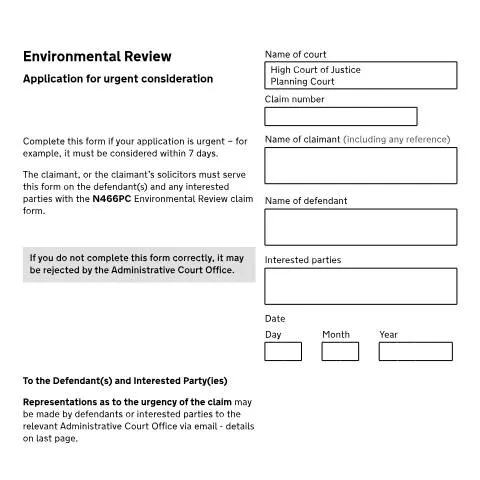
When environmental concerns clash with planning laws, the urgency of a situation can escalate rapidly. The N468PC Environmental Review - Application for Urgent Consideration plays a pivotal role in managing these pressing claims, setting the stage for timely judicial intervention. This form is designed for applicants who believe their cases require immediate attention, typically when a decision needs to be made within a week. Without completing this form correctly, your application may face rejection, delaying essential legal action.
Understanding the Framework: The Legal Backdrop of the N468PC
The N468PC form operates within a specific legal context that governs environmental reviews in the UK. This framework is essential for maintaining the delicate balance between development and environmental protection. Key legislation, such as the Environmental Impact Assessment Regulations and the Habitats Regulations, sets the stage for how environmental considerations must be integrated into planning decisions.
Furthermore, the procedure defined by the Planning Court ensures that urgent matters can be expedited, reflecting the pressing nature of environmental issues that may affect the public or natural resources. The ability to request urgent consideration underlines the judiciary's commitment to responding to high-stakes environmental challenges, often requiring swift evaluations to prevent irreversible harm.
Timelines: Navigating Dates and Deadlines
Understanding the calendar obligations attached to the N468PC form is crucial. The application for urgent consideration must be submitted when a claimant recognizes that immediate court action is necessary to prevent significant harm. Here’s a breakdown of key dates involved:
| Action | Timeframe |
|---|---|
| Identification of Urgency | As soon as the need arises |
| Submission of Form N468PC | Within 7 days of identifying urgency |
| Hearing Date | To be specified in the application |
In cases where a claimant fails to act promptly, the consequences can be dire. Delays can lead to irreversible damage to an environment or a community’s quality of life, underlining the form's significance.
Distinguishing the N468PC from Other Forms
Form N468PC is often confused with other court documents pertaining to planning and environmental reviews. It's important to clarify how this application stands apart:
- N466PC Environmental Review Claim Form: This is the initial application form for an environmental review, while N468PC is specifically for urgent requests.
- Form PCPF244: Used for applications that do not require urgent consideration, unlike N468PC which is time-sensitive.
- Different Jurisdictions: The N468PC is tailored for the Planning Court, whereas forms filed in other courts will follow different protocols.
Each form serves distinct purposes within the judicial system, and knowing which one to use can significantly affect the outcome of a case.
Breaking Down the N468PC: Section-by-Section Guide
The N468PC form comprises several sections, each demanding careful attention to detail. A breakdown of these sections ensures that claimants understand what information is required:
Section 1: Reasons for Urgency
This section requires claimants to clearly articulate why their case cannot wait. It’s essential to justify the urgency, as this sets the tone for the entire application. Typical reasons may include:
- Imminent environmental damage
- Significant financial implications for the claimant
- Threats to public health or safety
Section 2: Justification for Request
This section extends on the urgency, asking for specific dates and times when the urgency was first noted, as well as any reasons for delays in making the application. A comprehensive response is vital to establish the legitimacy of the request.
Section 3: Proposed Timetable
Here, claimants must specify how quickly they want their application to be considered. Options range from 2 hours to several days, and applicants should be realistic about what is achievable.
Section 4: Grounds for Application
This section focuses on the legal or factual grounds that support the need for an interim order. Claimants should provide a detailed yet concise explanation of the legal basis for their claim, grounding it in relevant statutes or precedents.
Section 5: Interim Relief and Draft Order
Claimants must attach a draft order outlining what kind of interim relief they are seeking. This order is crucial for the court to understand the specific actions the claimant wishes the court to consider.
Section 6: Service of Application
Finally, claimants must detail how the application was served to defendants and interested parties. Appropriate service is crucial for ensuring that all parties are aware of the claims and have an opportunity to respond.
What Happens After Submission?
Upon submitting the N468PC form, claimants should anticipate several key steps:
- The court will review the application to determine if the request qualifies for urgent consideration.
- If approved, a hearing date will be set, typically within the specified timeframe indicated on the form.
- Defendants and interested parties are allowed to make representations regarding the urgency of the claim, which may influence the court's decision.
- The outcome will depend on the evidence provided and the arguments presented during the hearing.
Failure to provide complete and accurate information in any section can result in delays or rejection of the application entirely, underscoring the importance of meticulous preparation.
Addressing Common Pitfalls and Challenges
Completing the N468PC form is no simple task; several pitfalls can derail an application:
- Insufficient Justification: Claimants may underestimate the level of detail required to demonstrate urgency, which can lead to rejection.
- Incorrect Service of Documents: Not serving all relevant parties properly can invalidate the application.
- Omitted Draft Orders: Failing to attach a necessary draft order is a common error that can cause significant delays.
In instances where an application is rejected, the claimant must act quickly to rectify the issues outlined by the court, potentially resubmitting the form or providing additional documentation to support their case.
What to Do in the Wake of a Refusal
Receiving a refusal can be disheartening. However, it doesn't signify the end of the road. Here’s how to respond effectively:
- Review the court's feedback carefully to understand the reasons for the rejection.
- If possible, rectify the identified issues with your application and resubmit as quickly as you can.
- Consider seeking legal advice if your case involves complex legal arguments or if you're unsure how to proceed.
The N468PC form is a crucial tool for claimants seeking urgent judicial review in environmental matters. By understanding its detailed requirements and adhering to strict timelines, applicants can navigate the planning court system effectively, ensuring that their crucial claims receive the attention they deserve.
Understanding the Urgency Criteria in Environmental Reviews
When applying for urgent consideration of an environmental review through Form N468PC in the Planning Court, it is imperative to understand the specific criteria that the court evaluates when determining whether the urgency is justified. The Planning Court has established several benchmarks that applicants must meet to qualify for expedited proceedings. These include the potential for irreparable harm, the time sensitivity of the environmental issues at stake, and the public interest involved.
Irreparable harm refers to situations where the environmental impact of a decision could not be adequately redressed through normal judicial review processes later on. For example, if an industrial project threatens a unique ecosystem or a community's health, demonstrating this potential harm is vital. Moreover, the time sensitivity could relate to seasonal factors, such as endangered wildlife breeding seasons, or impending deadlines for project completion that could preclude effective judicial review.
Applicants should gather substantial evidence demonstrating these points, including expert testimonies, environmental assessments, and community impact reports. Additionally, it is crucial to articulate clearly how the matter aligns with the public interest. The court tends to favour applications that demonstrate a broader societal impact beyond individual grievances, thus strengthening the case for urgent consideration.
The Role of Legal Representation in Environmental Reviews
Legal representation plays a critical role in navigating the complexities of environmental reviews, especially when seeking urgent consideration. Engaging an experienced legal professional familiar with environmental law and the processes of the Planning Court can significantly increase the likelihood of a successful application. Such legal representatives can assist in meticulously preparing the application, ensuring that it meets all procedural requirements and effectively articulates the urgency of the situation.
Moreover, they can provide guidance on the appropriate use of case law and precedents, which can bolster the argument for urgent consideration. Successful legal professionals in this domain will often draw from a wealth of knowledge about previous cases, demonstrating how similar circumstances resulted in expedited hearings. This not only builds credibility but also helps the court see the urgency from a legal context that extends beyond the applicant's immediate concerns.
Furthermore, legal representation can facilitate communication with other involved parties, such as local communities, environmental organizations, or public authorities, creating a robust case built on collaborative evidence. This approach is particularly important in environmental reviews, where various stakeholders often have conflicting interests. Effective legal counsel can help harmonize these interests into a clear, compelling narrative that underscores the necessity of urgent consideration.
Post-Application Process: Next Steps Following Submission of Form N468PC
After submitting Form N468PC for urgent consideration, applicants must prepare for the subsequent steps in the process. The Planning Court typically reviews the application promptly, often within a few days. At this stage, the court may schedule a hearing to evaluate the merits of the urgency claim and decide whether to grant an expedited hearing.
In the interim, applicants should be ready to respond to any queries or requests for additional information from the court. This may include further documentation, clarification of specific points in the application, or additional evidence supporting claims of urgency. Timeliness is crucial; applicants must respond quickly to maintain the momentum of their case.
Should the court grant urgent consideration, the applicant will receive notification of the hearing date, and it is essential to prepare thoroughly for this appearance. This preparation can involve gathering additional evidence, rehearsing the presentation of the case, and potentially coordinating with expert witnesses who can provide testimony at the hearing. The applicant must be prepared to address both the urgency of the claim and the underlying environmental concerns comprehensively.
Conversely, if the court denies the application for urgent consideration, the applicant may still pursue the standard judicial review process. It's vital to consult legal counsel to explore the implications of the court's decision and strategize on the best course of action moving forward.