Navigating the N242 Notice of Payment into Court: Your Step-by-Step Guide
In the realm of UK civil litigation, every detail matters, particularly when it comes to payment processes. One crucial document within this framework is the N242 Notice of Payment into Court. This guide explores its intricacies, uses, and best practices, ensuring that users are well-informed and prepared.
Understanding the N242: A Critical Component of Court Orders
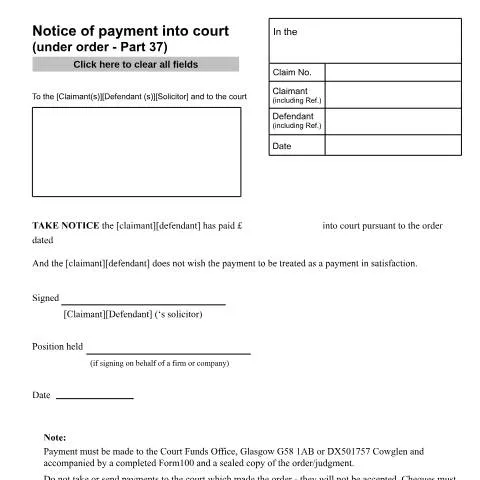
The N242 serves a specific function in the judicial process, particularly under Part 37 of the Civil Procedure Rules. It is primarily utilized when a party is required to make a payment into court following a court order. Understanding its precise role can help parties navigate their legal obligations more efficiently.
What the N242 Contains
- Claim Details: Information about the claim number, claimant, and defendant involved in the case.
- Payment Information: A declaration that payment has been made, including the amount and the date of the order.
- Instructions for Further Action: Guidance on following up with the court and the other party involved.
Recognizing these components can simplify the process of ensuring compliance with court requirements and avoiding potential pitfalls.
Step-by-Step: Utilizing the N242 in Practice
When faced with the need to submit a payment under a court order, the flow of actions can be broken down into clear stages. Here’s how to properly utilise the N242:
- Verify the Order: Ensure that you have a clear understanding of the court order that necessitated the payment.
- Prepare the Payment: Payments must be directed to the Court Funds Office in Glasgow, accompanied by Form 100 and a sealed copy of the order.
- Complete the N242: Accurately fill out the N242, detailing the amount paid and relevant claim information.
- Send Notifications: Submit a copy of the N242 to the opposing party and the court simultaneously with your payment.
By following these steps meticulously, parties can ensure that their payment is processed correctly and acknowledged officially.
Key Terms and Definitions: Navigate with Confidence
To effectively use the N242, it is essential to be familiar with certain legal terminology. Here’s a brief overview of relevant terms:
| Term | Definition |
|---|---|
| Claimant | The person or entity bringing a claim before the court. |
| Defendant | The party against whom the claim is made. |
| Court Funds Office | The office responsible for managing court funds and payments. |
| Form 100 | A supplementary form required when making payments into court. |
Grasping these definitions will aid in not only filling out the N242 but also in understanding the broader context of court processes.
Avoiding Common Misinterpretations Along the Way
While the N242 appears straightforward, misunderstandings can arise. Here are some common misinterpretations that can lead to errors:
- Confusing Payment Types: Distinguishing between a payment into court under Part 37 versus a payment in satisfaction (which would require Form N242A) is crucial.
- Incorrect Payment Address: Payments must not be sent to the court where the order was made; ensure you direct them to the Court Funds Office.
- Neglecting to Notify: Failing to send copies of the N242 to the other side can result in disputes over whether proper protocol was followed.
Awareness of these pitfalls can help mitigate risks associated with the payment process.
Who Benefits Most from the N242 and When?
The N242 is indispensable for various stakeholders in the legal system, particularly:
- Claimants: Those who need to comply with a court's payment order to advance their case.
- Defendants: Individuals or entities responding to claims who may need to make disbursements as dictated by court orders.
- Solicitors: Legal representatives who must ensure proper procedure for their clients to avoid complications.
In all these scenarios, the N242 allows for clarity and formality in the financial aspects of litigation, fostering a smoother path through the judicial process.
Practical Tips for Submitting Your N242 Notice
To ensure the N242 is submitted correctly and efficiently, consider these practical tips:
- Check Deadlines: Pay attention to any deadlines associated with the payment order to avoid penalties.
- Document Everything: Keep copies of all documents submitted, including the N242 and any related correspondence.
- Confirm Receipt: After sending the payment and notice, confirm with the court that your payment has been received and processed.
Implementing these practices can enhance the likelihood of a successful transaction and reduce anxiety associated with procedural compliance.
Conclusion: The N242 as a Tool for Effective Legal Navigation
Utilising the N242 Notice of Payment into Court is a vital aspect of managing financial obligations in civil litigation. By understanding its components, following procedural steps diligently, and avoiding common pitfalls, parties can effectively navigate their court-related payments. This knowledge equips individuals and legal professionals alike to approach their cases with confidence, ensuring adherence to judicial mandates while averting unnecessary complications.
Understanding the Context of Form N242 in Civil Proceedings
The use of Form N242, the Notice of Payment into Court, is primarily associated with civil litigation processes in the UK. It is especially pertinent for cases where a party wishes to offer a sum of money to be held in court as a form of security or settlement. This form is governed by the Civil Procedure Rules (CPR), which set out the procedures for civil cases in England and Wales. The relevant rules concerning Form N242 can be found in Part 37 of the CPR, which deals with offers to settle and the related processes.
Filing Form N242 ensures that the money is formally recorded and can affect the outcome of the case, especially concerning costs. When one party pays money into court, it can serve as an indication of their willingness to settle the dispute without further litigation. This gesture can sometimes lead to an agreement between the parties or influence a judge's decision during trial. Understanding the implications of this payment is crucial for litigants, particularly in terms of cost liability and case management.
The Procedural Steps for Filing Form N242
Filing Form N242 involves several procedural steps that must be followed meticulously to ensure compliance with the Civil Procedure Rules. Initially, the party intending to make a payment into court should prepare the form correctly. This involves outlining the amount being paid, the details of the proceedings, and any related orders from the court. The payment should be made through the appropriate channels, typically via bank transfer or through the court's payment facilities, which may vary depending on the court's location.
Once the payment has been made, it’s crucial to file the completed Form N242 with the court. This is done by submitting the form either in person at the court office or through an electronic filing system, where applicable. The form must be completed accurately, with all relevant details filled in – including the case number and names of the parties involved. If the form is not filled out correctly, it may lead to delays or even rejection of the payment, which could significantly impact the case.
After submission, the court will issue a receipt for the payment, and it’s advisable to keep this as proof for future reference. The receipt will confirm that the payment has been properly recorded, which is essential in avoiding disputes about whether or not a payment was made. Furthermore, if the payment into court is made with a view to settling the claim, parties should be aware of how this may affect potential costs and implications in the event of a trial.
Implications and Consequences of Paying Money into Court
Paying money into court using Form N242 can have various implications for both parties involved in the litigation. Firstly, once the money is accepted by the court, it may be deemed as an offer to settle the claim. If the claimant subsequently decides to reject the settlement, they must be prepared to justify their decision, especially if the case proceeds to trial. The court may consider the rejected offer when determining who pays the costs at the conclusion of the case.
Additionally, should the paying party be successful in their case, the court may order the claimant to pay costs from the date the payment was made. Conversely, if the claimant secures a higher amount than what was paid into court, they will potentially be entitled to their costs, which emphasizes the importance of carefully evaluating the risks and benefits of making such a payment.
Furthermore, the implications extend beyond just the potential financial outcomes. Making a payment into court can also influence the dynamics of negotiations between the parties. It may encourage the claimant to reconsider their position and potentially lead to a more amicable resolution. Nevertheless, it’s vital for parties to assess the specifics of their case and consult with legal professionals to ensure that any payments made into court align with their overall litigation strategy.