Understanding the Essentials of the Notice of a Court Order under Section 176A(5)
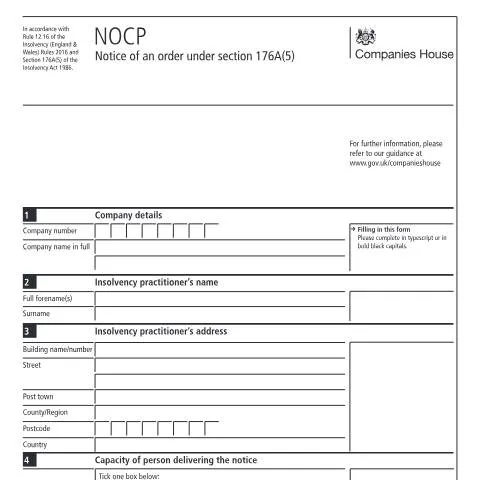
The Notice of a Court Order under Section 176A(5) is a critical document for professionals involved in insolvency proceedings. This notice is governed by Rule 12.16 of the Insolvency (England & Wales) Rules 2016 and falls within the framework of the Insolvency Act 1986. It primarily serves to inform Companies House of a court order related to a company’s insolvency status, which can affect a wide range of stakeholders, including creditors, shareholders, and company directors.
Key Concepts and Terminology
To effectively navigate the complexities of this document, it's essential to grasp some foundational concepts:
- Insolvency Practitioner: This individual is responsible for managing the insolvency process and must be qualified to deliver notices to Companies House.
- Court Order: A legal decree issued by a judge that may affect the rights and obligations of the company under insolvency circumstances.
- Section 176A(5): This section of the Insolvency Act 1986 outlines the requirements for notifying Companies House about certain court orders.
The Scope and Content of the Notice
The notice itself is concise yet comprehensive in its requirements. It must include specific details surrounding the court order, which are vital for maintaining an accurate public record. Notably, this document must be submitted in typescript or in bold black capitals to ensure clarity. The following details are necessary:
- Company Information: Full company name and registration number need to be accurately stated to match Companies House records.
- Insolvency Practitioner Details: Full name, address, and contact information of the insolvency practitioner must be provided.
- Court Order Date: The precise date of the court order must be specified.
- Signature: The notice must be signed and dated by the insolvency practitioner, confirming that the information provided is accurate.
Common Misinterpretations and Pitfalls
Understanding the implications of submitting this notice is crucial, yet misinterpretations can lead to significant setbacks. Here are some common pitfalls:
- Incomplete Information: Omitting essential details, such as the court order date or company registration number, can result in the notice being rejected by Companies House.
- Incorrect Format: Failing to adhere to the prescribed format (i.e., typescript or bold black capitals) may lead to complications in processing.
- Misunderstanding the Requirements: Not all court orders necessitate this notice. It is important to determine whether the order falls under Section 176A(5) specifically.
Step-by-Step Guidance for Submitting the Notice
To ensure a smooth submission process, follow these steps meticulously:
- Gather Required Information: Collect all necessary details regarding the company and the court order.
- Complete the Notice Form: Fill out the notice in typescript or bold black capitals, ensuring that all information is correct and complete.
- Attach the Court Order: A copy of the court order must be attached to the notice; failure to do so will result in a rejection.
- Sign and Date: Ensure the insolvency practitioner signs and dates the notice on the form.
- Submit to Companies House: The completed notice, along with attachments, can be sent to any Companies House address, although the most efficient option is:
Address Details The Registrar of Companies Companies House, Crown Way, Cardiff, Wales, CF14 3UZ
Identifying the Target Audience and Situational Necessity
This document is essential for several key audiences, particularly within the insolvency sector:
- Insolvency Practitioners: Their role necessitates the timely submission of such notices to ensure compliance with legal obligations.
- Company Directors: Understanding the implications of a court order is vital for directors, as it may impact their responsibilities and liabilities.
- Creditors: Creditors must be informed of any court orders that could affect their claims against the company.
Situationally, this notice becomes indispensable when a company is undergoing formal insolvency processes, particularly in scenarios involving administration, liquidation, or receivership.
Practical Implications of Filing the Notice
Filing the Notice of a Court Order under Section 176A(5) holds significant implications for the company involved:
- Public Record: The information becomes part of the public record, accessible by any interested parties, which can influence the company’s reputation and dealings.
- Legal Consequences: Non-compliance could lead to legal repercussions for the insolvency practitioner or company directors if they fail to adhere to statutory obligations.
- Impact on Stakeholders: Stakeholders, including employees and creditors, may need to adjust their expectations based on the new insolvency information reflected in the records.
Maintaining Compliance and Best Practices
To avoid complications and ensure adherence to legal requirements when filing the notice, consider the following best practices:
- Stay Informed: Keep up-to-date with changes in insolvency law and Companies House requirements to ensure compliance.
- Double-Check Details: Before submission, verify all details against Companies House records to avoid discrepancies.
- Seek Professional Advice: If in doubt, consult with a legal professional or an experienced insolvency practitioner.
Additional Resources and Guidance
For more comprehensive insights or updates on insolvency practices, professionals are encouraged to consult the official Companies House website, which offers detailed guidance notes and contact information for direct inquiries. This is particularly useful if there are questions regarding specific court orders or other related processes. Accessing these resources ensures that stakeholders remain informed about their rights and responsibilities throughout the insolvency process.
Understanding the Court Order Process under Section 176A
Section 176A of the Insolvency Act 1986 primarily deals with the power of the court to give notice of a court order made in relation to a company undergoing insolvency proceedings. This section is particularly relevant for insolvency practitioners, creditors, and stakeholders involved in such proceedings. To give notice under this section, one must first comprehend the conditions that warrant a court order and the implications that follow.
Typically, a court order is sought when there is a need to protect the rights of creditors after a company has entered administration or liquidation. The court may order that specific actions be taken to safeguard the interests of creditors, which can include the recovery of assets, the protection of certain financial interests, or the appointment of a specific individual to oversee the process.
To initiate this process, an application must be made to the court, which includes adequate supporting documentation that illustrates the necessity of the order. It is crucial to ensure that all relevant parties are notified of the proceedings and the implications of the court order, which is where the notice comes into play. Understanding the nuances of this legal framework is essential for those involved in insolvency matters to ensure compliance and protect their interests.
Practical Steps for Issuing Notice under Section 176A
Once a court order has been granted under Section 176A, the next step is to provide notice to all concerned parties. This process is central to maintaining transparency and ensuring that all stakeholders are informed of the court's decisions. Here are the specific steps that should be followed:
- Prepare the Notice: The notice must clearly outline the details of the court order, including the date it was issued, the nature of the order, and any specific instructions for compliance. The language used should be straightforward, avoiding legal jargon where possible.
- Identify Recipients: It’s vital to determine all the parties affected by the court order. This typically includes creditors, shareholders, the company's directors, and any other stakeholders involved in the insolvency process. Ensure that the list is up-to-date to avoid missing any critical parties.
- Choose the Method of Delivery: Notices can be delivered via various methods, including postal service, email, or through a public announcement in the appropriate legal publications. The method needs to be secure and reliable, ensuring that all parties receive the information in a timely manner.
- Maintain Records: Keep comprehensive records of all notices sent, including dates, methods of delivery, and any acknowledgments received. This documentation can be crucial if there are any disputes regarding the notice in the future.
By following these steps, you ensure compliance with the legal requirements set forth in the Insolvency Act and uphold the principles of good governance during proceedings.
The Role of Stakeholders in the Notification Process
Stakeholders play a pivotal role in the court order notification process under Section 176A. Their responsibilities extend beyond mere notification; they also encompass active participation in ensuring that the process is conducted efficiently and in accordance with legal standards. Here’s an overview of the various stakeholder roles:
- Insolvency Practitioners: These professionals are often tasked with managing the insolvency process and ensuring that the court order is implemented as intended. They are responsible for preparing the notice and ensuring that it is distributed according to legal requirements.
- Creditors: As the primary beneficiaries of the court order, creditors must remain vigilant and informed about the proceedings. They have the right to receive timely notifications and should actively engage with the insolvency practitioner to understand their rights and potential recoveries.
- Company Directors: Directors have a duty to ensure that the company complies with the court order and that stakeholders are kept informed. Their involvement is crucial, as failure to adhere to the order can lead to legal complications and further liabilities.
- Legal Advisers: Legal counsel can offer guidance on the intricacies of the notification process and ensure that all legal obligations are met. They can help in drafting the notice and advising on the best practices for communicating with stakeholders.
Understanding the roles and responsibilities of each stakeholder not only enhances the effectiveness of the notification process but also fosters a collaborative approach to managing insolvency proceedings.