Understanding the Absent Owner Application: Form T362
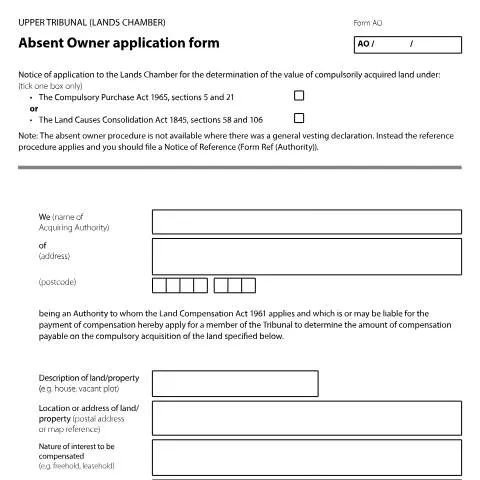
Filing an application under the Absent Owner Application Form T362 can seem daunting, yet it is a crucial step for acquiring authorities navigating the complexities of compulsory land acquisitions. This form allows authorities to claim compensation when owners cannot be traced, ensuring that land acquisition processes remain fair and legally binding. Understanding the specific processes and obligations tied to this form is paramount for both acquiring authorities and their legal representatives.
Deciphering the Compulsory Purchase Context
Compulsory purchase orders (CPOs) enable authorities to acquire land without the consent of the owner for public benefits such as infrastructure development. However, the absence of landowners can complicate this process. Form T362 serves as a lifeline, allowing authorities to proceed with compensation processes when the property owner cannot be located.
In the context of CPOs, when an acquiring authority seeks to determine the compensation payable for land acquired, the absence of a property owner necessitates a formal application to the Lands Chamber. This application is not merely procedural; it has implications for the determination of compensation, which directly affects the rights of the landowners and the authority involved.
Key Legislation Governing Form T362
The use of Form T362 hinges on several legislative frameworks:
- The Compulsory Purchase Act 1965: This act outlines the fundamental principles of compulsory purchasing and determines how compensation is assessed.
- The Land Clauses Consolidation Act 1845: This legislation further strengthens the provisions related to compensation for land acquisition.
- The Land Compensation Act 1961: It plays a crucial role in defining the compensation framework relevant to the land being acquired.
Understanding these legal foundations is essential for accurately completing Form T362 and ensuring compliance with statutory requirements.
The Nuts and Bolts of Completing Form T362
Filling out Form T362 requires attention to detail and a clear understanding of the information needed. Each section is pivotal and can influence the outcome of the application.
Step-by-Step Breakdown of the Form
Identification of the Acquiring Authority: Clearly state the name and address of the acquiring authority.
Details of the Land/Property:
- Description: Offer a concise but descriptive overview of the land (e.g., whether it's residential, commercial, or agricultural).
- Location: Include the postal address and any relevant map references.
- Nature of Interest: Indicate whether the land is freehold or leasehold.
Compulsory Purchase Order Reference: Specify the legislative basis under which the CPO is being issued. This is crucial for legal clarity.
Steps Taken to Locate the Owner: This section requires a comprehensive record of efforts made to contact the owner. Include dates, methods (e.g., mail, public notices), and outcomes. The more thorough this account, the better.
Confirmation of Payment: Acknowledge the payment of the requisite fees, including the determination fee and any valuation expenses. These fees can vary depending on whether the land is within Greater London or elsewhere.
What to Attach to Your Application
In addition to the completed form, several attachments are mandatory:
- Two copies of the application: Always provide duplicates to ensure that the tribunal has sufficient documentation for processing.
- Notice to Treat and Notice of Entry: These documents outline the authority's intention and the date the authority entered the land.
- Notice of Claim (if applicable): This should be included if there have been any claims filed in relation to the property.
- Plans and Maps: Providing clear visual representations of the land in question can facilitate the tribunal's understanding.
- List of Owner Tracing Efforts: A detailed account of the steps taken to locate the owner, as mentioned earlier.
This comprehensive approach not only demonstrates due diligence but also expedites the processing of your application.
Submission Channels and Their Importance
Once Form T362 is completed, selecting the appropriate submission channel is crucial for effective processing.
Digital vs. Paper Submission
E-Filing Service: Authorities are encouraged to utilize the E-Filing service for submitting documents. This method allows for real-time tracking and efficient communication with the tribunal. It is especially recommended for professional representatives.
Paper Submission: For those opting for traditional methods, documents must be sent to:
The Registrar
Upper Tribunal (Lands Chamber)
5th Floor, Rolls Building
7 Rolls Building, Fetter Lane
London EC4A 1NL
When sending documents via post, ensure they are well-organised and comply with all stipulated requirements.
Tracking Your Application: A Practical Guide
Once an application is submitted, understanding how to monitor its progress is essential.
What to Expect Post-Submission
After filing, you will receive confirmation from the tribunal that they have received your application. This confirmation often includes a reference number, which should be used in all subsequent communications.
You can regularly check the status of your application through the E-Filing service or by contacting the tribunal directly via telephone or email. Here is a summary of the contact information:
- Telephone: 020 7612 9710
- Email: [email protected]
Responding to Refusals and Handling Errors
Not every application will proceed without a hitch. Understanding how to address refusals or issues with your submission can save significant time and resources.
Common Issues and Their Resolutions
Incomplete Applications: If your application lacks necessary attachments or is incomplete, the tribunal may refuse to process it. In such cases, you may receive a notice explaining the deficiencies. Promptly addressing these issues and resubmitting can help mitigate delays.
Disputes Over Compensation: If the owner appears after the application is filed or disputes arise regarding the compensation amount, the process may require additional hearings. Being prepared with corroborating evidence and documentation will bolster your case.
Missing Documentation: If you are informed of missing documents after submission, ensure that you respond swiftly. The tribunal may allow for amendments, but this can prolong the process.
Consequences of Non-compliance
Filing Form T362 with accuracy is essential not only for compliance but also for ethical considerations in land acquisition. Failing to meet the requirements can lead to significant consequences:
- Legal Ramifications: Non-compliance with statutory obligations may result in legal challenges from landowners or community groups.
- Financial Repercussions: Inaccuracies and delays can lead to increased costs, both for the acquiring authority and potentially for taxpayers.
Maintaining thorough records and adhering strictly to the guidelines mitigates these risks.
Final Thoughts: Navigating the Absent Owner Process
Completing the Absent Owner Application Form T362 is not merely a bureaucratic exercise; it is a critical step in ensuring that the principles of fairness and accountability are upheld in compulsory land acquisitions. By engaging in thorough preparation, forming a clear understanding of legislative frameworks, and ensuring meticulous compliance, acquiring authorities can navigate the complexities of this process effectively.
For those embarking on this journey, the stakes are high, not just in terms of financial compensation but also in maintaining public trust and legal integrity within the framework of compulsory purchases. Understanding the nuances of Form T362 equips authorities to operate confidently and competently in the realm of land acquisition.
Understanding the Absent Owner Application Form (Form T362)
The Absent Owner Application Form, designated as Form T362, is a crucial document for individuals who are unable to manage their tax affairs due to their absence from the UK. This form enables absent owners to appoint a representative who can handle their tax responsibilities on their behalf. It is particularly relevant for those residing overseas or who are temporarily away from their primary residence.
To apply using Form T362, it is essential to provide comprehensive personal information, including your National Insurance number and tax identification details. The form requires the full name and contact information of the appointed representative, ensuring that HM Revenue and Customs (HMRC) can liaise effectively with your chosen representative regarding your tax matters.
Individuals should pay close attention to the specific criteria that define 'absence' in the context of UK tax law. Typically, an absence could refer to situations such as overseas employment, travel for education, or extended visits to family. Moreover, it is important to understand what constitutes a permanent or temporary absence, as this can have implications on residency status and tax obligations. The nuances of residency are vital; for example, if you are considered a non-resident, your tax obligations may differ significantly compared to being classified as a resident.
Common Pitfalls and How to Avoid Them When Completing Form T362
Filling out Form T362 may seem straightforward, yet several common pitfalls can lead to delays or complications in processing. First and foremost, ensure that all sections of the form are completed accurately. Errors or omissions could result in HMRC rejecting your application or requesting further information, thus extending the time it takes to resolve your tax affairs.
Another frequent issue arises from misunderstanding the definition of 'absence' as it pertains to your tax status. Many applicants incorrectly assume that a short trip abroad qualifies as an absence. However, if you are away for a limited time while maintaining your UK residence, you may still be subject to UK tax laws and responsibilities.
Furthermore, it is vital to keep HMRC updated if your circumstances change while your application is being processed. For instance, if your planned absence is extended or your representative changes, these details must be communicated promptly to avoid complications. Failure to do this can result in tax liabilities being incorrectly handled or even penalties for non-compliance.
Additionally, it is wise to maintain copies of all submitted documents and correspondence with HMRC. This practice not only provides a record of your application but also serves as proof of your diligent efforts in managing your tax commitments responsibly.
The Role of Your Appointed Representative
When submitting Form T362, understanding the role of your appointed representative is paramount. This individual or entity will act on your behalf for matters related to tax assessments, payments, and correspondence with HMRC. Appointing a representative requires careful consideration; you should ensure that they are knowledgeable about UK tax law and familiar with your specific tax situation.
Your representative can take various actions, including making tax returns, dealing with inquiries from HMRC, and managing payment obligations. It is crucial that they have all the necessary authorizations to represent you fully. This means that you should discuss and agree on the extent of their authority and responsibilities before submitting the form.
Moreover, the choice of a representative may depend on the complexity of your tax circumstances. If your financial situation is straightforward, a close family member may suffice. Conversely, if your affairs are more complex—such as involving multiple income streams or assets—consider appointing a professional accountant or tax advisor with expertise in international taxation.
It’s also important to periodically review your choice of representative. If they are unable to perform their duties, or if your circumstances change, you may need to appoint someone new. This change should be promptly communicated to HMRC, ideally through a new Form T362, ensuring that there are no gaps in representation during your absence.