Navigating the SE CH02: Transforming Corporate Governance in UK Societas
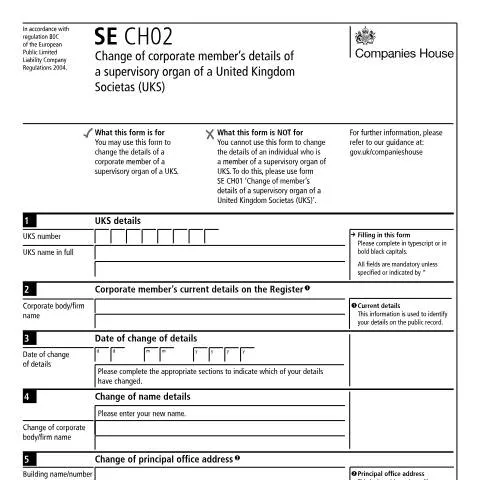
The Change of corporate member’s details of a supervisory organ of a United Kingdom Societas (SE CH02) is an essential document for organizations registered as UK Societas. Its importance cannot be overstated in the context of corporate compliance and governance, particularly when it comes to maintaining accurate records with Companies House. This document facilitates the formal update of corporate details, ensuring that businesses can operate transparently and in accordance with legal obligations.
Understanding the Role of SE CH02 in Corporate Governance
A UK Societas (UKS) operates under a structured governance framework, and the supervisory organ plays a crucial role in its operations. The SE CH02 form is pivotal for establishing clarity and accountability within this framework. It allows for the amendment of details regarding corporate members, supporting ongoing compliance with regulations.
The Need for Change
Changes in corporate membership may arise due to various reasons, including:
- Merger or acquisition activities
- Changes in corporate structure
- Legal adjustments affecting the governing law of the entity
Each of these scenarios necessitates an update to the corporate member’s information in the supervisory organ, and the SE CH02 is the instrument for achieving this.
Who is Responsible for Filing the SE CH02?
The responsibility for submitting the SE CH02 typically lies with the corporate secretary or another authorized individual within the company's management structure, such as a member of the management organ, liquidator, or receiver. This ensures that changes are communicated effectively to Companies House, maintaining the integrity of the public register.
Identifying the Relevant Parties
It's essential to distinguish who exactly can file this form:
- Members of the management organ of the UKS
- Liquidators overseeing the company's affairs
- Administrators managing company administration
Each of these parties has the authority to make necessary updates, reflecting changes that impact corporate governance.
A Step-by-Step Walkthrough of the Filing Process
Completing the SE CH02 involves several steps, from gathering the required details to submitting the form. Here’s a chronological guide to streamline the process:
1. Preparation Phase
Gather all necessary documentation. You will need:
- The current details of the corporate member
- The new details to be updated
- The date of the change
- Any documentation that supports the change, such as resolutions or agreements
2. Completing the Form
The SE CH02 requires careful attention to detail. Each section must be filled out correctly:
- UKS details: This includes the full name and registration number of the UKS.
- Corporate Member’s Current Details: Ensure that the existing information matches what is recorded in the public register.
- Change of Details: Accurately fill in the new name and any changes to the governing law or registration details.
3. Authentication
It's important to authenticate the form. This includes providing your printed name in the designated section. Do not include a signature, as it is not required.
4. Submission Channels
Decide on your submission method. There are different channels available:
- Online Submission: If available, this is often the quickest route, allowing for immediate processing.
- Postal Submission: Ensure you send the form to the correct address provided by Companies House to avoid delays.
Exploring the Sections of the SE CH02 Form
Each section of the SE CH02 form serves a distinct purpose, and understanding them can help prevent common pitfalls:
Corporate Member Details
This section must reflect the exact information currently held on the public register. Accuracy is critical; discrepancies could lead to the form being returned. Here’s what you should include:
- Name of the corporate member
- Principal office address (a physical location, not a PO Box)
Change of Name Details
If the corporate member's name is changing, provide the new name in this section. Failure to do so correctly may lead to confusion and processing delays.
Change of Legal Details
This section captures any shifts in the legal form of corporate membership. It's crucial to detail any changes to the register where the corporate member is entered, which includes:
- New registration number
- State of registration
After Submission: What to Expect
Once the SE CH02 form is submitted, the processing timeline can vary based on the method of submission:
- Online submissions are typically processed faster, often within a few working days.
- Postal submissions may take longer, possibly several weeks. Ensure that your mailing address is correct to avoid complications.
Tracking Your Submission
To ensure your changes have been recorded, you can check the public register on the Companies House website. This visibility allows you to confirm that your submitted changes reflect accurately.
Overcoming Challenges: Special Cases and Exceptions
There are specific scenarios that may complicate the filing of the SE CH02 form. Understanding these exceptions can save you time and prevent frustration:
International Corporate Members
For corporate members based outside the UK, additional considerations come into play. You may need to provide proof of the corporate member's registration in its home country, as regulations may differ depending on the jurisdiction.
Multiple Changes at Once
If you are making multiple changes, remember that each new detail must be clearly documented, and the reasons for these changes must be well-articulated to avoid confusion during processing.
Urgency in Submission
In cases where changes are time-sensitive, consider utilizing the online submission method for immediate processing. Properly justifying the urgency may also expedite the handling of your submission.
Best Practices for Completing the SE CH02
To enhance your chances of a smooth submission and avoid common pitfalls, keep the following best practices in mind:
Accuracy is Paramount
Ensure that every detail matches the public records precisely. Discrepancies can lead to form rejection and unnecessary delays.
Clarity in Communication
When detailing changes, use clear and direct language. Avoid jargon that might confuse the reviewing personnel.
Consider Professional Assistance
If you're unsure about any aspect of the process, consulting with a corporate services professional may provide the guidance needed to navigate complexities effectively.
Resources for Further Support
For additional information, including guidance notes and submission instructions, visiting the official Companies House website is highly recommended. They offer comprehensive resources to assist with various corporate procedural matters, ensuring that all businesses can adhere to compliance requirements effectively.
Filing the SE CH02 is not just a regulatory requirement; it is an opportunity to reinforce the governance structure within your organization. By handling this process with diligence and care, you contribute to the sustained integrity and transparency of your corporate body.
Understanding the Role of a Corporate Member in the Supervisory Organ
A corporate member in the context of a supervisory organ of a UK societas plays a vital role in the governance and oversight of a business. Unlike individual members, corporate members are entities themselves, often representing other companies or organizations. This structure allows for a more diverse range of expertise and perspectives in decision-making processes. The role of corporate members may involve participating in meetings, voting on significant matters, and ensuring compliance with legal and regulatory frameworks.
Corporate members are particularly important in sectors where collective decision-making and regulatory compliance are paramount. For example, in financial services or healthcare, having corporate members can help ensure accountability and transparency. It is essential for these entities to maintain accurate records and update their details promptly, especially when there are significant changes in the member's structure, ownership, or legal standing. This not only helps maintain compliance with the Companies Act 2006 but also aids in fostering trust among stakeholders.
Process and Documentation Required for Changing Corporate Member Details
Changing the details of a corporate member in the supervisory organ involves a structured process. To initiate this change, the existing member must complete specific documentation, often referred to as the 'Notification of Change of Corporate Member' form. This form typically requires detailed information about the corporate member, including its name, registration number, and the nature of the change being reported.
It is crucial to gather the following documents before submitting the form:
- Certificate of Incorporation: This document proves the legal existence of the corporate member. It is necessary to confirm that the entity is compliant with UK laws.
- Board Resolution: A formal resolution from the board of directors of the corporate member is often required. This document should outline the decision to change the member's details and authorize the action.
- Proof of Identity: Depending on the situation, you may also need to provide identity verification for the individuals representing the corporate member.
Once the necessary documents are collated, they must be submitted to the relevant supervisory organ or regulatory authority overseeing the societas. It is advisable to keep copies of all submissions for your records, as this can help in future audits or compliance checks.
Implications of Failing to Update Corporate Member Details
Neglecting to update corporate member details in a timely manner can have several significant implications. First and foremost, it can lead to non-compliance with the Companies Act 2006, resulting in fines or penalties for the societas. Regulatory bodies such as Companies House take these matters seriously, and failing to adhere to reporting requirements can trigger investigations into the entity’s practices.
Moreover, inaccurate or outdated records can lead to governance issues within the supervisory organ. For instance, if the wrong corporate member is listed, decisions made may be invalidated, creating operational disruptions. Stakeholders, particularly investors, may lose confidence in the organization’s governance, potentially impacting funding opportunities and market reputation.
Furthermore, in cases where corporate members are involved in regulatory activities or compliance measures, outdated details could impede the supervisory organ's ability to fulfill its obligations. This can have cascading effects, such as delayed reporting or scrutiny from regulatory bodies, which could further complicate an already challenging compliance landscape.