Understanding the SE TM01 Form: Navigating Your Duties as a Member of a UK Societas
When it comes to managing a UK Societas (UKS), understanding the nuances of various administrative processes is crucial. One such process is the termination of a member’s appointment within the supervisory organ of a UKS. The SE TM01 form is the official documentation required to execute this process. Let's explore the intricacies of this form, outlining who should submit it, when, and how to effectively complete and submit it.
Who Needs to Engage with the SE TM01 Form?
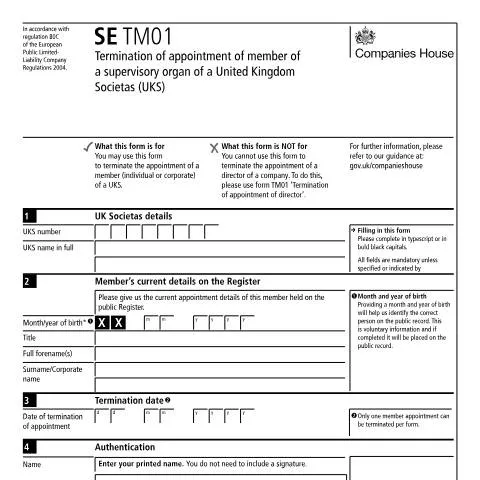
The SE TM01 form is specifically designed for the termination of a member of a supervisory organ of a UK Societas. This can include either individual members or corporate entities that are designated within the UKS structure. However, it is crucial to note that this form is not intended for the termination of directors; for such appointments, you must use the TM01 form, entitled "Termination of appointment of director."
Identifying Your Role
As a member of the supervisory organ, your responsibilities include overseeing the company’s management. Considering the legal implications of your position, understanding when and how to utilize the SE TM01 form is significant to ensure compliance with the law. If you find yourself needing to terminate an appointment, the SE TM01 is the pathway to formalize that change.
Chronology of the Termination Process
Understanding the sequence of events leading to the successful termination of a member’s appointment is paramount. Below is a streamlined process that outlines the key steps involved:
- Trigger for Termination: This can arise from various circumstances, such as the member stepping down voluntarily, breaches of conduct, or restructuring within the supervisory organ.
- Preparation of SE TM01 Form: Gather all necessary details regarding the member whose appointment is to be terminated. This includes their full name, title, and the exact date of termination.
- Filling Out the Form: Complete the SE TM01 either electronically or in clear, bold black capital letters. Ensure accuracy to prevent delays.
- Submission: Submit the SE TM01 form to Companies House, either electronically or via post.
- Confirmation of Termination: Await confirmation from Companies House regarding the processing of your form.
Completing the SE TM01 Form: Key Considerations
The completion of the SE TM01 form requires attention to detail. Below are the essential elements that must be included in the form:
- UK Societas Name and Number: Ensure that the name and registration number align with the public record.
- Member’s Details: Fill in the full name of the member being terminated, along with their title.
- Date of Termination: Clearly indicate the date when the termination is effective.
- Authentication: The form must be authenticated by a member of the management organ or other authorized personnel.
Completing the Member’s Information
Providing comprehensive information on the member can aid Companies House in processing the form efficiently. While including the month and year of birth is voluntary, it enhances identification accuracy.
Submitting the SE TM01 Form: Your Options
Deciding how to submit your SE TM01 form can influence the efficiency of the termination process. Here are your options:
Online Submission
Opting for online submission via the Companies House portal can expedite processing times significantly. This method is favored for its convenience and speed.
Postal Submission
If you select postal submission, ensure the form is sent to the correct address, as indicated on the Companies House website. This method may take longer, so factor in potential delays when planning your timeline.
Post-Submission: What Comes Next?
After submitting your SE TM01 form, several outcomes are possible:
- Successful Processing: You will receive confirmation from Companies House, indicating that the termination has been successfully recorded.
- Request for Further Information: If there are discrepancies or missing information, Companies House may contact you for clarification.
- Possible Rejection: In cases where the form is incorrectly completed or does not meet the necessary criteria, it may be returned for rectification.
Tracking Your Submission
To track the status of your submission, you can reach out to Companies House directly, providing them with your submission details. This proactive step can clarify any uncertainties regarding your form’s status.
Handling Issues: What If Something Goes Wrong?
Should your SE TM01 submission face complications, knowing how to address these issues is vital. Here’s what to remember:
- Follow-Up: If you encounter a delay, contact Companies House to inquire about your form’s status.
- Correcting Errors: If you receive a notification about incomplete or incorrect information, promptly rectify the form and resubmit it.
- Understanding Rejections: If your form is rejected, carefully review the reasons provided and ensure that all requirements are met before resubmitting.
The Timelines Involved: Key Dates to Keep in Mind
Understanding the timeline associated with the SE TM01 form can help you plan effectively. Here is a general outline of important dates:
| Event | Timing |
|---|---|
| Submission of SE TM01 Form | As soon as the decision to terminate is made |
| Processing by Companies House | Typically within a few working days, but can take longer |
| Confirmation of Termination | Upon successful processing of the form |
Final Thoughts on the SE TM01 Process
Being proactive and informed when dealing with the SE TM01 form can greatly enhance your experience in terminating a member's appointment in a UK Societas. The obligation to maintain precise records and adhere to administrative protocols not only reflects well on the governance of your company but also ensures compliance with UK regulations. As you navigate this process, remember the importance of detail, accuracy, and promptness to facilitate a seamless termination process.
Understanding the TM01 Form: A Deep Dive
The TM01 form is crucial for any company in the UK seeking to terminate the appointment of a member of its supervisory organ, typically a director or associated officer. When dealing with the TM01, it's essential to understand not only the form itself but also the context and legal implications surrounding the appointment and removal of a supervisory member. Companies House dictates that this form must be filed to maintain accurate records, which are vital for corporate transparency.
When completing the TM01, one must include the full name of the individual whose appointment is being terminated, along with their designation and the date on which the termination takes effect. Additionally, the form must be signed by an authorized individual in the company, typically another director or the company secretary. It's also important to note that if the member being removed is a designated member of a Limited Liability Partnership (LLP), a different form, the LLAD, is used instead.
Another critical aspect of the TM01 form is the requirement for it to be submitted within 14 days of the termination date. Failure to comply could result in penalties, including a fine or a warning from Companies House. Moreover, ensuring the accuracy of the information is paramount, as any discrepancies might lead to legal complications or challenges from the individual whose appointment is being terminated.
Common Scenarios for Using the TM01 Form
There are various scenarios under which a TM01 form may need to be utilized, each carrying its own set of considerations:
- Voluntary Resignation: When a member of the supervisory organ decides to resign, the TM01 form must be filled out to officially document the end of their tenure. The individual resigning may need to provide a resignation letter, which should also be kept on file for company records.
- Removal by the Board: If the board of directors collectively decides to remove a member due to performance issues or a breach of company policy, they must convene a formal meeting to discuss and record the decision. This must be documented in the minutes of the meeting, and the TM01 should reflect the date of this decision.
- Death or Incapacity: In unfortunate circumstances where a member passes away or becomes incapacitated, the TM01 form still needs to be submitted with the relevant date of termination. In such cases, it is advisable to attach a copy of the death certificate or a medical report to support the application.
- Change in Business Structure: If a company decides to change its structure, for example converting from a private limited company to a public limited company, this may necessitate changes in the supervisory organ. The TM01 would be needed to formalize these changes and ensure compliance with the updated legal structure.
Legal Implications and Responsibilities Post-TM01 Submission
After the TM01 form has been filed, there are ongoing responsibilities for both the company and the individual whose appointment has been terminated. For the company, ensuring that all statutory obligations are met is paramount. This includes updating any internal records and notifying other relevant parties, such as stakeholders or regulatory bodies, about the change in the supervisory organ.
Furthermore, the outgoing member may have certain obligations, depending on their role. If they held sensitive information or trade secrets, they may still be bound by confidentiality agreements even after their departure. It's advisable for companies to have clear exit procedures in place to handle such matters, ensuring that all parties are aware of their rights and responsibilities post-termination.
In terms of legal recourse, if the terminated member disputes their removal, they may seek legal advice and potentially pursue a case for wrongful dismissal, depending on the circumstances of their termination. Companies should therefore ensure that any decision regarding termination is well-documented and justified to defend against potential claims.
Finally, it’s worth highlighting that failing to file the TM01 correctly or within the stipulated period can attract penalties. Companies House may impose fines, and persistent non-compliance can lead to the company being struck off the register. Therefore, it is always advisable to consult with legal professionals or business advisors when navigating the complexities of corporate governance.