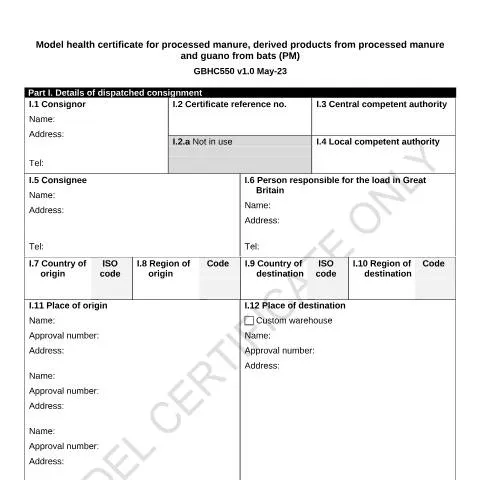
Understanding the Model Health Certificates for Processed Manure
The issuance of model health certificates for processed manure, derived products from processed manure, and bat guano is a critical component of the agricultural and environmental landscape in the UK. These certificates, governed by the Department for Environment, Food & Rural Affairs (DEFRA) and executed by official veterinarians, ensure compliance with health standards for animal and plant health. This document not only validates the safety and quality of the manure but also plays a pivotal role in regulatory compliance during transport and use.
The Legal Significance of the Model Health Certificate
This certificate serves as official documentation affirming that the processed manure meets the necessary health and safety regulations under UK law. Specifically, it confirms that the product:
- Derives from a recognized source, such as an approved plant for processing.
- Has been subjected to stringent treatment processes to eliminate harmful pathogens.
- Complies with GB regulations, which include specific temperature controls and packaging standards.
Legal Framework and Compliance
The model health certificate is rooted in various legislative frameworks, including the Animal Health Act and associated regulations. It is essential for import and transit of animal-derived products, ensuring that they are free from diseases like Salmonella and E. coli. Each certificate carries a unique reference number, providing traceability and accountability throughout the supply chain.
Obtaining a Model Health Certificate
The process of obtaining a model health certificate for processed manure is systematic and requires adherence to several steps. Here’s a detailed breakdown of the procedure:
- Application Submission: The first step involves the submission of an application to the relevant local authority or official veterinarian. This application must include details of the manure source, processing plant, and intended use.
- Inspection of Processing Facilities: Before certification can occur, the processing facility must undergo a thorough inspection by a certified official veterinarian. They will assess compliance with hygiene and safety standards.
- Sample Testing: Samples of the processed manure may be subjected to laboratory testing to ensure they meet health standards, particularly with respect to pathogen levels.
- Certification Issuance: Once all requirements are satisfied, the official veterinarian will issue the model health certificate, detailing the specifics of the batch, including quantities and processing conditions.
Documentation Required for the Application
Applicants should prepare to present the following documentation:
- Proof of establishment approval (approval numbers).
- Details of the processing methods used.
- Laboratory test results (if applicable).
- Transport documentation for the consignment.
Eligibility Criteria for Certificate Applicants
Not everyone can apply for a model health certificate. Eligibility is restricted to certain entities and individuals who meet specific criteria:
| Eligibility Criteria | Description |
|---|---|
| Registered Establishment | The processing plant must be registered with the competent authority and meet all regulatory requirements. |
| Qualified Personnel | Only certified official veterinarians or inspectors can issue the health certificates. |
| Compliance with Processing Standards | Applicants must demonstrate that their processing methods adhere to UK hygiene and health standards. |
Validity and Renewal of the Model Health Certificate
The model health certificate has a limited shelf life, typically aligned with the specific batch of processed manure. The validity period is contingent upon the conditions under which the manure was processed and stored. Here are key points regarding its validity:
- Expiration: The certificate generally expires once the product has been delivered to its destination or after a specified time frame, typically established by the issuing authority.
- Renewal Process: For continued use, a new application must be submitted, including any updated documentation and possibly additional inspections.
- Conditions for Withdrawal: Authorities reserve the right to revoke the certificate if compliance issues are identified during inspections or if health standards are compromised.
Practical Uses and Requirements from Regulatory Bodies
Model health certificates for processed manure are not merely bureaucratic formalities; they serve as crucial documents in various contexts. Here are some practical applications:
- Transport of Manure: The certificate is imperative for transporting processed manure across borders, particularly into and out of Great Britain. It ensures that carriers can demonstrate compliance with health and safety regulations.
- Compliance with Agricultural Regulations: Farmers and agricultural businesses often require certificates to meet regulatory obligations, particularly if the manure is intended for use as a fertilizer or soil conditioner.
- Environmental Protection: The certificate helps safeguard environmental health by ensuring that only treated and compliant manure products are utilized in agricultural practices.
Entities Requiring Model Health Certificates
Various stakeholders demand model health certificates, including:
- Agricultural producers utilizing manure as fertilizer.
- Transport companies moving manure products.
- Importers receiving manure from other countries.
Addressing Issues: Loss, Errors, and Disputes
In the event of a lost certificate, errors in documentation, or disputes regarding compliance, there are clear protocols to follow. Adhering to these steps can facilitate resolution:
- Reporting Loss: If a certificate is lost, the holder should promptly report the incident to the issuing authority and apply for a replacement.
- Rectifying Errors: Any errors on the certificate must be communicated to the certifying veterinarian to initiate amendments.
- Challenging Disputes: In case of a compliance dispute, stakeholders should consult the relevant regulatory body to seek guidance on resolving the matter.
Maintaining Compliance and Record Keeping
Effective record-keeping practices are essential for maintaining compliance with health certificate requirements. Entities should:
- Keep copies of all health certificates issued for at least five years.
- Document any inspections and test results related to the manure processing.
- Regularly review compliance with the latest regulations and guidelines from DEFRA.
Conclusion and Future Considerations
As agricultural practices evolve and environmental concerns grow, the role of model health certificates for processed manure will likely expand. Stakeholders are encouraged to stay informed about changes in regulations and best practices to ensure ongoing compliance. The integrity of food production and environmental health hinges on the diligent management of such certificates, making them indispensable in modern agriculture.
Understanding the Role of Model Health Certificates in Manure Trade
In the context of manure trade within the UK, Model Health Certificates (MHCs) serve as vital documents ensuring compliance with various regulations governing the movement of organic fertilizers. These certificates are critical in confirming that the manure meets health, safety, and environmental standards. They primarily address concerns linked to biosecurity and disease prevention, particularly when manure is transported across regions or borders.
It is essential to understand that MHCs must be issued by an authorized veterinarian or an inspector who has the necessary qualifications. The MHC includes detailed information about the origin of the manure, the type of livestock from which it originates, and any treatments or checks that have been carried out to ensure its safety for agricultural use.
To facilitate a smooth process, businesses should familiarize themselves with the specific requirements set out by the Animal and Plant Health Agency (APHA). Each MHC must accompany the manure during transport, ensuring that all parties involved, including farmers, hauliers, and end-users, can verify its compliance with legal standards. An understanding of the risks associated with manure, such as the spread of zoonotic diseases, emphasizes the importance of having these certificates readily available.
Key Components of Model Health Certificates for Manure
Model Health Certificates for manure include several crucial elements that must be addressed to ensure compliance with UK laws and regulations. First, the description of the manure type is essential. This includes identifying whether the manure is solid, liquid, or semi-solid, as well as specifying the source, such as cattle, poultry, or pigs. Accurate identification is vital for maintaining traceability.
Another critical component is the date of collection and the storage details of the manure prior to transport. The storage conditions can significantly impact the biosecurity status and nutrient content of the manure. For example, manure that has been stored for a period allowing for the reduction of pathogens through composting may receive a different classification than freshly collected manure.
The certification must also include laboratory test results, if applicable. Depending on the intended use and region of distribution, specific testing for pathogens or contaminants may be required. This aspect is particularly crucial when manure is to be used in organic farming or in areas with stricter environmental regulations.
Lastly, details about the transportation method should be included, particularly if it involves cross-border movements, as international regulations may impose additional requirements. Ensuring that all components of the MHC are accurately completed is essential; failure to comply can lead to delays in transportation or even penalties imposed by regulatory authorities.
Common Challenges in Obtaining Model Health Certificates
Obtaining Model Health Certificates can present a range of challenges for agricultural businesses. One of the most common issues faced is the need for timely access to qualified professionals who can carry out the necessary inspections and issue certificates. The demand for qualified veterinarians can often outstrip supply, leading to delays in the certification process. This bottleneck can impede the timely transportation of manure, affecting supply chains.
Additionally, businesses must navigate the complexity of differing requirements across regions. For example, while Scotland may have specific regulations regarding manure applications, England and Wales may have different stipulations. This can create confusion for businesses operating in multiple regions, as they must ensure that they are compliant with all applicable laws.
Another significant challenge is the cost associated with obtaining health certificates. The expense of professional fees, laboratory testing, and administrative costs can add up quickly, particularly for smaller farms. As such, it is crucial for businesses to factor these costs into their budgeting processes to avoid financial strain.
Furthermore, changes in legislation can create uncertainty and require businesses to remain vigilant in adapting their practices to comply with new requirements. Regular training and information updates for agricultural staff can help mitigate these challenges, ensuring that all personnel are aware of the latest compliance standards and processes related to Model Health Certificates.