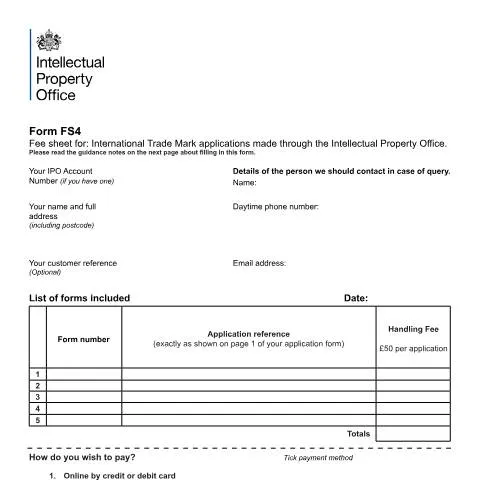
Navigating the Fee Sheet for International Trade Mark Applications
In the complex world of international trade marks, the Fee Sheet for International Trade Mark Applications serves as a critical tool for businesses and individuals looking to secure their brand identity across multiple jurisdictions. This document, issued by the Intellectual Property Office (IPO), outlines not only the required fees but also the necessary procedural steps that applicants must follow to successfully register their trade marks internationally.
Understanding the Role of the Fee Sheet
The Fee Sheet, identified by reference Form FS4, plays a multifaceted role in the application process. It isn’t merely a financial document; rather, it acts as a roadmap for applicants to navigate through the financial commitments associated with their international trade mark applications.
- Application Reference: Each application made through the IPO requires a unique reference number that allows the office to process payments and applications efficiently.
- Handling Fees: New applications incur a handling fee, which is essential for the initiation of the application process.
- Payment Methods: Applicants must choose a suitable method to complete their payment, which can have implications on their filing date.
Channels for Submission: Digital vs. Traditional
Applicants must choose how they wish to submit their Fee Sheet, which significantly impacts processing times and overall convenience.
Online Submission
Submitting the Fee Sheet online is the most efficient method. Applicants can access the payment portal via fees.ipo.gov.uk/pay, where they complete their transaction and instantly receive a payment reference. This method ensures a quicker processing time, allowing for minimal delays in the applicant's trade mark registration journey.
Paper Submission
For those who prefer traditional methods, sending in a paper form is still an option. However, it’s important to note that this method generally involves longer processing times. Applications are to be directed to the IPO’s office at Intellectual Property Office, Concept House, Cardiff Road, Newport, South Wales, NP10 8QQ. Mail delays can occur, and it’s vital to account for this when planning your application timeline.
In-Person Submission
While not commonly utilized, applicants can also submit their forms in person. This method is best suited for those who have immediate questions or require assistance from the IPO staff. It can be a valuable option for complex applications that necessitate direct interaction.
Key Dates: When to Act and What to Expect
Timing is crucial when filing an international trade mark application. Understanding the timeline associated with the Fee Sheet can help applicants manage their expectations and prepare accordingly.
- Submission Timing: Begin the process as soon as possible, ideally at least several months prior to any intended launch. This allows ample time for potential issues to be addressed.
- Payment Confirmation: After submitting the Fee Sheet, applicants will receive a payment receipt within five days. This receipt is essential as it marks the official commencement of the application process.
- Examination Period: Following payment confirmation, the IPO will notify the applicant of any deficiencies within 15 working days, allowing for rapid resolution of any issues.
The Implications of Incomplete or Incorrect Applications
Submitting an incomplete or incorrect Fee Sheet can lead to significant delays in the trade mark registration process. Understanding the consequences is essential for all applicants.
Common Pitfalls
One of the most common mistakes involves failing to include the correct payment reference, which can hinder the processing of the application. Additionally, listing forms out of order or omitting required documentation can lead to rejection or delays.
What to Do in Case of Issues
If an application is returned due to deficiencies, the applicant will be informed precisely what is missing or incorrect. It is crucial to respond promptly and accurately to avoid further delays. The IPO advises contacting their support services at 0300 300 2000 if clarification is needed on the feedback received.
Understanding the Payment Process
The payment process is a pivotal aspect of the Fee Sheet, as it connects the financial commitment to the application itself.
Payment Methods Explained
| Payment Method | Description | Processing Speed |
|---|---|---|
| Online Payment | Instant payment through the IPO’s website. | Fastest |
| Cheque | Traditional payment via post, payable to ‘Intellectual Property Office’. | Slower |
| Bank Transfer | Direct transfer to the IPO’s bank account. | Variable |
| IPO Deposit Account | Deductions made from a pre-funded IPO account. | Moderate |
Choosing the right payment method can significantly streamline the application process. For those opting for bank transfers, it is essential to include the correct reference details to ensure proper tracking of the payment.
The Importance of Accurate Record Keeping
Maintaining accurate records throughout the application process is vital for smooth communication and future reference.
- Customer References: Including a customer reference on the Fee Sheet helps link transactions with personal records, aiding in maintaining clarity over the progress of the application.
- Documentation: Keep copies of all submitted forms and receipts. This ensures that in case of discrepancies or queries, applicants can easily provide necessary evidence.
The Bigger Picture: Trade Marks and Global Business
Securing a trade mark is not just a bureaucratic exercise; it represents a significant step forward in building a brand’s identity in the global marketplace. The Fee Sheet serves as an entry point into this world.
With the right preparations and understanding of the Fee Sheet, applicants set themselves on a path toward international recognition and protection of their brand. The implications of not securing a trade mark can be far-reaching, potentially allowing competitors to encroach on a brand’s identity and market share.
Long-term Benefits of a Trade Mark
Investing in a trade mark offers numerous long-term advantages:
- Legal Protection: A registered trade mark provides legal backing against unauthorized use of the brand.
- Brand Recognition: It enhances the credibility and recognition of the brand in the marketplace.
- Asset Value: Trade marks can become valuable business assets that contribute to the overall worth of a company.
As businesses navigate the complexities of international trade, understanding the pivotal role of the Fee Sheet in the registration process empowers applicants to make informed decisions, ultimately securing their brand’s future in a competitive global landscape.
Understanding the Cost Structure of International Trademark Applications
The fee structure for international trademark applications can be intricate, particularly when navigating through various jurisdictions beyond the UK. Understanding the costs associated with filing and maintaining an international trademark is crucial for any business looking to expand globally. The United Kingdom operates under the Madrid Protocol, which allows for the registration of trademarks in multiple countries through a single application process. However, the fees are structured in a way that varies based on several factors, including the number of countries designated and the application class.
When applying for an international trademark via the UK Intellectual Property Office (IPO), applicants should be prepared to pay an initial application fee, which can differ based on whether you're filing for a standard or collective mark. As of October 2023, the basic fee for an application under the Madrid System starts at £300 for the first class of goods or services. Additional classes incur additional costs, which can quickly add up if your trademark covers a wide range of products or services. For instance, each additional class typically adds £100 to the base fee, so if you're filing for a trademark that spans three classes, the total application fee could reach £500.
Moreover, applicants need to consider the maintenance costs of their trademark. Once registered, a trademark must be renewed every ten years, with renewal costs reflecting similar structures to the initial application fees. Additionally, certain countries may impose their own fees upon international registration, further complicating the overall cost structure. Businesses should also factor in potential legal fees associated with trademark searches, legal advice, or assistance with the application process, as these can substantially increase the total investment in securing an international trademark.
Common Pitfalls in International Trademark Applications
While the process of filing for an international trademark can seem straightforward, several common pitfalls can lead to costly delays or even rejections of your application. One major misstep is failing to conduct a thorough trademark search prior to application. Conducting comprehensive searches helps identify any existing trademarks that may conflict with your intended mark, which is essential for avoiding potential legal disputes down the line.
Another frequent issue arises from incomplete or inaccurate information in the application form. Given the stringent requirements set by the World Intellectual Property Organization (WIPO) and the UK IPO, any discrepancies or omissions can result in immediate rejection. It’s vital to ensure that all trademark classifications accurately represent the goods and services intended for protection, as incorrect classifications can lead to complications in both the application and potential enforcement of rights.
Furthermore, time zones and language barriers can present challenges when dealing with international jurisdictions. Different countries have varying requirements for documentation, communication, and procedural timelines. For example, some jurisdictions may require translations of documents, which can add time and additional costs. Understanding the specific requirements of each country where you wish to register your trademark is imperative to avoid unnecessary setbacks. For businesses, collaborating with an experienced trademark attorney who specializes in international registrations can mitigate these risks and help navigate the complexities of global trademark law.
The Role of Professional Help in Securing International Trademark Protection
Engaging professionals in the process of securing international trademark protection can be a game-changer for businesses looking to expand their brand globally. While it may be tempting to handle applications independently to save on costs, the complexities involved often warrant the expertise of trademark attorneys or intellectual property specialists. These professionals not only understand the intricacies of trademark law but can also provide invaluable insights into the nuances of international jurisdictions.
One of the key advantages of hiring a trademark specialist is their ability to conduct extensive trademark searches and analyze the results effectively. They can help identify potential conflicts with existing brands, significantly reducing the likelihood of rejection based on prior use. Additionally, their familiarity with different countries' trademark systems allows them to provide tailored advice regarding filing strategies, potential risks, and compliance with local laws.
Moreover, professional assistance can streamline the application process. Trademark attorneys can prepare and file the necessary forms, ensuring that all information is accurate and comprehensive, which is critical in avoiding costly delays. Furthermore, as laws and regulations change, having a professional on your side ensures that your business remains compliant with the latest requirements.
Finally, in the unfortunate event of an opposition or infringement issue, having a trademark attorney who understands the international landscape can be an asset. They can represent your interests in disputes, helping to enforce your rights and navigate the legal system effectively. In conclusion, while the initial investment in professional help may seem substantial, the long-term benefits of securing strong international trademark protection can far outweigh the costs involved.