Navigating the UKEIG Notification Process: Your Essential Guide to EE MP01
When dealing with the intricacies of economic collaborations in the United Kingdom, particularly through a UK Economic Interest Grouping (UKEIG), the importance of properly notifying Companies House cannot be overstated. The EE MP01 document serves as a crucial tool in this process. By understanding what it entails and how to effectively use it, you can ensure that your UKEIG remains compliant with legal requirements while facilitating smooth operations.
Understanding the Role of the EE MP01 Document
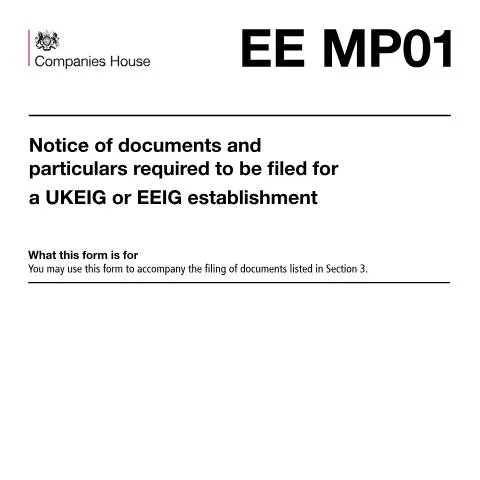
The EE MP01 document acts as a formal notice to Companies House regarding various documents and particulars associated with a UKEIG. While you might be inclined to think of it as just another form, it carries significant weight in laying the groundwork for effective inter-company cooperation across various sectors.
The Importance of Timely Filing
Filing the EE MP01 in a timely manner is not simply a bureaucratic necessity; it is crucial in maintaining transparency and legal standing. Below are critical scenarios when notifying through EE MP01 becomes indispensable:
- Amendments to Formation Contracts: If there are any changes in your grouping's formation contract, whether due to changes in member participation or name changes, utilizing the EE MP01 form is essential.
- Judicial Decisions: Any significant judicial decisions affecting the grouping, such as those regarding nullity or winding up, must be reported using this document.
- Liquidation Procedures: Should your group enter liquidation, any related documentation must be filed via the EE MP01 to ensure all parties are aware of the status.
What the EE MP01 Covers: A Comprehensive Overview
While the EE MP01 form is vital for certain notifications, it is equally important to understand its limitations. Here’s what this document encompasses:
Included Documents and Particulars
The EE MP01 allows for a variety of documents to be submitted alongside it. This list includes, but is not limited to:
- Amendments to the grouping's formation contract.
- Documents evidencing judicial decisions regarding nullity.
- Assignments of member participation—both full and partial.
- Orders for winding up the grouping.
- Appointment and termination of liquidators.
- Any conclusions regarding liquidations.
- Exemption clauses for new members regarding pre-existing debts.
It’s crucial to note that if any of these documents are not in English, a certified translation must be included. This ensures clarity and compliance with the Data Protection Act 2018 and UK GDPR, safeguarding personal data during processing.
Coordination with Other Documents and Procedures
The EE MP01 is often not used in isolation. It intricately ties in with other forms and processes within the Companies House framework, especially when engaging with economic interest groupings.
Related Forms and Their Functions
For establishing or closing an EEIG, you would need to utilize the EE MP02 form, clearly delineating the distinct functions each form serves within the broader administrative landscape:
| Form | Description | Purpose |
|---|---|---|
| EE MP01 | Notice of documents and particulars for UKEIG | To notify Companies House of amendments or judicial decisions. |
| EE MP02 | Establishment or closure of an EEIG | To formally set up or wind down an economic interest grouping. |
Understanding these nuances is vital for any entity engaged in economic collaborations, as it impacts the legal and operational dynamics of the grouping.
Common Misunderstandings Regarding the EE MP01
Even seasoned professionals may harbor misconceptions about the EE MP01 form, leading to potential pitfalls during the filing process.
Clarifying Common Misinterpretations
- Not a Registration Form: A common mistake is treating the EE MP01 as a registration form for establishing a UKEIG. It is crucial to remember that this form is purely for notification purposes, not for starting or closing a grouping.
- Missing Document Attachments: Failing to attach required documents can lead to delays or rejections. Always double-check your submissions against the checklist provided in the form.
- Translation Requirements: Ignoring the need for certified translations can lead to compliance issues. Ensure that all non-English documents are properly translated.
Key Steps in the Filing Process: What You Need to Know
Completing the EE MP01 is straightforward, but attention to detail is paramount. Below is a structured approach to facilitate your filing:
- Accumulate Required Documents: Before filling out the EE MP01, ensure you have all related documents ready, including any amendments or judicial decisions.
- Authenticate the Form: It’s essential for either a member or manager to authenticate the document, as this will appear on the public record.
- Payment Details: If applicable, include the required payment of £30 for changes to the grouping’s formation contract.
- Review and Submit: Utilize the checklist to confirm that all necessary fields are filled, and all supporting documents are attached before submission.
Ensuring Compliance: Final Checks Before Filing
To avoid common pitfalls and ensure compliance, here are important checks to perform:
Checklist for Successful Filing
- The grouping name and number must match the information held on the public register.
- The state of the official address for the UKEIG must be clearly indicated.
- All appropriate boxes in Section 3 should be ticked for clarity.
- Attachments, including certified translations where necessary, must be included.
- The form must be duly authenticated.
Next Steps After Submission
Once submitted, it’s essential to understand the subsequent steps involved:
What Happens Next?
Upon receipt of your EE MP01, Companies House will process your notification. Here’s what you can expect:
- Public Record Updates: Information provided will be integrated into the public register, allowing for transparency and accountability.
- Verification Process: Companies House may contact you for clarification or additional information if your submission raises any queries.
- Legal Standing: Ensure you maintain your UKEIG's compliance by keeping all necessary documentation current and by adhering to filing deadlines.
Overall, completing the EE MP01 accurately and promptly can significantly ease the administrative burden of managing a UKEIG. By being proactive and thorough in your approach, you can better navigate the complexities of business collaboration within the UK landscape.
Understanding the Formation and Purpose of a UK Economic Interest Grouping (UKEIG)
The UK Economic Interest Grouping (UKEIG) is a specific type of legal entity designed to facilitate cooperation between its members in achieving shared economic objectives without the constraints of a traditional corporate structure. This can be particularly beneficial for small to medium-sized enterprises that seek to collaborate while maintaining their independent legal identities. Under the Companies Act 2006, a UKEIG is not considered a company, which means it is not subject to many of the regulations that govern limited companies, such as certain reporting requirements.
Members of a UKEIG can include individuals, companies, and other entities, which allows for a diverse range of participants to engage in joint ventures, manage assets collectively, or undertake specific projects beneficial to all members involved. An essential aspect of a UKEIG is that it cannot engage in activities that are purely for profit; instead, it aims to promote the economic interests of its members. This distinction makes UKEIGs suitable for groups involved in research and development, community projects, or industry collaborations.
To establish a UKEIG, the members must draft a formal agreement that outlines their objectives, the governance structure of the grouping, and the rights and responsibilities of each member. While there are fewer formalities compared to limited companies, it is advisable to adhere to best practices in governance to ensure transparency and accountability among members. After the agreement is in place, the grouping must register with the relevant authority, which requires completing and submitting the appropriate notice of documents and particulars, specifically the EE MP01 form.
Key Considerations When Filing the EE MP01 Form
Filing the EE MP01 form is a crucial step for UKEIGs as it formally registers the grouping and provides necessary details to the relevant authorities, including information about the members and the objectives of the grouping. Here are several key considerations to keep in mind when preparing and submitting your EE MP01 form:
- Accurate Member Information: All members of the UKEIG must be correctly identified in the EE MP01 form. This includes full names, addresses, and, where applicable, the registered numbers of corporate members. Any errors in this information can lead to delays in processing or even rejection of the application.
- Detailed Objectives: The form requires a clear description of the economic interests that the grouping intends to pursue. Ensure that these objectives are specific, achievable, and align with the legal framework surrounding UKEIGs. Ambiguous goals may raise questions from the registering authority.
- Appointment of Representatives: If the UKEIG designates a representative for communications with authorities, this person’s contact details should be included in the form. This simplifies the process of responding to any inquiries or requests for additional information.
- Compliance with Data Protection Legislation: As registration involves processing personal data, it is vital to comply with the Data Protection Act 2018 and UK GDPR. Ensure that all members are informed about how their data will be used, stored, and shared.
- Submission Deadlines: Pay attention to any deadlines for registration. While there is no immediate time limit after forming a UKEIG, timely submission of the EE MP01 can enhance the grouping's credibility and operational efficiency.
Consequences of Non-Compliance and How to Address Issues
Non-compliance with the filing requirements associated with a UKEIG can lead to significant consequences, including legal challenges and potential dissolution of the grouping. If the EE MP01 form is not submitted correctly or on time, the grouping may face penalties or be considered invalid by the relevant authorities.
Should you find yourself in a situation where there has been an oversight in the filing process, it is essential to act quickly. The following steps can help mitigate any issues:
- Review and Correct: Immediately review the submitted EE MP01 form for any inaccuracies or missing information. This includes checking member details and the objectives outlined. If errors are discovered, prepare to submit a corrected form as soon as possible.
- Communicate with Authorities: Contact the relevant registration authority to explain the oversight and ask for guidance. They may provide specific instructions on how to rectify the situation and the timeframe in which changes must be made.
- Legal Advice: If complications arise or if there is a concern about the implications of non-compliance, it may be prudent to seek legal advice. A solicitor specialized in corporate law can help navigate the complexities of UKEIGs and ensure that you are taking the correct steps to resolve any issues.
- Documentation of Compliance Efforts: Keep thorough records of all communications and submissions related to the EE MP01. This documentation can be invaluable if there are disputes or questions about the validity of the UKEIG.
Addressing compliance issues promptly will not only safeguard the interests of the UKEIG but also promote confidence among its members, maintaining the integrity and purpose of the grouping.