Navigating the Tree Health Advice Package: A Comprehensive Guide
The Tree Health Advice Package, administered by the Forestry Commission under the Department for Environment, Food & Rural Affairs, plays a crucial role in maintaining the health of trees in the UK. As environmental challenges multiply, the need for effective management of tree health becomes imperative for landowners and managers alike. This article delves deep into the intricacies of the application process for the Tree Health Advice Package, providing a practical guide for prospective applicants.
Understanding Your Role and Responsibilities
Before embarking on the application process, it's essential to understand the roles played by different stakeholders. If you're a landowner, land manager, or farmer, your responsibilities extend beyond merely submitting an application; you become an active participant in safeguarding the ecosystem.
Who Should Apply?
- Landowners: Individuals or entities owning land, particularly in rural areas, are the primary applicants.
- Land Managers: Those managing land, including farmers, small holding owners, and lot owners, can also submit applications.
- Agents: If you are represented by an agent, they must have appropriate authorisation to submit on your behalf.
Responsibilities Upon Application
Applicants must ensure that all provided information is accurate and complete. Furthermore, they must be prepared to undertake necessary biosecurity training, a key aspect in the management of tree health.Form Structure: What You Need to Know
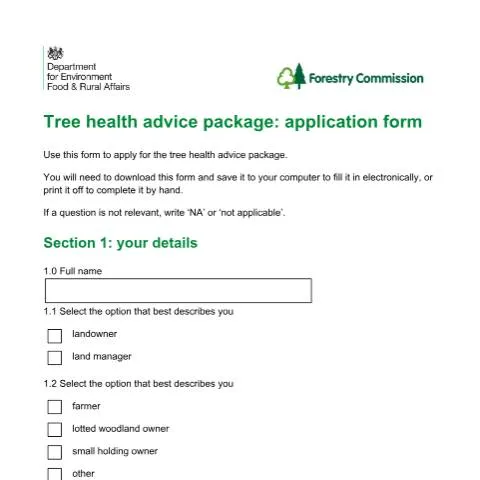
The Tree Health Advice Package application form is structured to gather specific details vital for assessing your request. Understanding its sections in detail will simplify your application process.
Section Breakdown
- Personal Details: Full name, contact information, and the status of your property (landowner or manager).
- Site Information: Provide the site name, central grid reference, area in hectares, and details about the tree species and health issues present.
- Consulting Agent Details: If applicable, list your agent's contact details for smooth communication.
- Declaration: This section requires your signature, affirming your understanding and agreement to the terms.
Completing each section thoughtfully will enhance the likelihood of a successful application, as it provides the Forestry Commission with all necessary information to evaluate your request effectively.
Choosing Your Submission Method: Digital or Paper?
Understanding the nuances of submission methods is vital. The Tree Health Advice Package offers both digital and paper submission options, catering to different needs.
Online Submission
Submitting your application via email is the most efficient method. You'll need to scan the signed declaration page and send the completed form to [email protected]. This method allows for quicker processing times, generally yielding responses within ten working days.
Paper Submission
If you opt for the traditional route, print the form, complete it by hand, and post it to the designated office. While this method may be suitable for those less comfortable with technology, it typically results in longer processing times.
The Timeline: Key Dates and Expectations
Understanding the timeline associated with the Tree Health Advice Package is essential for managing expectations. Key dates begin from the moment you submit your application.
Application Period
The application form can be submitted at any time; however, submitting earlier in the season may lead to better response times due to lower volumes of applications.
Processing Times
| Action | Expected Timeframe |
|---|---|
| Confirmation of receipt | Within 10 working days |
| Decision notification | Typically within 2 weeks |
| Grant offer letter (if successful) | Sent within weeks of decision |
These timeframes can fluctuate based on individual circumstances or specific issues related to your application.
Preparing Your Documentation: A Step-by-Step Approach
Documentation preparation is critical for a successful application. The Tree Health Advice Package requires specific proofs to support your request.
Essential Documents
- Statutory Plant Health Notice (SPHN): If applicable, this number confirms any existing health notices affecting your trees.
- Site Maps: Visual aids can greatly assist in clarifying your location and tree health issues.
- Previous Reports: Historical data on tree health can provide context to your application.
Organising Your Submission
When compiling your documents, ensure everything is readily accessible. Use folders or digital management tools to keep track of all necessary items, as incomplete submissions can lead to delays or rejection.
Post-Submission: What Happens Next?
Once your application is submitted, several processes unfold in the background, crucial for assessing your request.
Acknowledgment and Communication
Upon receiving your application, the Forestry Commission will send a confirmation email, which acts as a crucial first step in the communication process.
Outcome Notification
Following internal reviews, you will receive a notification regarding the outcome of your application. If successful, you will be provided with:
- An acceptance letter detailing the grant offer.
- A biosecurity management plan template.
- Links to online training resources.
Handling Unique Situations and Urgencies
While the general application process is straightforward, certain situations may require tailored considerations.
Special Cases
- Non-Residents: If you're applying from outside the UK, be prepared to provide additional documentation concerning your status and interest in maintaining tree health.
- Urgent Cases: In cases of immediate tree health concerns, reaching out via email for expedited processing or special assistance is advisable.
Agent Representation
Applicants using agents must ensure that the represented party is fully informed and authorised to act on their behalf, which is essential for maintaining compliance with the application requirements.
Privacy Considerations: Handling Your Data with Care
In compliance with the Data Protection Act 2018 and UK GDPR, the Forestry Commission has stringent measures in place regarding the handling of personal data.
Your Data Rights
As an applicant, you have the right to understand how your personal data will be processed:
- Your information will be securely stored within the UK or European Economic Area.
- Data retention lasts for 7 years after the last financial transaction or 1 year post the conclusion of your obligations under the grant.
- You are responsible for informing any third parties affected by your application regarding how their data may be used.
Maintaining Compliance
Ensuring compliance with data protection guidelines is essential, especially if sensitive information is involved. Familiarise yourself with the privacy notice provided by the Forestry Commission to safeguard your interests effectively.
Ongoing Support and Engagement
The Forestry Commission continuously supports applicants throughout the application process, offering guidance and resources to enhance your engagement.
Staying Informed
Subscribing to eAlerts from the Forestry Commission will keep you updated on any changes or important announcements related to the Tree Health Advice Package.
Fill in your form directly online
No printing: type your details into the boxes of the official form, tick, then download the PDF ready to send.
- 1Type into the form boxes
- 2Tick in one click
- 3Save and download the PDF
Contacting for Assistance
If uncertainties arise during your application process, email [email protected] for assistance. They typically respond within ten working days, ensuring your queries are addressed promptly.
Final Thoughts: Empowering Tree Health Management
Participating in the Tree Health Advice Package not only enhances your environmental stewardship but also contributes to the broader effort to sustain biodiversity within the UK. By taking the necessary steps to complete your application diligently, you can play a pivotal role in supporting tree health management effectively.
Understanding the Tree Health Advice Package: An Overview
The Tree Health Advice Package is an initiative designed to assist landowners, woodland managers, and local authorities in addressing tree health issues. Recognising the critical role trees play in biodiversity and the ecosystem, this package aims to provide tailored advice and support to mitigate tree diseases, pests, and environmental stresses. The package encompasses various services, including diagnostics, management strategies, and access to expert consultations.
To apply for this package, it is essential to understand the scope of support provided. The Tree Health Advice Package typically includes:
- Initial Consultation: A site visit or virtual consultation to assess the specific tree health issues.
- Diagnostic Services: Laboratory testing for pest and disease identification.
- Management Plans: Tailored recommendations based on the assessment results to improve tree health and resilience.
- Follow-up Support: Ongoing guidance to implement the recommended management strategies.
Eligibility criteria may vary, but typically you must demonstrate ownership or management responsibility for the land where the trees are located. Additionally, it may be stipulated that the trees in question should be at risk from specific threats outlined by the Forestry Commission or relevant local authorities.
Application Process: Step-by-Step Guide
Applying for the Tree Health Advice Package involves several important steps, ensuring a comprehensive evaluation of your situation and a smooth application experience. Here’s a detailed guide to navigating the application process effectively:
- Gather Necessary Information: Before starting your application, compile essential information about your trees, including species, age, location, and any visible symptoms of disease or pest infestation. This data will be vital for a thorough assessment.
- Determine Eligibility: Review the eligibility criteria set out by the Forestry Commission. Ensure that you meet the requirements as an applicant, which may include ownership of land or prior engagement in tree management practices.
- Complete the Application Form: Access the designated application form for the Tree Health Advice Package. Pay attention to the details requested, ensuring you provide accurate and complete information. Be mindful of any specific guidelines related to data protection outlined in the Data Protection Act 2018.
- Submit Supporting Documentation: Alongside your application form, you may be required to submit supporting materials such as photographs of the trees, historical management records, and any previous assessments conducted. These documents can provide additional context for your request.
- Send Your Application: Submit your completed application form and supporting documents as directed—often via postal service or online submission, depending on the provisions set by the Forestry Commission.
- Await Confirmation: After submission, you will receive an acknowledgment of your application, outlining the timeline for assessment. The typical waiting time may vary based on demand, but you can expect confirmation within several weeks.
- Engagement with Advisors: Following the assessment, you may be contacted by tree health advisors who will provide their findings and recommendations tailored to your specific case.
Throughout this process, maintaining clear communication with the Forestry Commission and adhering to all guidelines is crucial. Should you have any questions or require clarification at any stage, don’t hesitate to reach out to their helpline or resources available on their website.
Maintaining Tree Health: Best Practices Post-Application
Once you have successfully accessed the Tree Health Advice Package and implemented the recommended strategies, maintaining the long-term health of your trees is paramount. Here are some best practices to consider:
- Regular Monitoring: Conduct routine inspections of your trees to identify early signs of distress, disease, or pest activity. Document changes over time to monitor progress and adapt management strategies as needed.
- Implementing Management Strategies: Follow through with the management plans outlined in your consultation. This may include pruning, soil management, or pest control measures tailored specifically to your tree species and local conditions.
- Community Engagement: Engage with local conservation groups or tree care communities. Sharing experiences and knowledge can be beneficial not only for your trees but also for fostering a community awareness of tree health issues.
- Educational Workshops: Consider participating in workshops or training sessions offered by local authorities or environmental organisations. These sessions often cover updated practices in maintaining tree health and insights into emerging threats.
- Documentation and Reporting: Keep detailed records of your tree care activities and any changes observed in tree health. This documentation can be invaluable for future applications or assessments, showcasing your commitment to tree stewardship.
By adopting these best practices, you not only enhance the resilience of your trees but also contribute positively to the broader ecological health of your environment. Remember that tree health management is an ongoing process, and staying informed and proactive is key to successful outcomes.