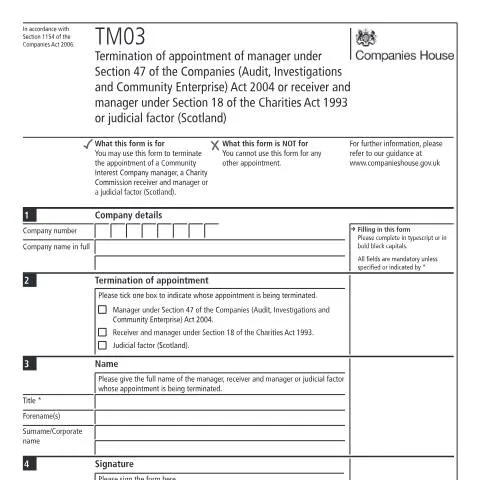
Navigating the Termination Appointment Form: A Practical Guide
When a Community Interest Company (CIC) manager or a Charity Commission receiver needs to be removed from their position, using the correct documentation is paramount. The form for terminating these appointments is not just a piece of paper; it represents a significant procedural step in the governance of community enterprises and charities within the UK. Understanding how to navigate this form is essential for directors, managers, and trustees.
The Framework Behind Termination: What Legislation Governs This Process?
At the core of terminating appointments in the UK is a combination of legislative acts that dictate how these changes must be executed. Specifically, the Companies Act 2006 and the Charities Act 1993 outline the requirements for managing appointments and terminations within CICs and charities.
Under Section 47 of the Companies (Audit, Investigations and Community Enterprise) Act 2004, the process for terminating a manager's appointment is clearly defined. Similarly, the Charities Act 1993 governs the conditions under which a receiver and manager can be removed. This legal framework ensures that all parties involved are aware of their responsibilities and the procedures that must be followed.
Understanding the Distinctions: CIC Managers vs. Charity Receivers
Though the form CHFP000 facilitates the termination of both CIC managers and Charity receivers, it’s crucial to understand the differences in their roles to avoid any confusion. Here’s a breakdown:
| Role | Legislative Basis | Responsibilities |
|---|---|---|
| CIC Manager | Companies (Audit, Investigations and Community Enterprise) Act 2004 | Oversees the operations of the CIC, ensuring compliance with community objectives. |
| Charity Receiver | Charities Act 1993 | Manages the assets of a charity, particularly when financial issues arise. |
| Judicial Factor (Scotland) | Scots Law | Appointed by the court to manage a charity’s affairs in specific circumstances. |
Understanding these distinctions will help in completing the form accurately, as well as setting clear expectations for the process ahead.
Decoding the Sections of the Termination Form: What to Pay Attention To
The form is structured to ensure all relevant details are captured effectively. Below is a closer look at the key sections, along with tips for successful completion.
Section 1: Company and Appointment Details
In this section, you must provide:
- Company Name: Ensure you write the full registered name of the CIC or charity.
- Company Number: This is a unique identifier provided by Companies House; accuracy is crucial.
- Type of Appointment Being Terminated: Check the appropriate box, be it for a CIC manager, receiver, or judicial factor.
Any discrepancies in this section may lead to delays or rejections, so double-check the information against the public register.
Section 2: Name of the Individual or Entity Being Terminated
This section requires you to input the full name or corporate title of the person whose appointment is being terminated. It’s critical to ensure that:
- All names are spelt correctly.
- If it's a corporate entity, provide the full registered name as per Companies House records.
Section 3: Signature Section
Signatures are vital in this form. The form must be signed by one of the following:
- The Charity Commissioners
- The Regulator of Community Interest Companies
- The Judicial Factor
Make sure the signature is clear, as it serves as verification of the appointment termination.
Preparation for Submission: What’s Required Before You Send It?
Once the form is filled out, you need to ensure that you have met the following prerequisites:
- Check that the company name and number align with the public records.
- Confirm the correct checkbox is ticked for the type of termination.
- Ensure that the name in Section 2 is correct and complete.
- Provide a clear signature as required.
Failure to adhere to these checks can lead to your application being returned, causing unnecessary delays in the termination process.
Where to Send the Form: Understanding the Submission Addresses
The form can be sent to various Companies House locations depending on where the company is registered. This is crucial for ensuring your application is processed promptly. Here’s a quick reference:
| Region | Submission Address |
|---|---|
| England and Wales | The Registrar of Companies, Companies House, Crown Way, Cardiff, CF14 3UZ |
| Scotland | The Registrar of Companies, Companies House, Fourth floor, Edinburgh Quay 2, EH3 9FF |
| Northern Ireland | The Registrar of Companies, Companies House, Second Floor, The Linenhall, BT2 8BG |
For expediency, it is advisable to send the form to the respective address for your region.
Post-Submission: What Happens After You Send the Form?
Once the form has been submitted, Companies House will process the termination. You can expect to see the following:
- A confirmation of the termination: After processing, Companies House will update the public record and notify you.
- Potential queries: Should there be any issues or further information required, Companies House may reach out for clarification.
It’s wise to track your submission by keeping a copy of the form and noting the date you posted it. This way, you can follow up if necessary.
Additional Considerations: Special Circumstances Surrounding Terminations
While most terminations will follow a standard process, there are unique situations that may require additional considerations:
- Foreign Companies: If the company operates in multiple jurisdictions, seek advice regarding any international implications of the termination.
- Urgent Terminations: Should there be a pressing need to terminate an appointment, understanding expedited processes or emergency provisions is key.
- Minors or Vulnerable Individuals: Special care must be taken to ensure that the rights of vulnerable parties are protected throughout the process.
Consulting legal advisors familiar with corporate governance can provide clarity in these more complex scenarios.
Final Thoughts: Robust Governance through Proper Documentation
Using the CHFP000 form correctly is essential for maintaining the integrity and compliance of community enterprises and charities in the UK. Each detail matters, from the initial filling out of the form to understanding the legislative framework surrounding terminations. With careful attention to detail and a clear understanding of the process, organizations can navigate this vital aspect of governance effectively.
Understanding the Role of a Community Interest Company Manager
A Community Interest Company (CIC) is a specific type of non-profit organization in the UK designed to provide a benefit to the community. The role of a CIC manager is essential in ensuring the organization operates within its defined mission while adhering to regulatory standards. The manager is responsible for the governance of the CIC, making decisions that align with its community objectives, and ensuring compliance with the Companies House regulations.
When it becomes necessary to terminate the appointment of a CIC manager, it is crucial to follow specific procedures outlined under the Companies Act 2006 and the regulations laid down by the Charity Commission. The process generally involves notifying the manager in writing, providing a clear rationale for the termination, and ensuring that proper records are maintained for accountability.
In instances where the termination is due to misconduct or financial mismanagement, it may be prudent to gather evidence and consult with legal advisers to mitigate any potential repercussions. Additionally, the remaining board members or directors should convene to discuss the next steps, including appointing an interim manager if necessary, to ensure the continued operation of the CIC.
The Role of Charity Commission Receiver and Manager
The Charity Commission has the authority to appoint a receiver and manager for charities facing serious mismanagement or potential insolvency. This role is vital for protecting the charity’s assets and ensuring that it can continue to operate in the best interests of its beneficiaries. When a receiver and manager is appointed, they take control of the charity's finances and operations, effectively stepping into the shoes of the charity's trustees.
In the context of terminating such an appointment, the process is governed by strict guidelines to safeguard the interests of the charity and its stakeholders. The receiver and manager must provide a detailed report to the Charity Commission on the charity’s financial status and the reasons for the proposed termination of their role.
Once the termination is initiated, the Charity Commission will oversee the transition back to the trustees or to a new manager if necessary. Trustees requesting the return of control must demonstrate that robust measures have been implemented to address the issues that necessitated the receiver's appointment. This may include changes in governance, financial management, and compliance structures.
Judicial Factor: When the Courts Step In
In Scotland, the appointment of a judicial factor is a legal remedy pursued through the courts for the management of a charity or company when substantial mismanagement or deadlock occurs. A judicial factor can be appointed to ensure that the assets of the charity are preserved until structural changes can be made or until the issues are resolved. This process is particularly important when there are disagreements among trustees or directors that impede effective governance.
When it comes to terminating a judicial factor’s appointment, the courts will evaluate whether the reasons for their initial appointment have been sufficiently addressed. If the issues leading to the appointment have been rectified, the affected parties can petition the court for termination. This process involves presenting evidence that demonstrates compliance with statutory requirements and highlights the steps taken to rectify prior mismanagement.
Moreover, the court may require the judicial factor to provide a final report detailing their management activities and any outstanding financial matters. This transparency ensures that all parties involved are adequately informed and that the transition of management is handled smoothly.