Understanding Grant Services: The Heart of the Rural Payments Agency
In the dynamic landscape of agriculture and rural development in the United Kingdom, the Rural Payments Agency (RPA) plays an essential role in facilitating grant funding that supports land management, environmental initiatives, and rural businesses. The Grant Funding Scheme Query Form is a crucial tool in this process. It serves as the primary communication channel for stakeholders seeking clarification or assistance regarding grant-related issues. Understanding this form and the context in which it is used is essential for anyone engaged in rural development activities.
Initiating the Grant Services Query Process
Whether you’re a farmer, land manager, or involved in a rural enterprise, there may be moments when questions arise about your grant applications or payments. This might happen after receiving a grant or during the application process. The first step in addressing these questions is to complete the Grant Services Query Form.
- When to Use the Form: If you encounter issues such as payment discrepancies, application status inquiries, or general queries regarding the grant services.
- Types of Queries: The form allows you to specify various types of concerns, including claims, variations, or post-payment monitoring.
Timeline: Key Dates and What Follows
Being aware of the timeline associated with grant funding is crucial. The process begins when you identify a need for clarification or assistance. Here’s a breakdown of what to expect:
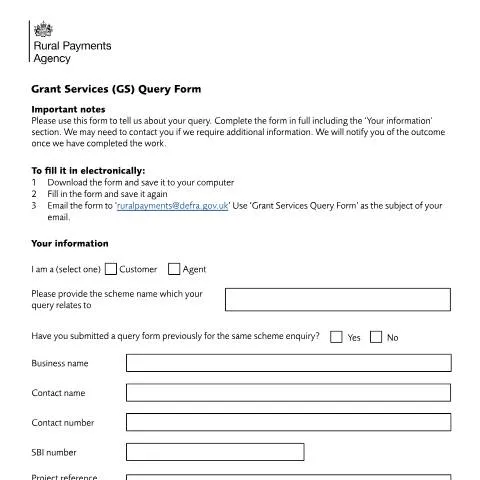
- Submission of the Query Form: Fill in the form completely, ensuring all required fields are addressed, particularly the 'Your information' section to allow for effective communication.
- Processing Time: After submission, the RPA typically undertakes an assessment of the query. Expect to hear back within a few weeks, though this may vary based on complexity.
- Outcome Notification: Once the query has been reviewed, you will receive a notification detailing the outcome of your inquiry. This communication is essential for guiding your next steps.
Documenting Your Concerns: Essential Information for Submission
Filling out the query form accurately is vital. Each section is designed to gather specific information that will facilitate a comprehensive response from the RPA.
Fields to Complete
| Field | Description |
|---|---|
| Scheme Name | Specify which grant scheme your query pertains to. |
| Business Name | Provide the official name of your business or organisation. |
| Contact Information | Ensure your contact name and number are accurate for follow-up. |
| Description of Query | Offer a detailed account of your issue, including any perceived errors in grant payments. |
Being detailed and clear in your descriptions will help expedite the processing of your query. If necessary, attach any supporting documentation to reinforce your claim or inquiry.
From Submission to Resolution: What Happens Next?
Once your Grant Services Query Form is submitted, it enters a systematic review process. This journey is critical, as it impacts how quickly and effectively your issue is resolved.
Steps in the Review Process
- Initial Assessment: RPA staff will assess the details provided in your form to determine if additional information is needed.
- Contact for More Information: If further clarification is required, the RPA will reach out using the contact information you've supplied.
- Final Decision: After thorough examination, the RPA communicates their findings, which could lead to a resolution, adjustment in grant amounts, or, in some cases, an explanation of denial.
What to Do If You Face Challenges: Navigating Refusals and Errors
Sometimes, despite the best efforts, you might find yourself facing a refusal or error regarding grant funding. Understanding your options is essential for moving forward effectively.
Steps to Take Following a Refusal
- Review the Decision: Carefully examine the notification you received to understand the reasons behind the refusal.
- Gather Supporting Evidence: Collect documentation that can substantiate your case for reconsideration.
- Follow-Up Communication: Engage with the RPA to discuss the potential for appeal or clarification on specific points of refusal.
In Case of Missing Documentation
If your application is delayed due to missing or incorrect documentation, take immediate action:
- Identify the Missing Items: Determine exactly what documentation is required to complete your query.
- Prepare and Submit Missing Documents: Ensure that the new information is submitted through the appropriate channels, ideally alongside your original query to keep everything in one file.
Detailed Breakdown of the Grant Services Query Form: A Closer Look
Examining the form itself provides insights into its structure and function. Each section has a specific purpose and should be completed thoughtfully to ensure clarity and efficiency.
Detailed Sections of the Form
- Your Information: Where you provide your personal and company details.
- Scheme Information: Key to connecting your query with the specific grant scheme.
- Nature of the Query: Clearly state what issue you are encountering—this is crucial for the RPA's assessment.
Remember, the more detailed your submission, the more effective the resolution process will be.
Final Thoughts: Engaging with the RPA Efficiently
Engaging with the RPA through the Grant Services Query Form is not just about addressing issues; it’s about opening a dialogue that could significantly impact your rural project or business. Proper utilization of this form can lead to swift resolutions and continued support from the RPA.
By understanding the intricacies involved in filling out the form and following up on queries, you can create a proactive approach to managing your relationships with the RPA. If you maintain clear communication and provide comprehensive information, you’re likely to navigate the grant funding landscape with more ease and success.