Understanding the Role of Form PPF in Pension Compensation Sharing
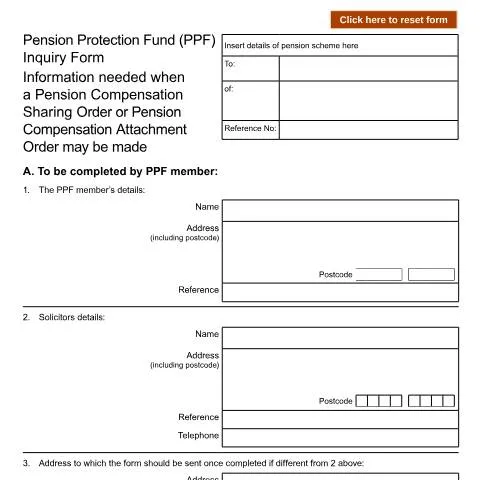
The Pension Protection Fund (PPF) Inquiry Form, commonly referred to as Form PPF, plays a crucial role in the context of matrimonial law and pension compensation sharing orders in the UK. This document becomes particularly significant in divorce proceedings or civil partnership dissolutions where pension rights are involved. When couples separate, it is not uncommon for pension rights to be included as part of the financial settlement. The PPF ensures that pension entitlements are managed fairly when a Pension Compensation Sharing Order or a Pension Compensation Attachment Order is in effect. Understanding the nuances of this form is critical for all parties involved, especially when it comes to the legal and financial implications of pension sharing.Who Needs to Complete Form PPF?
Form PPF must be completed by individuals who are members of the Pension Protection Fund and are subject to a Pension Compensation Sharing or Attachment Order. This includes:- Individuals undergoing divorce proceedings where their pension rights are being considered.
- Solicitors representing either party in the matrimonial proceedings.
- Members of the PPF who need to provide information related to their pension entitlements for court purposes.
The Legal Framework Surrounding Form PPF
The PPF Inquiry Form is grounded in the Pension Protection Fund (Pension Compensation Sharing and Attachment on Divorce etc.) Regulations 2011. These regulations outline the rights and obligations regarding pension entitlements when relationships dissolve, particularly focusing on the fair and equitable distribution of pension assets. Regulation 3 and 4 of the 2011 Regulations specify how pension compensation sharing orders should be implemented, while Rule 9.39(1) of the Family Procedure Rules 2010 governs how such information must be presented in legal proceedings. Understanding these regulations is essential for anyone involved in pension compensation sharing, as they dictate the timelines and requirements for submitting Form PPF.Key Features of Form PPF
The structure of the Form PPF is designed for clarity and efficiency. It contains several sections that require specific information:- Member's details: This includes personal information about the PPF member, including their name, address, and any reference numbers.
- Solicitor's details: If applicable, the solicitor's name and contact details must also be provided.
- Information provision section: This deals with the necessary information to be provided to the court and involves valuation of the pension entitlement.
Steps Involved in Completing Form PPF
Completing Form PPF involves a systematic approach to ensure that all required information is provided correctly. Here’s a step-by-step breakdown:- Gather Personal Information: Collect all personal and pension details, including your National Insurance number, to fill out the member's section.
- Contact Your Solicitor: If you are represented by a solicitor, coordinate with them to ensure that they provide their details accurately in the form.
- Accurate Valuation: Ensure that the Cash Equivalent Valuation (CEV) is calculated accurately, as this forms the basis of the pension entitlement information.
- Sign Off: The member must sign the form to authorise the release of information, unless a court order requires otherwise.
- Submission: Submit the completed form to the Pension Protection Fund at the specified address: Pension Protection Fund, Operations Team, P O Box 128, Mowden Hall, Darlington DL1 9DA.
Understanding the Cash Equivalent Valuation (CEV)
A pivotal aspect of Form PPF is the necessity for a Cash Equivalent Valuation (CEV) to determine the value of pension assets to be shared. The PPF is obliged to respond to requests for CEVs within a specified timeframe:| Situation | Response Timeframe |
|---|---|
| General request for valuation | 1 month |
| Pension sharing order notification | 6 weeks |
| Request as part of matrimonial proceedings | Within 3 months |
What Happens After the Submission of Form PPF?
Once Form PPF has been submitted, the Pension Protection Fund will process the information as per the regulations. They will confirm whether they have sufficient information to proceed with the sharing order. If additional information is required, they will notify the involved parties within the timescales stipulated in the regulations. Moreover, once the information is processed, it can influence the court’s decision regarding pension sharing. The court may issue orders based on the valuations provided, so ensuring that all information is accurate at the outset is crucial.Potential Pitfalls and Errors: Navigating Common Challenges
Filling out Form PPF can come with its challenges. Missing information or inaccuracies can lead to delays or complications in the sharing process. Here are some common pitfalls:- Inaccurate Information: Ensure that all personal and pension details are accurate; this includes double-checking names and addresses.
- Incorrect Valuation: An inaccurate CEV can lead to disputes or unfavorable outcomes. If in doubt, seek a professional valuation.
- Missing Signatures: The member's signature is crucial for authorising the release of information; failure to provide this can delay the process.
Special Cases: Handling Complex Situations
Certain situations may require additional considerations when completing Form PPF. Here are a few examples:International Considerations
If one party resides overseas or if the pension scheme is governed by international laws, it’s essential to seek legal guidance. The complexities of international divorce law may impact how pension rights are treated, and the PPF may need to account for different jurisdictions.Minors and Vulnerable Parties
If the PPF member is a minor or deemed vulnerable, additional protections may apply. Legal representatives will typically get involved to ensure that the interests of the minor are preserved.Urgent Cases
In urgent cases, where immediate financial support is required, it’s advisable to notify the court and the PPF of the urgency. Timelines may be expedited in situations of financial hardship, so clear communication with all parties is essential.Final Considerations and Resources
Filling out Form PPF is a critical step for individuals navigating the complexities of pension compensation sharing. It is vital to approach this process thoroughly and with careful attention to detail. For those needing further assistance, consider consulting with a solicitor who specializes in family law and pensions. They can provide invaluable guidance tailored to your specific situation. Maintaining open lines of communication with the Pension Protection Fund can also facilitate a smoother process. Be proactive in following up on your form submission and ensure that any requests for additional information are addressed promptly. Ultimately, understanding the intricacies of the PPF Inquiry Form can significantly impact the outcome of pension sharing arrangements, ensuring that all parties are treated fairly and justly in accordance with the law.Understanding the Pension Compensation Sharing Order (PCSO)
When a couple separates or divorces, issues concerning their pension rights can arise, particularly if one partner has accrued significant pension benefits. A Pension Compensation Sharing Order (PCSO) is a legal mechanism that enables the division of pension benefits between spouses or civil partners. This order can be crucial for ensuring a fair distribution of assets during the divorce process.
To apply for a PCSO, it is essential to gather accurate information about both parties' pension entitlements, including the value of the pension benefits and the pension scheme in which they are held. The process can vary depending on the type of pension involved, whether it’s an occupational pension or a personal pension scheme. Detailed paperwork must be submitted to the court, and it is advisable to seek assistance from legal professionals familiar with family law and pension regulations.
Furthermore, if a Pension Compensation Attachment Order (PCAO) is sought instead, the underlying principles remain the same. Both orders aim to ensure that a spouse or civil partner receives their fair share of the pension benefits, which may necessitate a clear understanding of the Pension Protection Fund implications, especially if the pension scheme is in distress or has entered a Pension Protection Fund assessment period.
Required Documentation for Form PPF Submission
Completing the PPF inquiry form requires meticulous attention to detail and a comprehensive understanding of the information the Pension Protection Fund requires to process your case effectively. Here’s a breakdown of the essential documentation needed:
- Pension Scheme Details: You must provide the name of the pension scheme and the scheme reference number. This helps the PPF to locate the correct records efficiently.
- Personal Information: Include your name, address, date of birth, and National Insurance number. For the other party involved, you will need similar details, which will be crucial for validating claims.
- Details of the Pension Compensation Sharing Order: If a PCSO is already in place or if you're applying for one, include specific details of the order, such as the date of issue and any relevant court reference numbers.
- Current Value of Pension Benefits: This may be obtained through a statement from the pension provider, indicating the current cash equivalent transfer value (CETV) of the benefit.
- Proof of Divorce or Separation: Documentation such as the divorce decree absolute or separation agreement will be required to demonstrate the relationship status between the parties involved.
Organising these documents ahead of time can streamline the process and reduce potential delays in your application. It's also advisable to keep copies of all paperwork submitted, as they may be crucial for future reference or if there are queries regarding your submission.
Potential Challenges and Considerations
While completing the PPF inquiry form and navigating the pension division process can seem straightforward, several challenges may arise. Understanding these can help you prepare and mitigate potential issues.
Pension Value Discrepancies: One common challenge arises from discrepancies in the assessment of pension values between parties. Engaging a financial advisor who specializes in pensions can help provide an independent valuation, leading to a fairer settlement.
Delays in Processing: The PPF processes a substantial volume of inquiries, which may lead to delays. Be proactive in following up on your submission and ensure that any additional information requested by the PPF is provided promptly.
Legal Implications of Orders: Be aware that once a PCSO or PCAO is granted, it can have long-term implications on your finances. It’s essential to seek legal advice to fully understand how these orders will affect your pension benefits and overall financial status moving forward.
Tax Considerations: The division of pension benefits may also have tax implications, which must be taken into account. Consult with a tax advisor to understand how your specific situation might affect your tax liability, especially concerning the Lifetime Allowance and any potential tax charges on pension benefits.
By staying informed about these potential challenges and preparing thoroughly, you can navigate the complexities of pension sharing orders and the Pension Protection Fund more effectively.