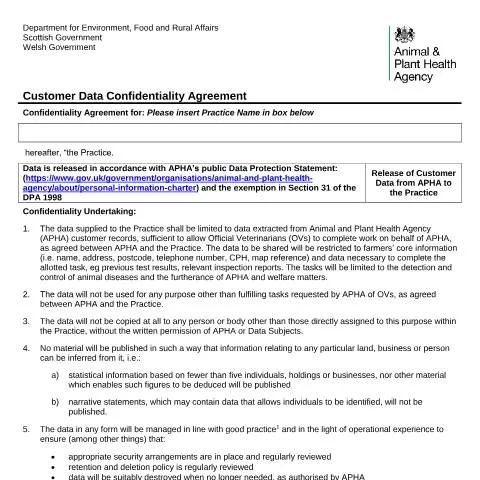
Understanding the OV32 Confidentiality Agreement: A Key Document for Official Veterinarians
The OV32: Official Veterinarian (OV) confidentiality agreement is an essential document for veterinary practices that work closely with the Animal and Plant Health Agency (APHA) in the UK. This agreement serves to uphold the confidentiality of sensitive data that is shared between APHA and veterinary practices. Understanding the importance of this agreement, its application, and the ramifications of non-compliance is crucial for maintaining the integrity of animal health services.
Navigating the Confidentiality Undertaking
The OV32 agreement comprises several critical sections that outline how data can be utilized, shared, and protected. Below is an analysis of the core components:
1. Data Usage Limitations
- The data supplied is restricted to information necessary for fulfilling roles assigned by APHA, such as detecting animal diseases and ensuring welfare.
- Only relevant data, such as farmers' core information and past inspection reports, may be utilized.
2. Data Sharing Restrictions
One of the fundamental principles of the OV32 is that the data cannot be disclosed to any unauthorized parties. This ensures that sensitive information stays within the confines of trusted veterinary practices.
3. Security Measures
Practices must implement appropriate security measures to protect the data. This includes encrypted communications and regular reviews of data handling policies. Any breach can lead to severe consequences, including legal repercussions.
Who Needs to Complete the OV32?
Primarily, the OV32 agreement is to be filled out by official veterinarians or veterinary practices collaborating with APHA. However, understanding who specifically needs to sign off on this document can vary based on several factors:
- Official Veterinarians: They are the primary signatories and must understand the confidentiality obligations.
- Support Staff: In some cases, managerial staff may also need to sign, especially if they handle sensitive data.
Completing the OV32: Step-by-Step
Filling out the OV32 form requires careful attention to detail. It is essential to ensure all relevant sections are accurately completed to avoid delays or potential penalties.
Essential Fields to Fill
- Practice Information: Insert the practice name in block letters at the top of the document.
- Signatories: Ensure that all names, job titles, and contact information are filled out clearly.
Timeline and Submission Protocol
Understanding the timeline for submitting the OV32 agreement is vital. Typically, the agreement should be returned to APHA promptly following its completion. Here’s what to keep in mind regarding deadlines:
- It’s advisable to complete and return the agreement prior to the start of any assignments requiring data access.
- Keep an eye on APHA communications for any updates regarding submission deadlines.
The Importance of Compliance: Consequences and Remedies
Non-compliance with the OV32 agreement can lead to serious ramifications, not only for the individual practice but also for the broader veterinary community.
Potential Consequences of Breach
- Legal Action: Breaching the confidentiality agreement may lead to legal scrutiny and potential lawsuits.
- Reputation Damage: A breach can severely impact a practice’s reputation among clients and regulatory bodies.
Remedying Breaches
In the event of a data breach, it is essential to act quickly. The OV32 outlines a clear protocol for notification:
- Contact APHA immediately.
- Document the breach thoroughly, including all relevant details for further assessments.
Distinct Features of the OV32 Compared to Other Forms
Veterinary practices often face confusion between various forms related to data handling and animal welfare. Understanding how the OV32 differs from other agreements is crucial:
| Document | Purpose | Primary Focus |
|---|---|---|
| OV32 Confidentiality Agreement | To safeguard confidential APHA data | Data protection and confidentiality |
| Animal Health Certificate | To certify animal health status | Animal welfare compliance |
| Veterinary Practice Registration | To register veterinary practices | Operational compliance |
Historical Context and Regulatory Framework
The OV32 confidentiality agreement exists within a stringent legal framework aimed at protecting personal data. The key pieces of legislation include:
- Data Protection Act 2018: Establishes guidelines for data processing to protect individual privacy.
- UK General Data Protection Regulation (GDPR): Provides a comprehensive approach to data regulation.
These regulations highlight the importance of confidentiality in veterinary practices and ensure that personal data handling aligns with best practices.
After Submission: What Comes Next?
Once the OV32 agreement has been submitted, veterinary practices must be prepared for the next steps:
Monitoring and Compliance Checks
- APHA may conduct periodic audits to verify compliance with the confidentiality agreement.
- Practices are encouraged to maintain clear records of data usage and any communications related to data requests.
Training and Awareness
It is equally important for all staff involved in handling confidential data to undergo regular training:
- Understanding the implications of data protection and the importance of confidentiality.
- Continual updates regarding changes in legal requirements or APHA protocols.
This proactive approach not only safeguards the practice but also enhances the overall integrity of veterinary services in the UK.
Understanding the Role of Official Veterinarians (OVs) in the UK
Official Veterinarians (OVs) play a crucial role in maintaining animal health and welfare as well as public health in the UK. These professionals are appointed by the government and carry out essential duties related to animal disease control, meat hygiene, and animal welfare inspections. To fulfil their responsibilities effectively, OVs must adhere to strict regulatory guidelines and confidentiality agreements, which ensure that the information gathered during their inspections and interactions remains secure and protected.
OVs are primarily involved in the enforcement of legislation concerning the welfare of animals at slaughter and during transport. They also assess the health status of animals in the food supply chain to prevent outbreaks of zoonotic diseases that could affect both animal and human populations. Their work requires not only a high level of veterinary expertise but also an understanding of the legal implications surrounding their role.
To become an OV, a veterinary surgeon must be registered with the Royal College of Veterinary Surgeons (RCVS) and must undergo additional training specific to the OV role. This includes understanding the legal frameworks within which they operate, such as the Animal Welfare Act and relevant EU regulations, even post-Brexit. Being aware of these regulations helps OVs navigate the complexities of their duties while maintaining stringent confidentiality practices.
Confidentiality and Data Protection in Veterinary Practice
The confidentiality agreement for Official Veterinarians (OV32) is grounded in the principles of the Data Protection Act 2018 and the UK General Data Protection Regulation (UK GDPR). These regulations are designed to protect personal data and privacy, and they govern how OVs must handle sensitive information encountered during their professional duties.
Under the OV32 agreement, OVs are required to keep all information obtained in the course of their duties confidential. This includes data about animal health, ownership details, and any business processes that may involve sensitive operational information. The obligation to protect this information extends beyond the duration of employment and into the future, ensuring that any confidential data remains untouched by unauthorized parties.
It is important for OVs to be aware of the specific provisions laid out in the confidentiality agreement. Breaches of confidentiality can result in severe penalties, including disciplinary action by the RCVS, as well as legal consequences under the Data Protection Act. Moreover, maintaining confidentiality helps to build trust with farmers, businesses, and the general public, which is essential for effective disease control and compliance with animal health regulations.
The Impact of Confidentiality Agreements on Animal Welfare and Public Health
The implications of the confidentiality agreement for Official Veterinarians extend far beyond legal obligations; they significantly influence animal welfare and public health outcomes. By safeguarding sensitive information, OVs can effectively monitor and report on animal health issues without the risk of undermining the trustworthiness of the data gathered. This is particularly important in situations involving disease outbreaks or welfare concerns, where transparency is crucial for prompt intervention.
For example, if an OV discovers a case of bovine tuberculosis (bTB), they are required to follow strict protocols for reporting while maintaining the confidentiality of the affected farm's identity. This ensures that farmers can collaborate with veterinary authorities to address the disease without fear of public backlash or potential financial repercussions.
Moreover, the effectiveness of OVs in managing public health risks is closely linked to their adherence to confidentiality agreements. By maintaining the integrity of sensitive data, they can participate in surveillance and control strategies that hinge upon accurate reporting and data sharing among veterinary services, public health officials, and policymakers. This collaborative approach is vital for implementing effective responses to animal diseases that could pose threats to public health, emphasizing the broader role of OVs in ensuring both animal and human health are preserved.
In conclusion, the confidentiality agreement for Official Veterinarians (OV32) is a critical component of their role in the UK. It ensures that sensitive information is protected, thereby fostering an environment of trust that is essential for effective animal health management and public health safety. OVs must remain diligent in upholding these standards to support animal welfare and protect communities across the nation.