Understanding the Deletion Notice for Park Homes: A Comprehensive Guide
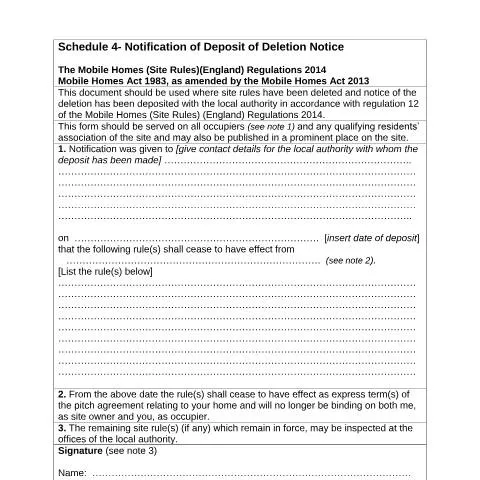
When it comes to living in a park home, understanding the legalities surrounding site rules is crucial. A significant document in this context is the Park Homes: Notification of Deposit of Deletion Notice. This notice is essential for site owners and residents alike, as it outlines the process of deleting specific site rules and the impact of such deletions. In this guide, we will delve into the various aspects of this document, ensuring that all stakeholders are well-informed and equipped to navigate the complexities of park home living.
Why is the Deletion Notice Significant?
The deletion notice is not merely a formality; it plays a vital role in the legal framework governing park homes. Under the Mobile Homes (Site Rules) (England) Regulations 2014, this notice must be deposited with the local authority when certain site rules are deleted. Here are a few reasons why understanding this document is paramount:
- Legal Clarity: It clarifies which rules are no longer in effect, thereby protecting the rights of both site owners and residents.
- Transparency: The notice must be served to all occupiers and any resident association, ensuring everyone is on the same page regarding rule changes.
- Compliance Requirement: Failure to follow the appropriate procedures when making changes to site rules can lead to legal disputes.
The Procedure: Step-by-Step Insights
Understanding the steps involved in issuing a deletion notice is vital for compliance. Here's how the process typically unfolds:
- Identify Rules for Deletion: The site owner must first determine which specific rules are to be deleted.
- Notification to Local Authority: The site owner must notify the local authority where the deletion notice will be deposited.
- Serving Notice: The deletion notice must be served to all occupiers and any resident association on-site.
- Effective Date: The rules cease to have effect 22 days after the notification date, which must be clearly stated in the notice.
- Finalise Documentation: The notice must be signed by the site owner or an authorised representative, confirming the date of deposit with the local authority.
Who Should Be Aware of This Notice?
This document is particularly important for several parties involved in the park home community:
- Site Owners: They must ensure compliance with regulations and communicate effectively with residents.
- Occupiers: Residents should be aware of their rights and obligations following any rule deletions.
- Resident Associations: These groups play a crucial role in representing the interests of residents and must stay informed about changes in site rules.
Key Considerations for Effective Use of the Deletion Notice
There are several critical aspects that individuals must consider when working with the deletion notice:
Timing is Everything
The deletion notice must be deposited within a specific timeframe. The date of deposit needs to be recorded accurately, as the rules will cease to have effect 22 days after this date. This time frame is crucial for ensuring that all legal processes are observed.
Communication and Accessibility
Once the notice is served, it is recommended that it be published in a prominent location on the site. This ensures that all residents are informed and can refer to the deletion notice when needed. Some effective practices include:
- Posting the notice on community boards.
- Sending copies to individual residents.
- Engaging with resident associations to disseminate information.
Limitations of the Deletion Notice
While the deletion notice is a powerful tool, it does have its limitations. Understanding these boundaries is essential to avoid misunderstandings:
- Scope of Deletion: Only specific rules can be deleted. The notice will outline which rules are affected, and any other rules not mentioned will remain in force.
- Application to New Residents: New residents moving onto the site may not be immediately aware of the changes unless properly informed by the site owner.
- Legal Challenges: Residents can contest the deletion of rules if they believe the process was not followed correctly.
Exploring Related Documents in the Context of Park Homes
Understanding the deletion notice is part of a broader framework of regulations governing park homes. Here are some key documents that are often referenced in conjunction with the deletion notice:
| Document |
Purpose |
| Mobile Homes Act 1983 |
Provides the foundational legal framework for the use of mobile homes. |
| Mobile Homes (Site Rules) (England) Regulations 2014 |
Specifies the requirements for establishing and modifying site rules. |
| Site Agreement |
Details the terms agreed upon between site owners and residents regarding occupancy. |
Final Thoughts: Using the Deletion Notice Effectively
For site owners and residents living in park homes, the Park Homes: Notification of Deposit of Deletion Notice is a critical document that can significantly impact community living. By understanding its significance, the procedures involved, and the related documents, individuals can better navigate their responsibilities and rights within the park home framework.
Being well-informed also aids in fostering transparent relationships between site owners and residents, ultimately leading to a more harmonious living environment. It is advisable for both parties to maintain an open line of communication regarding any changes to site rules, ensuring all members of the community are informed and engaged.
Understanding the Deletion Notice Process for Park Homes
The deletion notice process in the context of park homes is a vital aspect of the legal framework governing residential sites in the UK. Under the Mobile Homes Act 1983, site owners are required to notify the local authority when they intend to serve a deletion notice on a home. This notice indicates that the home is no longer suitable for occupation and provides a mechanism for the owner to legally remove it from the park.
It's essential to understand the circumstances that lead to a deletion notice. A park home may be subject to a deletion notice for several reasons, including the physical state of the home, failure to comply with site rules, or instances where the owner has abandoned the property. The local authority plays a critical role in this process, ensuring that the notice is compliant with regulations and that appropriate actions are taken in the interest of residents.
Upon serving a deletion notice, the site owner must notify the resident in writing, clearly detailing the reasons for the notice and the implications it carries. This communication must be delivered to the resident's last known address or through direct contact if appropriate. Residents should be aware of their rights during this process, including the right to appeal the decision and seek legal advice.
Moreover, the withdrawal of a deletion notice can occur; if the reasons for the notice are resolved, the site owner may retract the notice, allowing the resident to retain their home. Understanding this dynamic is crucial for residents and site owners alike, as it emphasizes the importance of adhering to legal procedures while also protecting the rights and welfare of individuals living in park homes.
Implications of the Data Protection Act on Deletion Notices
The Data Protection Act 2018 and the UK General Data Protection Regulation (UK GDPR) play a pivotal role in the processing of personal information during the deletion notice procedure for park homes. When a deletion notice is served, it involves the collection and handling of personal data, including details about the resident and their living situation.
Site owners must ensure that any personal data involved in the deletion notice process is handled in compliance with data protection laws. This means obtaining explicit consent for the collection and processing of this data, as well as ensuring that it is secured and used appropriately. Failure to comply with these regulations can result in significant legal implications for site owners, including potential fines and reputational damage.
Residents also have rights under the Data Protection Act, including the right to access their personal data held by the site owner and the right to request rectification if they believe their data is inaccurate. They can also request the deletion of their personal data in specific situations, particularly if it is no longer necessary for the purposes for which it was collected or if they withdraw their consent.
Furthermore, transparency is key in this process. Site owners should provide a clear privacy notice to residents, informing them about the types of personal data collected, the purposes for which it is being used, and their rights under the data protection framework. This not only fosters trust between residents and site owners but also ensures that both parties are aware of their obligations and rights under the law.
Appealing Against a Deletion Notice: Steps and Considerations
For residents who receive a deletion notice, it is crucial to understand the avenues available for appeal. If a resident believes that the deletion notice has been wrongly issued, they have the right to challenge this decision. The appeals process is typically directed to the local authority, and residents must be aware of the specific procedures involved.
Firstly, it is advisable for the resident to carefully review the reasons provided in the deletion notice. Understanding the specific claims made by the site owner will form the basis of the appeal. Residents should gather any evidence that supports their position, which may include photographs of the property, communication with the site owner, or documentation proving compliance with site rules.
Once the resident has gathered necessary information, they should prepare a written appeal to the local authority. This appeal must be submitted within a statutory timeframe, typically within 28 days of receiving the deletion notice. The written appeal should clearly outline the grounds for contesting the notice, accompanied by any supporting evidence.
The local authority will then review the appeal and may request further information or clarification from both the resident and the site owner. It’s essential for residents to be responsive and cooperative during this stage to facilitate a fair assessment. The local authority’s decision will be communicated in writing, and if the appeal is upheld, the deletion notice may be rescinded.
In cases where the appeal is denied, the resident may wish to seek legal recourse, potentially through a tribunal, to further contest the validity of the deletion notice. Engaging with legal assistance can provide valuable guidance throughout this process, ensuring that the resident's rights are fully protected.
Navigating the deletion notice process can be complex; hence, remaining informed and proactive is critical for residents facing this situation. Understanding the implications of their decisions, the appeal process, and the legal obligations surrounding data protection will empower residents to effectively advocate for their rights within the park home community.