Navigating the Application Process for Maintaining a Plant Variety
In the constantly evolving field of agriculture and horticulture, maintaining the integrity and availability of plant varieties is crucial. The Great Britain and Northern Ireland Variety Lists: Application to Maintain a Plant Variety is a pivotal document that allows applicants to take on the responsibility of a plant variety, ensuring its continued cultivation and distribution. Whether you are a seasoned grower or a new entrant into plant breeding, understanding this application is vital for ensuring compliance and success in maintaining your plant variety.
The Role of the Application in the Larger Regulatory Framework
This application form plays an essential role within a broader regulatory context governed by the Seeds (National Lists of Varieties) Regulations 2001 and its Northern Ireland counterpart, the Seeds (Variety Lists) Regulations 2020. These regulations are enforced by the Animal and Plant Health Agency (APHA), which oversees the registration and maintenance of plant varieties across the UK. The form serves as a formal request for recognition as a maintainer of a plant variety listed under these regulations, ensuring that all parties involved in plant breeding and maintenance adhere to the established legal standards.
Who Should Submit the Application?
The application can be submitted by various entities:
- Individuals: If you are acting on your behalf as a private grower or breeder.
- Companies or Partnerships: For corporate entities, the application must be signed by an authorized representative, such as a director.
- Joint Maintainers: If you are applying to jointly maintain a variety with another party.
Step-by-Step Guide to Completing the Application
Successfully completing the application requires diligence and attention to detail. Below is a structured approach to ensure all necessary information is gathered and correctly filled out.
Gathering Preliminary Information
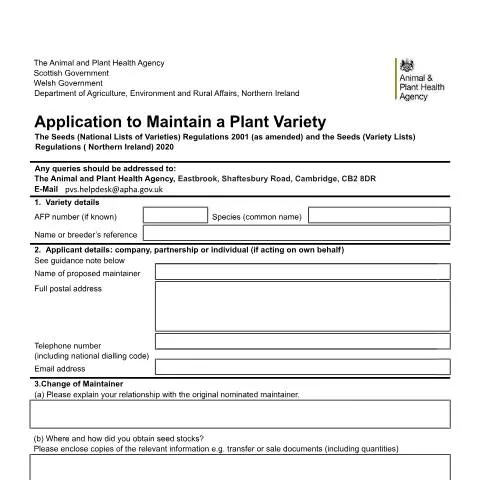
- Variety Details: Identify the plant species and provide the AFP number if available. This number helps streamline the application process.
- Applicant Information: Clearly state the name of the proposed maintainer, including your full postal address, telephone number, and email. It’s essential to use BLOCK LETTERS for clarity.
- Change of Maintainer Section: If applicable, indicate your relationship with the original maintainer and clarify your intent, whether you are becoming a sole maintainer, a joint maintainer, or replacing a current maintainer.
Documentation Requirements
As part of the application process, it’s important to provide thorough documentation:
- Seed Stock Verification: Include copies of documents related to the transfer or sale of seed stocks. This can encompass invoices, transfer agreements, or stock summaries.
- Signature Requirements: Depending on your status, ensure the application is signed by the appropriate individual (e.g., a director for a corporate body).
Timelines and Deadlines: When to Act
Understanding the timelines associated with this application is crucial for timely submission and adherence to regulatory requirements. The application does not have a fixed annual deadline but should be submitted as soon as you are ready to maintain a variety.
Post-Submission Timeline
Once you submit your application, APHA will review your submission. Typically, the review process can take several weeks. Here’s what you can expect:
- Initial Review: APHA will check the completeness of your application.
- Additional Information: If information is missing or unclear, you may be contacted for further details.
- Approval Notification: Upon successful review, you will receive a notification confirming your status as a maintainer on the GB and NI Variety Lists.
Tackling Potential Hurdles: What if Your Application is Rejected?
Receiving a rejection can be disheartening, but understanding the appeals process can empower you to take corrective actions. Common reasons for rejection include:
- Incomplete application forms.
- Lack of relevant documentation.
- Failure to meet the criteria for maintainers.
If your application is rejected, consider the following steps:
- Review Feedback: Carefully read the feedback provided by APHA to understand the reasons for rejection.
- Rectify Issues: Address the specific concerns raised in the feedback; this could involve gathering more comprehensive documentation or clarifying details in your application.
- Resubmit: After addressing the issues, reapply with the corrected information. Ensure all required documentation is included.
Special Considerations for Complex Situations
Certain situations may complicate the application process. It is essential to be aware of these complexities to navigate them effectively:
International Applicants
If you are applying from outside the UK, special rules may apply. It's advisable to check guidelines specific to international maintainers, which may include additional documentation and approvals.
Minors and Guardianship
For applicants under the age of 18, a parent or legal guardian must submit the application on their behalf. Ensure that the guardian provides their information and signature where applicable.
Urgent Applications
In cases of urgency, such as when a variety is in immediate danger of being lost, you may contact the APHA to inquire about expedited processing options. Keep in mind that urgent requests must still comply with all necessary documentation and legal requirements.
Understanding Data Protection Considerations
As with any application involving personal information, the Data Protection Act 2018 plays a crucial role. Any personal data submitted will be handled in line with UK GDPR regulations:
- Your data will only be used for processing your application and maintaining records.
- APHA is committed to safeguarding your data privacy and will not share your information with third parties without consent.
For further information on how your data is managed, visit the APHA's personal information charter on their website.
Conclusion: The Importance of Compliance and Diligence
Submitting the Great Britain and Northern Ireland Variety Lists: Application to Maintain a Plant Variety is an essential step for anyone looking to maintain a specific plant variety legally and efficiently. By following the outlined steps and understanding the broader context of this application, applicants can ensure their compliance with regulations and contribute positively to the agricultural landscape of the UK. Each plant variety represents a significant investment of time and resources, and securing its maintenance is paramount for future growth.
Understanding the Importance of Plant Variety Rights in the UK
Plant Variety Rights (PVR) play a crucial role in promoting innovation and agricultural development in Great Britain and Northern Ireland. By granting exclusive rights to breeders, the system encourages the development of new plant varieties that can enhance food security, improve crop resilience, and increase productivity.
Importantly, the UK operates under the Plant Variety Rights Act 1997, which aligns with the UPOV (Union Internationale pour la Protection des Obtentions Végétales) convention, establishing a framework for the protection of new plant varieties. This legal framework not only protects the intellectual property of breeders but also ensures that farmers and consumers benefit from diverse and improved agricultural products.
For applicants, the route to obtaining PVR involves several key steps, including the submission of an application to the UK Plant Variety Rights Office, detailed testing for distinctiveness, stability, and uniformity of the variety, and adherence to rigorous guidelines set forth by the Animal and Plant Health Agency. Understanding this process is vital for anyone looking to maintain and protect their plant varieties effectively.
Application Process for Maintaining a Plant Variety: Key Considerations
The application process for maintaining a plant variety is intricate and requires attention to several critical factors. Firstly, an applicant must ensure that their plant variety is distinct, uniform, and stable (DUS) before applying. This means that the variety must be sufficiently different from existing varieties, consistent in its characteristics, and stable over successive generations.
Once these criteria are met, the applicant must prepare a comprehensive application, including detailed descriptions of the plant variety, evidence of DUS testing, and all necessary supporting documents. The fee structure, which varies depending on the type of variety and the scope of protection sought, also needs to be considered. For instance, the application fee currently carries a basic charge, but additional fees may apply for subsequent growing trials, which are mandatory for certain crops.
It’s essential to submit the application within the designated time frames, as delays can impact the variety's eligibility for protection. Upon submission, the application will undergo a thorough examination by the Plant Variety Rights Office, where it may be subject to queries or requests for additional information. After a successful review, the variety may be granted protection, allowing the breeder to control its propagation and commercial exploitation.
Challenges and Opportunities in the Plant Variety Maintenance Landscape
The landscape for maintaining plant varieties in the UK is continually evolving, presenting both challenges and opportunities for breeders. One significant challenge is the increased scrutiny regarding the environmental impact of agricultural practices, which has led to a push for more sustainable varieties. Breeders must balance the demand for high-yield varieties with the need for ecological sustainability, which may require innovation and adaptation in breeding techniques.
Moreover, the ongoing adjustments in regulations, particularly post-Brexit, have introduced complexities regarding intellectual property rights and international trade. Breeders may need to navigate different legal frameworks when seeking protection for their varieties outside the UK, underscoring the importance of understanding both local and international laws related to plant variety rights.
However, these challenges also provide opportunities for breeders to engage in collaboration with research institutions and other stakeholders. By forming partnerships, they can leverage shared resources to develop new varieties that meet emerging consumer demands while complying with sustainability goals. Furthermore, advancements in biotechnology and genetic research present promising avenues for creating innovative plant varieties that can thrive in changing climatic conditions.
In summary, while the path to maintaining plant varieties in Great Britain and Northern Ireland may be fraught with challenges, it also offers significant opportunities for those willing to adapt and innovate in a rapidly changing agricultural landscape.