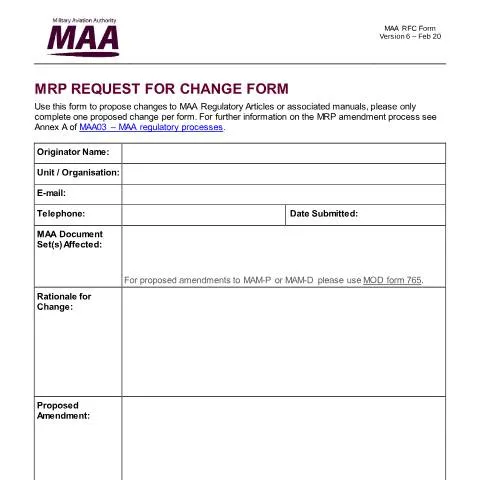
Understanding the MAA Request for Change Form: A Practical Journey
In the world of military aviation, regulatory compliance is paramount. Changes in procedures, protocols, and manuals can significantly affect operations. Enter the MAA Request for Change Form, a critical tool for those working within the Ministry of Defence’s Military Aviation Authority (MAA). This document is more than just a form; it’s a gateway for personnel to propose amendments that enhance safety, efficiency, and compliance.
Initiating Change: The Context for Submission
Imagine you’re a safety officer in a military aviation unit, identifying a flaw in the existing regulations that could lead to operational risks. What should be your first step? The answer lies in submitting the MAA Request for Change Form. This form serves as the mechanism for suggesting modifications to MAA Regulatory Articles or associated manuals, allowing for a structured and formal approach to regulation updates.
Who Should Submit the Form?
- Unit Personnel: Any officer or staff member identified as a point of contact within the unit can initiate the request.
- Safety Officers: Those responsible for monitoring compliance and safety issues are often the primary users of this form.
- Administrative Staff: Individuals involved in documentation and data management may also find themselves filing these requests on behalf of operational teams.
Each submission must only propose a single change, making clarity and precision vital. Therefore, those drafting the request must be well-informed about the current regulations and the recommended changes.
The Process: From Proposal to Implementation
The journey of a submitted MAA Request for Change Form does not end with its completion. Understanding the complete process is crucial for the originator to navigate successfully through the approval stages.
Step-by-Step Submission Process
- Complete the Form: Fill out all required fields, including your name, unit, email, telephone number, and details regarding the proposed amendment.
- Rationale for Change: Clearly articulate why the change is necessary, providing sufficient context to justify the modification.
- Proposed Amendment: Detail the specific changes you wish to introduce.
- Submission: Forward the completed form via email to [email protected] or by post to the MAA office in Bristol.
- Await Feedback: After submission, the MAA will review the proposed changes and provide feedback, which may include requests for further information or clarifications.
Each of these steps contributes to a transparent and efficient amendment process. Understanding the timeline for each stage can help originators manage expectations and plan accordingly.
Decoding the Form: Essential Sections Explained
While the MAA Request for Change Form might appear straightforward, each section is crucial for ensuring clarity and compliance. Let’s break down the significant areas of the form that need careful consideration.
| Section | Description | Common Pitfalls |
|---|---|---|
| Originator Name | The name of the person proposing the change. | Failing to include a full name or proper title may delay processing. |
| Unit / Organisation | The specific military unit or organisation associated with the proposal. | Incorrect unit designation can lead to confusion and misrouting of requests. |
| Contact email for follow-up communication. | Using an unofficial email can hinder communication options. | |
| Date Submitted | The date the form is completed and sent for review. | Omitting this information can result in delays in processing. |
| MAA Document Set(s) Affected | Specify which MAA documents will be impacted by the proposed amendment. | Inaccurate identification of affected documents can complicate assessment. |
| Rationale for Change | A brief explanation of why the modification is necessary. | Vague or insufficient rationales may lead to rejection of the request. |
| Proposed Amendment | Explicit description of the changes being proposed. | Ambiguous language can cause misunderstanding and delay. |
Each section serves a distinct purpose, and taking care to complete each field accurately not only expedites the review process but also increases the chances of approval.
Understanding the Implications: Rights and Obligations
Submitting an MAA Request for Change Form isn’t merely a procedural task; it carries with it a spectrum of rights and obligations for the individual and the unit involved.
Rights of the Submitter
- Right to Feedback: After submission, the originator has the right to receive feedback on the proposal, whether accepted or rejected.
- Right to Resubmit: If the initial proposal is rejected, there’s an opportunity to correct and resubmit with additional justification.
- Right to Confidentiality: All personal information submitted is protected under the Data Protection Act 2018, ensuring privacy during the review process.
Obligations of the Submitter
- Obligation to Provide Accurate Information: The details provided must be correct and complete to avoid delays.
- Obligation to Justify Proposed Changes: The submitter is responsible for articulating a clear and compelling rationale for the amendment.
- Obligation to Follow Up: It is the submitter’s responsibility to follow up on the request if no feedback is received within a reasonable timeframe.
The interplay of rights and obligations ensures that the amendment process is fair and transparent, allowing for continuous improvement in military aviation regulations.
Timing Matters: Key Dates and Expectations
Understanding the timelines associated with the MAA Request for Change Form can greatly impact the operational capabilities of a unit. Knowing when to submit and what to expect afterward is essential.
Submission Timeline
- Changes can be proposed at any time, but it is advisable to do so as early as possible to align with operational schedules.
- Annual reviews of regulatory documents often occur during specific periods; awareness of these cycles can enhance the likelihood of successful amendments.
Post-Submission Process
- Review Duration: The review process by the MAA typically takes several weeks, depending on the complexity of the proposed changes.
- Expected Feedback: Submitters should expect to receive feedback within six weeks of proposal submission, though this can vary.
- Implementation Schedule: If approved, changes are generally integrated into the regulatory documents at the next scheduled update.
By understanding these timelines, individuals and units can better plan their operational strategies and ensure that regulatory changes are integrated efficiently.
How the MAA Request for Change Form Differs from Other Regulatory Forms
In the realm of military aviation, various forms and documents are required to ensure compliance and safety. Distinguishing the MAA Request for Change Form from similar documents is crucial for effective navigation of the regulatory landscape.
Key Differences
| Form | Purpose | Distinct Features |
|---|---|---|
| MAA Request for Change Form | To propose amendments to existing MAA Regulatory Articles. | Single-change focus, requires detailed rationale and proposed amendment. |
| MOD Form 765 | For proposed amendments specific to MAM-P or MAM-D. | Used in conjunction with specific manuals rather than general amendments. |
This distinction is vital for ensuring that personnel use the correct forms, preventing administrative errors that can lead to delays in regulatory updates.
Real-Life Impacts: Consequences of Non-Compliance
Understanding the implications of failing to submit a timely and accurate MAA Request for Change Form is crucial for all personnel in military aviation. Non-compliance can have far-reaching consequences.
Consequences of Inaction
- Operational Risks: Ignoring necessary changes can lead to safety hazards and operational inefficiencies.
- Regulatory Repercussions: Units may face scrutiny from oversight bodies for failure to comply with current regulations.
- Impact on Personnel: Potential disciplinary actions or adverse effects on career progression for individuals who do not adhere to compliance protocols.
By appreciating the gravity of these consequences, personnel are motivated to engage actively in the amendment processes, ensuring that regulations reflect current operational realities.
Final Thoughts on Navigating the MAA Request for Change Form
Engaging with the MAA Request for Change Form is a vital aspect of ensuring that military aviation practices remain safe and efficient. From understanding the nuances of the form itself to acknowledging the broader implications of submissions, every aspect contributes to a culture of compliance and continuous improvement.
For those involved in the process, attention to detail, clear communication, and an understanding of the regulatory environment are essential. By navigating this form correctly, personnel can play an integral role in shaping the operational landscape of military aviation.
Understanding the MAA (Military Aviation Authority) Request for Change Process
The MAA Request for Change Form is a critical component for any alterations in aviation operations, safety protocols, or regulatory compliance within the UK's military aviation sector. Understanding the intricacies of this process is essential for personnel involved in aviation management or operations. The request aims to maintain a high safety standard while ensuring that any changes made are compliant with existing regulations. This section will delve into the types of changes that can be requested and the implications they may carry.
Typically, the MAA Request for Change Form is utilized for various types of modifications, including but not limited to procedural changes, alterations in equipment specifications, and updates in safety management protocols. It is vital to ensure that all requested changes align with the overarching safety objectives of military aviation.
When filling out the form, users must provide detailed information that clearly outlines the necessity and impact of the proposed change. This includes a justification for the change, an assessment of risks involved, and a plan for implementation. All sections of the form must be completed accurately to prevent delays in processing, which can hinder operational readiness.
Common Pitfalls in Completing the MAA Request for Change Form
Completing the MAA Request for Change Form requires attention to detail and an understanding of the requirements set forth by the MAA. Several common pitfalls can lead to delays or rejections of requests, and being aware of these can increase the likelihood of a smooth approval process.
Fill in your form directly online
No printing: type your details into the boxes of the official form, tick, then download the PDF ready to send.
- 1Type into the form boxes
- 2Tick in one click
- 3Save and download the PDF
Firstly, one of the major issues is a lack of clarity in justifications. Often, submitters provide vague reasons for the requested change, which can lead to misunderstandings or the perception that the change is not necessary. It is essential to articulate clearly why the change is needed and how it will impact safety and operations.
Secondly, failing to include supporting documentation can significantly hinder the approval process. Any proposed change should be backed by relevant data, studies, or technical reports that substantiate the request. This not only strengthens the case but also demonstrates due diligence in the decision-making process.
Another frequent error is neglecting to engage with stakeholders early. The MAA expects that all relevant parties are consulted prior to submitting a change request. Not doing so may lead to opposition or concerns that could have been addressed beforehand, creating unnecessary delays.
Finally, not adhering to submission timelines can be detrimental. Each request is subject to specific processing times, and late submissions can affect operational schedules. To avoid this, familiarize yourself with the MAA's timelines and plan accordingly to ensure all necessary approvals are in place before the change is implemented.
Post-Submission: What Happens After You Submit Your Request?
Once the MAA Request for Change Form is submitted, it enters a multi-tiered review process. Understanding what to expect during this post-submission phase can greatly assist applicants in maintaining effective communication with the MAA and preparing for potential follow-ups.
The first step after submission is an initial review by MAA personnel, who will assess whether the request meets the basic criteria for consideration. This assessment includes a preliminary evaluation of the completeness of the form and the validity of the justifications provided. Should the form lack vital information, you may receive a request for clarification or additional details, which can extend the processing time.
If the request passes this initial review, it will be forwarded to a more comprehensive evaluation stage. During this phase, subject matter experts from relevant areas will conduct a thorough examination of the proposed change, including safety implications, operational feasibility, and compliance with existing regulations. This process may involve consultations with various stakeholders, ensuring a well-rounded assessment of the implications of the requested change.
Once the evaluation is complete, a recommendation will be made regarding the approval or rejection of the change request. If approved, the implementing team will receive guidance on the next steps, including timelines and any additional compliance requirements. In certain cases, minor modifications may be suggested, requiring the applicant to submit a revised request before final approval is granted.
It is crucial to maintain open lines of communication during this phase, as proactive engagement can help address any issues that arise promptly. Additionally, tracking the status of your request via the MAA’s official communication channels is advisable to stay informed about any developments.