Navigating the FTA Arbitration Panel Appointments Expression of Interest
The landscape of trade agreements is continuously evolving, creating a pressing demand for skilled arbitrators who can facilitate dispute resolution under Free Trade Agreements (FTAs). In this context, the document titled FTA Arbitration Panel Appointments: How to Express Interest serves a pivotal role. This document invites individuals with the requisite qualifications to declare their interest in being appointed to arbitration panels that will operate under various FTAs negotiated by the UK. Understanding the nuances of this document is crucial for those looking to contribute their expertise in international trade and arbitration.
Understanding the Context of Your Expression of Interest
The United Kingdom's commitment to establishing a robust trade framework necessitates a well-defined arbitration process for resolving disputes that may arise between parties engaged in international trade. The Department for Business and Trade (DBT) has initiated this call for expressions of interest to compile a roster of qualified arbitrators. This initiative aims to ensure that the arbitration panels are populated by individuals who not only have a deep understanding of trade law but also exhibit the necessary impartiality and professional integrity.
The Role of Arbitrators in International Trade
Arbitrators serve as neutral third parties who resolve disputes based on the evidence and arguments presented by the parties in conflict. Their decisions, known as awards, are binding and enforceable under international law. Typically, arbitrators in trade disputes require expertise in:
- International commercial law
- Trade agreements
- Dispute resolution procedures
By expressing your interest through this official document, you are positioning yourself as part of a vital mechanism that supports the integrity and smooth function of international trade.
Who Should Consider Submitting an Expression of Interest?
This invitation is primarily targeted at legal professionals, academics, and practitioners with substantial experience in international arbitration or trade law. However, there are several distinct profiles that may find this opportunity particularly relevant:
Experienced Practitioners
If you have a proven track record in handling complex trade disputes or have acted as counsel in international arbitration, your skills will be invaluable in this context. Similarly, individuals with experience in mediation or other alternative dispute resolution mechanisms are encouraged to apply.
Academics and Researchers
Those engaged in research or teaching related to international trade law or dispute resolution may also wish to express their interest. Your theoretical understanding complemented by practical insights could greatly enhance the arbitration process.
Industry Experts
Professionals who have worked extensively in sectors affected by international trade agreements, such as manufacturing, agriculture, or services, can offer practical perspectives that are beneficial during arbitration proceedings.
The Procedure: From Submission to Appointment
Submitting an expression of interest is a systematic process that unfolds over several stages. Familiarizing yourself with this journey can enhance your chances of a successful application.
Step 1: Preparation
Before you begin filling in the expression of interest document, it is prudent to gather relevant documentation that showcases your qualifications, such as:
- Curriculum Vitae (CV)
- Details of your relevant experience in arbitration or trade law
- Any endorsements or recommendations from recognized bodies in the field
Step 2: Completing the Document
When filling out the expression of interest, attention to detail is critical. Ensure that all sections are completed accurately to avoid unnecessary delays.
Key Sections to Focus On
- Personal Information: Provide accurate information about your qualifications and experience.
- Demonstrating Expertise: Highlight any prior experiences related to arbitration or trade disputes.
- Availability: Clearly indicate your availability for potential appointments.
Step 3: Submission
Once you’ve completed the document, it must be submitted as per the guidelines provided by the DBT. Pay attention to the submission deadlines to ensure your application is timely.
Step 4: Assessment of Applications
After receiving your submission, the DBT's Trade Disputes team will conduct a thorough assessment. The key criteria include:
- Your professional qualifications
- Relevant experience in arbitration or trade
- Demonstrated understanding of international trade laws
Step 5: Notification and Appointment
Should your expression of interest be successful, you will receive a notification outlining the next steps. Subsequently, you may be appointed to specific arbitration panels, depending on the demands of ongoing or future FTAs. Keep in mind that appointments may vary based on availability and specific trade disputes that arise.
The Legal Framework Guiding Your Expression of Interest
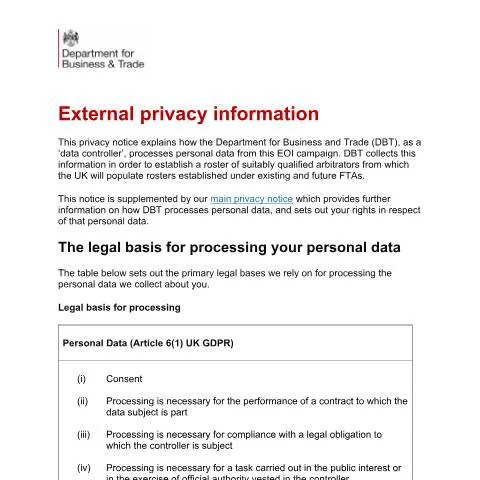
Understanding the legal backdrop against which this expression of interest operates can further illuminate its importance. The UK GDPR and the Data Protection Act 2018 set out strict guidelines on how personal data is managed by the DBT. Here are some critical components:
Legal Bases for Processing Personal Data
| Legal Basis | Description |
|---|---|
| Consent | Explicit permission obtained for processing your personal data. |
| Contractual Necessity | Data processing needed for fulfilling contractual obligations. |
| Legal Obligation | Processing required to fulfill legal responsibilities. |
| Public Interest | Processing necessary for tasks carried out in the public interest. |
These legal frameworks ensure that your personal information is safeguarded throughout the application process and beyond.
Your Rights Under Data Protection Laws
As an individual submitting an expression of interest, you have certain rights regarding your personal data, including:
- The right to access your personal data
- The right to rectify inaccuracies
- The right to restrict processing under certain circumstances
If you have concerns about how your data is being processed, you can contact the DBT’s Data Protection Officer or submit a complaint to the Information Commissioner’s Office (ICO).
Staying Informed: Following Up on Your Application
After submitting your expression of interest, it is essential to stay proactive. Here are some practical strategies for following up:
Timely Communication
If you have not received confirmation of your submission within a reasonable timeframe, it is advisable to reach out to the DBT. Ensure you have your submission reference number handy to facilitate the inquiry process.
Networking and Professional Development
Engaging with professional networks related to arbitration can provide insights and updates about ongoing panels and potential appointments. Attend relevant seminars, workshops, or webinars hosted by reputable organisations in the field.
Common Pitfalls and How to Avoid Them
Many applicants inadvertently overlook critical details that can hinder their chances of selection. Here are some common pitfalls to watch for:
Neglecting to Showcase Relevant Experience
It is crucial to ensure that your application clearly outlines your relevant experience in arbitration and trade law. Craft compelling narratives that illustrate your capabilities.
Ignoring Submission Guidelines
Failure to adhere to submission formats, timelines, or any specific instructions can lead to the rejection of your application. Always double-check the guidelines provided by the DBT.
Inaccurate Personal Information
Ensure that all personal information provided is up-to-date and accurate. Inconsistencies can lead to complications later in the process.
Continuing Your Engagement with the DBT
Engaging with the Department for Business and Trade does not end once the expression of interest is submitted. To remain an active participant in the arbitration community:
Monitor Opportunities
Regularly check DBT announcements and updates regarding future FTAs and arbitration panel opportunities. The landscape of international trade is dynamic, and new needs for arbitrators may emerge at any time.
Participate in Training and Certification Programs
Consider enrolling in additional training or certification programs related to arbitration and trade law. This not only enhances your credentials but also shows your commitment to professional development.
In navigating the complexities of international trade and arbitration, expressing your interest through the DBT's official document is a crucial first step. By understanding the nuances of the process, adhering to guidelines meticulously, and engaging proactively with the department, you can position yourself as a valuable arbitrator within the UK's trade framework.
Understanding the Role of FTA Arbitration Panels
The Free Trade Agreements (FTA) arbitration panels play a crucial role in resolving disputes that may arise between the parties involved in international trade agreements. These panels are essential for ensuring that the terms of FTAs are upheld and that any disagreements are addressed in an impartial manner. The primary function of an arbitration panel is to provide a legally binding resolution to disputes, which can include interpretations of the agreement, issues of compliance, or even damages due to breaches of contract.
Panel members are typically experts in international trade law, and they bring a wealth of experience to the table. This experience can stem from various sectors, including governmental bodies, academia, and private practice. The appointment of individuals to these panels is often done through a rigorous selection process that emphasizes the need for neutrality and expertise.
As the UK continues to negotiate and finalize various FTAs post-Brexit, understanding how these panels function and the criteria for appointments becomes increasingly critical for those interested in contributing to the arbitration process. By ensuring that the panel members have the necessary skills and experience, the integrity of the arbitration process is maintained, ultimately fostering confidence among the negotiating parties.
Criteria for Appointment to FTA Arbitration Panels
When expressing interest in serving on an FTA arbitration panel, it is essential to understand the specific criteria that are typically used to evaluate candidates. While the exact requirements may vary depending on the particular FTA and the appointing authority, there are several common qualifications that candidates should meet to enhance their chances of being selected.
1. Legal Expertise: A strong background in international trade law is paramount. Candidates should have a comprehensive understanding of the legal frameworks governing FTAs, alongside experience in arbitration processes. This could involve previous roles in legal practice, academia, or governmental advisory positions.
2. Relevant Experience: Beyond legal qualifications, having direct experience in trade negotiations or dispute resolution can be a vital asset. Candidates may be expected to demonstrate experience in handling cases similar to those likely to arise under the FTA's provisions.
3. Neutrality and Impartiality: An essential criterion is the ability to act without bias. Candidates must be able to demonstrate their commitment to impartiality, ensuring that all parties see them as fair arbiters. This may involve disclosing any past affiliations that could be perceived as conflicts of interest.
4. Language Skills: Given the international nature of FTAs, proficiency in multiple languages can be an advantage. This ability allows for broader communication and understanding during the arbitration process, particularly when dealing with parties from different linguistic backgrounds.
5. Continued Professional Development: Candidates should engage in ongoing education and training related to international trade law and arbitration. This commitment not only enhances their qualifications but also demonstrates a proactive approach to keeping abreast of changes and developments in the field.
The Application Process for FTA Arbitration Panel Appointments
Once candidates have familiarized themselves with the criteria for appointment to FTA arbitration panels, the next step is navigating the application process. This process can vary depending on the appointing authority but generally follows a structured format aimed at ensuring transparency and fairness.
1. Expression of Interest: The first step typically involves formally expressing interest through a dedicated channel. Many appointing authorities will have specific guidelines on how to submit this expression, which may include a detailed cover letter and a comprehensive CV highlighting relevant experience.
2. Submission of Supporting Documents: Candidates may be required to provide supporting documentation, such as references, evidence of previous arbitration experience, and proof of legal qualifications. It is vital to adhere to all specifications outlined by the authority to ensure the application is complete.
3. Review Process: Following the submission of applications, a review process ensues. This may involve a panel of experts evaluating the qualifications of each candidate against the predetermined criteria. Candidates may also be required to participate in interviews or assessments to further demonstrate their suitability.
4. Appointment Notification: Successful candidates will receive an official notification of their appointment, which may also outline the terms and conditions associated with their role on the arbitration panel. It is crucial for appointees to review these terms carefully to understand their obligations and responsibilities.
5. Training and Orientation: Once appointed, new panel members often undergo training or orientation sessions. These sessions aim to familiarize them with the specific FTA's stipulations and the procedural norms of the arbitration process, ensuring they are equipped to handle their roles effectively.