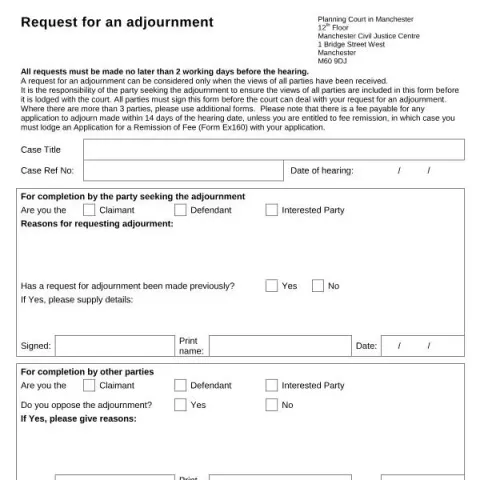
Navigating the Request for an Adjournment: Understanding Form PC001
In the context of the UK judicial system, a request for an adjournment holds significant implications for the parties involved in a case. Form PC001 is the official document that facilitates this request within the Planning Court in Manchester. This form can be crucial for applicants seeking to delay a hearing, whether due to unforeseen circumstances, the need for additional time to prepare, or other legitimate reasons. Understanding the intricate details of this form and its context is paramount for effective legal navigation.
The Regulatory Framework Behind Form PC001
The necessity for a structured approach to adjournments in court proceedings stems from various regulatory provisions and procedural norms that govern the judiciary in the UK. Form PC001 aligns with the principles set out in the Civil Procedure Rules (CPR), particularly Part 3, which deals with the management of cases and the powers of the court to control its own proceedings. The form not only ensures compliance with these rules but also protects the rights of all parties involved by mandating that their views be presented before a decision is made.
Legal Precedents Influencing Adjournment Requests
Over the years, case law has established precedents that influence the granting of adjournments, including the necessity of showing good cause for any delay. The court considers various factors, such as previous adjournment requests, the reasons provided, and the potential impact on the proceedings' integrity. Understanding these precedents can empower parties to present compelling arguments when submitting Form PC001.
Decoding the Layout of Form PC001
Completing Form PC001 accurately is vital for ensuring that your request is duly considered by the court. The form comprises several sections that must be filled out meticulously. Let’s break down each part to illuminate the requirements and common pitfalls.
Case Details Section
- Case Title: Clearly state the title of your case, as it appears on court documents.
- Case Reference Number: This identifier is crucial for tracking your application and should match the court's records.
- Date of Hearing: It is imperative to note this date accurately, particularly as requests must be made no later than two working days before the hearing.
Party Identification
The form requires you to specify whether you are the claimant, defendant, or an interested party. This classification is critical as it determines your standing in the case and the procedural rights accompanying it. For example, defendants might need to substantiate their reasons for opposing an adjournment more rigorously.
Reasons for Requesting an Adjournment
Providing a clear and concise explanation for requesting the adjournment is essential. The court expects you to present compelling reasons — whether due to health issues, the need for further evidence, or legal representation unavailability. Be prepared to justify these reasons fully. Misrepresentation or vagueness can lead to rejection of your request.
Opposition from Other Parties
If there are multiple parties involved, their views on the adjournment matter significantly. Each party must complete their section of the form, stating whether they oppose the request. Their reasons for opposition can influence the court's decision, so it’s beneficial to communicate openly with all parties, if possible, before lodging your request.
Filing the Form: Processes and Protocols
Once Form PC001 is adequately filled out, the next step involves its submission. This process can vary depending on whether you choose to file online or via traditional means.
Submission Channels
| Submission Method | Details | Considerations |
|---|---|---|
| Online Submission | Filing through the courts' digital portal, if available. | Quicker processing; confirmation of receipt. |
| Postal Submission | Mailing the completed form to Manchester Civil Justice Centre. | Longer processing time; ensure to use registered mail for tracking. |
| In-Person Submission | Delivering the form directly to the court. | Immediate confirmation but may incur waiting time. |
The Role of Form PC001 in a Broader Legal Context
Understanding Form PC001's role is crucial when considering its impact on your case. The adjournment request is not just a procedural step; it can significantly influence the trajectory of legal proceedings.
Impact on Case Timelines
When a hearing is adjourned, it delays the entire process, potentially leading to increased costs and extended timelines for resolution. This can have significant implications, especially in civil matters where timely resolution is often paramount. Hence, parties must weigh the benefits of delaying versus the urgency of the matter at hand.
Consequences of an Unsuccessful Request
If the court denies the adjournment request, you’ll need to be prepared to proceed with the hearing as scheduled. Failure to appear can lead to a default judgment against you, emphasizing the importance of careful consideration before filing.
Repercussions of Non-Compliance: Rights and Obligations
Filing an adjournment request is not merely a procedural courtesy; it carries specific obligations and rights for the parties involved. Understanding these can prevent severe repercussions.
Rights Granted by Form PC001
- Right to Representation: Each party has the right to present their case, including the right to seek adjournments.
- Right to Fair Hearing: If an adjournment is granted, it ensures that all parties can adequately prepare their cases.
Potential Consequences of Missteps
Neglecting to follow the proper procedure can result in adverse outcomes. For instance, if the form is submitted too late or is incomplete, the request can be rejected outright. Moreover, failing to include the views of all parties can lead to significant delays and judicial frustration.
Preparing Supporting Documentation: A Key Step
In addition to Form PC001, it is often necessary to prepare supplementary documents that support your request for an adjournment. The nature of these documents can vary significantly based on the context of your case.
Common Supporting Documents
- Medical Certificates: If health issues are cited, a doctor's note substantiating the claim may be necessary.
- Evidence of Unavailability: This could include correspondence demonstrating a conflict in schedules with legal representation or witnesses.
- Any Previous Correspondence: Documentation relating to prior adjournment requests or discussions among parties can be beneficial.
Strategies for Effective Documentation Preparation
When preparing your supporting documents, ensure that all information is clear, relevant, and presented in a professional manner. Keep copies of everything submitted for your records, as this can be useful in case of disputes or follow-up actions.
Following Up: Tracking Your Adjournment Request
After submitting Form PC001 and any associated documents, knowing how to track the status of your request is vital. The court generally advises on the expected timeframe for processing but being proactive can provide peace of mind.
Fill in your form directly online
No printing: type your details into the boxes of the official form, tick, then download the PDF ready to send.
- 1Type into the form boxes
- 2Tick in one click
- 3Save and download the PDF
How to Follow Up
- Contact the Court: Reach out to the court via phone or email to inquire about the status of your application.
- Check Online Resources: Utilize the court’s online portal, if available, to view updates regarding your case.
What to Expect After Submission
Once your request is evaluated, you’ll receive a notice detailing the court's decision. Should your adjournment be granted, be prepared to receive a new hearing date, along with any additional conditions that may apply. In case of denial, it is critical to be ready to present your case on the original date.
Understanding the Grounds for Requesting an Adjournment
When considering a request for an adjournment as outlined in Form PC001, it is critical to understand the acceptable grounds that may warrant such a request. The courts generally acknowledge that an adjournment is justified under specific circumstances, which include:
- Illness or incapacity: If the party requesting the adjournment is unwell or incapacitated, they must provide appropriate medical documentation. This may include a letter from a healthcare professional detailing the nature of the illness and how it impacts their ability to participate in the hearing.
- Insufficient time to prepare: If the party can demonstrate that they have not had adequate time to prepare for the hearing, such as receiving crucial documents too late, this may be a valid reason for an adjournment request. It is advisable to specify what material was received late and how it impacts preparation.
- Unavailability of key witnesses: The absence of a significant witness can be a legitimate reason for requesting an adjournment. In such instances, the party should outline who the witness is, their relevance to the case, and any efforts made to secure their attendance.
- Change in legal representation: If a party has recently changed their legal representative and requires time for the new representative to become acquainted with the case, this can justify an adjournment. It is essential to notify the court promptly regarding the change and the reasons behind it.
Each of these grounds requires careful documentation and, in some cases, the provision of corroborating evidence to support the request. The court will evaluate the circumstances and determine whether the request is reasonable and justified.
Procedure for Submitting Form PC001
The submission process for Form PC001 is crucial for ensuring that your adjournment request is considered by the court. Here’s a step-by-step guide to effectively navigate this procedure:
- Complete the Form: Ensure that Form PC001 is filled out completely and accurately. Double-check for any missing information that could lead to delays in processing.
- Gather Supporting Documents: Compile any necessary documents that support your request, such as medical certificates, evidence of unavailability, or correspondence with witnesses. These documents should be clearly referenced in your application to provide context for your request.
- Submit to the Correct Court: It is essential to submit the form to the appropriate court where your case is being heard. Verify that you have the correct court address and ensure that your submission adheres to any specific local requirements.
- Pay Applicable Fees: Check if there are any fees associated with submitting the adjournment request. Some courts may require a fee, while others may not, depending on the nature of the case. Ensure that payment is made in accordance with the court’s regulations.
- Await Confirmation: After submission, you should receive confirmation from the court regarding the status of your request. This could be in the form of a letter or a notice on the court’s online system. It is crucial to keep this communication for your records.
This procedure must be followed diligently to avoid any potential complications or delays in the adjournment process. Familiarizing yourself with each step ensures that your request is taken seriously and processed efficiently.
Potential Outcomes of an Adjournment Request
Once you have submitted Form PC001, the court will assess your request for an adjournment and issue a decision. Understanding the potential outcomes can help you prepare for the next steps:
- Request Granted: If the court finds sufficient grounds to support your adjournment request, they will grant it, typically specifying a new date for the hearing. This allows parties more time to prepare. It’s important to note that you will receive a formal notification detailing the new arrangements.
- Request Denied: If the court deems the grounds for adjournment insufficient, they will deny the request. In this scenario, you will need to proceed with the hearing as originally scheduled. Being prepared for this outcome is vital, and you should have your case ready to present regardless of the adjournment decision.
- Conditional Grant: In certain cases, the court may grant an adjournment with specific conditions. This could include limited additional time or the requirement to provide further documentation before a new hearing date is set. Adhering to these conditions is essential to ensure that the adjournment remains valid.
Understanding these potential outcomes allows you to be better prepared for the next steps in your legal journey, regardless of whether your adjournment request is granted or denied.