Navigating the NE01c Form: Your Path to Name Exemption
In the dynamic landscape of business formation in the UK, the NE01c form stands out as a crucial document for specific companies looking to alter their identity. For organisations limited by guarantee, this form serves as the gateway to dropping ‘limited’ or ‘cyfyngedig’ from their name, thereby allowing a more tailored representation of their corporate identity. Understanding the implications of the NE01c form is essential for navigating the complexities of UK company law effectively.
Understanding the Purpose of the NE01c Form
The NE01c form is not just a procedural requirement; it’s a significant element for organisations wishing to establish a distinct identity. By enabling companies limited by guarantee to drop the ‘limited’ suffix from their name, the form facilitates a more relevant branding approach. This exemption is particularly relevant for non-profit entities, charities, and community-focused organisations that may wish to project a less corporate image.
Who Should Consider the NE01c Form?
This form is tailored specifically for private companies limited by guarantee. If your entity falls within this category, understanding the eligibility criteria is pivotal. Notably, this form cannot be used by companies that are newly incorporated or those that do not meet the necessary requirements under the Companies Act 2006. Therefore, if your organisation was established under a different structure or if it is an unincorporated entity, the NE01c form is not applicable.
Key Dates and Deadlines: When to Act
Timing is critical when it comes to submitting the NE01c form. Understanding the calendar surrounding this process can help prevent pitfalls and ensure compliance. Companies typically need to submit this form when they are ready to change their name following the requirements laid out in the Companies Act 2006.
What Happens After Submission?
Once the NE01c form is submitted, Companies House processes the request. If the form meets all criteria and is filled out correctly, the requested name change is granted. It is important to keep in mind that the processing times may vary; while many submissions are processed quickly, delays may occur depending on the workload and completeness of the documents submitted.
Step by Step: Completing the NE01c Form
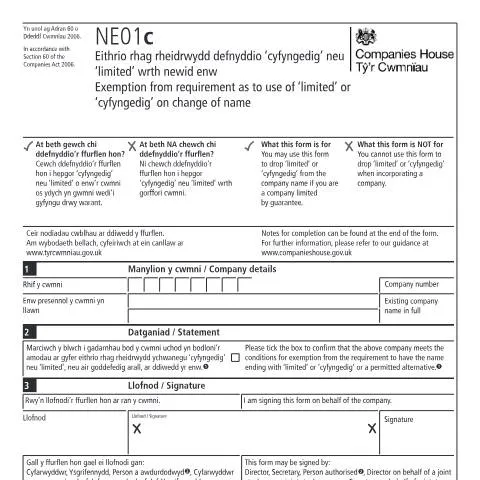
Completing the NE01c form may seem straightforward, but it's vital to understand each section thoroughly to avoid common pitfalls. Below is a breakdown of key sections within the form:
1. Company Details
In the initial section, you will need to provide your existing company name in full, as registered with Companies House. It is crucial to ensure that this information matches the public register to avoid discrepancies.
2. Exemption Confirmation
This section requires the applicant to confirm that their company meets the criteria for exemption. Be sure to tick the appropriate box to affirm compliance with the necessary conditions.
3. Statement of Intent
Here, you’ll articulate your intention to apply for the name change. Ensure that the statement is clear and aligns with your organisational goals.
4. Signatures and Authorisation
The NE01c form requires signatures from individuals authorised to act on behalf of the company. This can include directors, secretaries, or other authorised personnel. It’s essential to ensure that the form is signed correctly to validate the submission.
Consequences of Inaction: What If You Don’t Submit the NE01c?
Failing to submit the NE01c form when required can lead to significant administrative hurdles. Companies that neglect to follow the proper channels for name changes may face legal complications, including potential challenges in branding and identity. Additionally, this may affect stakeholder trust and recognition.
The Implications of Incorrect Submission
Submitting a poorly completed NE01c form can result in delays or outright rejection of your application. Companies House may return forms that are incorrectly filled or incomplete, which can stall your plans for a name change significantly. It is wise to double-check every detail before submission to mitigate these risks.
Exceptional Cases and Considerations
While the NE01c form has clear parameters, there are instances where special circumstances may apply. Below are some notable exceptions and considerations:
1. Non-UK Entities
Companies based outside the UK but wishing to operate under a UK name must first ensure they are correctly registered in the UK. They may face additional requirements to complete the NE01c process.
2. Minors and Legal Guardians
In cases where directors are minors, legal guardians may be required to provide additional documentation or consent for the name change process.
3. Urgent Requests
For companies requiring expedited processing of their NE01c form, it is advisable to contact Companies House directly. While expedited service is not guaranteed, inquiries can provide clarity on potential timelines.
Following Up with Companies House
After submission, remaining engaged with Companies House is crucial. Here’s how you can check the status of your NE01c application:
1. Online Tracking
Companies House offers online tools that may allow you to track the status of your application. Accessing these resources can provide timely updates on your submission’s progress.
2. Direct Contact
If there are concerns or delays, reaching out to Companies House by phone or email can help resolve issues. Being proactive in your communication can expedite the process.
Checklist for NE01c Submission
Before submitting the NE01c form, ensure you have completed the following checklist:
- Company name and number align with the public register.
- The exemption confirmation box has been ticked.
- The form has been fully signed by an authorised person.
- All sections of the form are completed correctly.
Additional Resources for NE01c Users
To further assist you in the NE01c process, the following resources are available:
- Companies House Guidance: Direct access to guidance materials on the Companies House website.
- Legal Assistance: Consulting a solicitor familiar with company law may provide additional insights.
- Workshops and Seminars: Participating in workshops focused on company formation and regulations can be beneficial for a deeper understanding.
Conclusion: Empowering Your Business Identity
The NE01c form represents more than just a procedural step; it embodies a significant opportunity for companies limited by guarantee to craft their identity and establish their presence within the market. By carefully navigating the process and adhering to the guidelines outlined above, businesses can successfully transition their names, ensuring alignment with their mission and values.
For any further inquiries or assistance, visiting the Companies House website or contacting them directly may prove invaluable as you embark on this important step in your business journey.
Understanding the Criteria for Gain Exemption Under NE01c
When applying for gain exemption from the requirement to use "limited" or "cyfyngedig" in your company name, the criteria set out by Companies House are crucial to understand. The NE01c form is specifically designed for this purpose. The exemptions are typically granted under specific circumstances that warrant consideration. Below are some key criteria to keep in mind when determining your eligibility:
- Nature of Business: Your business activities play a significant role in whether you qualify for an exemption. For example, sole traders or partnerships transitioning to limited companies may find themselves eligible if they can demonstrate that the addition of "limited" would mislead clients about the structure and liabilities associated with their business.
- Public Perception: If your business operates in a sector where the addition of "limited" could confuse customers regarding the nature of your services or products, this factor can bolster your case. It's essential to provide evidence or testimonials showing how your current name has been established and accepted within your market.
- Existing Brand Recognition: If your business name has been a registered trademark or is widely recognized, you might have a case for exemption. This is particularly relevant for established businesses with substantial customer bases that identify your services with your current name.
To successfully navigate the application process, gather comprehensive documentation to substantiate your claims. For example, customer feedback, market analysis reports, or any evidence of your brand’s reputation can significantly strengthen your case. Additionally, it is advisable to consult with a professional who specializes in corporate law to ensure your application aligns with Companies House's guidelines.
Filling Out the NE01c Form: Best Practices
Completing the NE01c form can seem daunting, but following best practices can ease the process. Here are some recommendations to consider:
- Accuracy is Key: Ensure that all information provided on the form is accurate and consistent with your existing registration details. Companies House is stringent about discrepancies, which could delay your application.
- Clear Justifications: Clearly articulate the reasons for your exemption request in the section provided. Utilize bullet points or numbered lists to make your case easy to read and digest. A well-structured explanation can enhance your application's chances of approval.
- Timeliness of Submission: Submit your NE01c form as part of your annual confirmation statement or as a standalone document. It's crucial to keep track of deadlines, particularly if you are also submitting other forms simultaneously. If you miss deadlines, your application may be rejected, leading to further complications.
In addition to the main application, consider including supplementary documents that support your request. These can range from a letter detailing the history of your business to financial statements that reflect your operations. The more comprehensive your submission, the better the chances of a favorable review.
Consequences of Non-Compliance with Name Requirements
Failing to comply with the UK naming requirements can have serious implications for your business. Understanding these consequences is essential for any entrepreneur or business owner operating within the UK:
- Legal Penalties: If your business name does not comply with the stipulated guidelines, you may face legal action from Companies House. This can result in fines or, in severe cases, the dissolution of your company.
- Impact on Business Reputation: Non-compliance can lead to distrust among consumers, clients, or partners. If your business is perceived as trying to mislead by omitting "limited" or "cyfyngedig," it could harm your reputation and affect customer relations.
- Inability to Enforce Contracts: Operating without the correct designation may render contracts unenforceable. For instance, if you sign a contract under a name that does not reflect your company’s legal status, it could be challenged in court, putting your business interests at risk.
To mitigate these risks, it is advisable to stay informed about naming regulations and ensure that you maintain compliance at all times. Regular audits of your business name and its alignment with registration requirements can safeguard against potential legal issues and ensure your business operates smoothly.