Navigating the Request for Opinion on Patent Validity or Infringement
In the world of intellectual property, the need for clarity and resolution regarding patent disputes can arise at any moment. For inventors, businesses, and patent holders, the Request for Opinion as to Validity or Infringement form from the Intellectual Property Office (IPO) serves as a critical tool. It provides a mechanism to seek an official opinion on specific patent issues, which can greatly affect one’s rights and responsibilities in the commercial landscape.
Understanding the Role of the Request for Opinion
The Request for Opinion is not just a formality; it is a significant step in the dispute resolution process regarding patent rights. By submitting this request, the applicant seeks an expert evaluation on either the validity of a patent or whether an infringement has occurred. This opinion can be pivotal in determining the next course of action, whether it be litigation, negotiation, or ceasing certain activities.
The Importance of Validity and Infringement Opinions
Issues surrounding patent validity often relate to questions of novelty or inventive step, while infringement opinions focus on whether a party has violated the exclusive rights granted by a patent. The outcome of such opinions can influence not only the involved parties but also competitors and markets, as they can establish precedents in legal interpretations and commercial practices.
- Validity Opinions: These assess whether a patent is legally enforceable, focusing on criteria such as originality and non-obviousness.
- Infringement Opinions: These evaluate whether an entity is infringing upon a patent by making, using, or selling a patented invention without consent.
Who Can Submit This Request?
The Request for Opinion can be submitted by any party interested in understanding a patent's status, not just the patent holder. This includes:
- Patent owners seeking clarity on their rights.
- Businesses concerned about potential infringement implications.
- Competitors wanting to challenge the validity of a patent.
- Licensees who need to ensure compliance with patent terms.
Importantly, whether you are a sole proprietor of a patent or part of a joint ownership, understanding how to properly fill out this form is crucial to ensure your interests are adequately represented.
Key Sections of the Request for Opinion Form
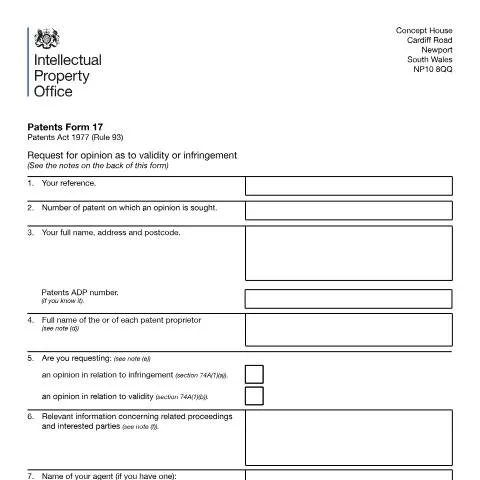
The form consists of several sections that must be completed carefully. Each section addresses specific information that the IPO needs to process your request effectively. Let’s break down the main components:
| Section | Description |
|---|---|
| Your Reference | Provide a reference number that you may use to track your submission. |
| Patent Number | The number of the patent that is the subject of your request. |
| Applicant Information | Include full name, address, and postcode; also include your National Insurance number if applicable. |
| Proprietor Information | If applicable, provide the names of co-proprietors of the patent. |
| Your Request Type | Specify if you seek an opinion regarding validity or infringement. |
| Relevant Proceedings | List any ongoing or past proceedings related to the patent. |
| Signature and Date | Ensure your submission is signed and dated, which can be done electronically or by hand. |
Completing the Form: Guidelines and Tips
Filling out the Request for Opinion form is a straightforward process, but several guidelines should be followed to prevent delays or errors:
- Use Capital Letters: For legibility, complete the form in capital letters or type your responses.
- Be Detailed: Provide as much relevant information as possible, especially in sections where you explain your reasoning or context.
- Include Evidence: If available, attach copies of evidence or documents that support your claim.
- Double-Check Entries: Ensure all information is accurate and that you have filled in every applicable section.
Submission Channels: Electronic vs. Postal
When it comes to submitting the request, applicants have options; both electronic and postal submissions are accepted. However, there are important distinctions:
Electronic Submission
Submitting your request electronically can expedite the process. You can email your completed form to [email protected]. Ensure your form is in PDF format and has been duly signed.
Postal Submission
If you choose to send the form via post, you'll need to print it and send it to the following address:
Intellectual Property Office Concept House Cardiff Road Newport South Wales NP10 8QQ
Keep in mind that postal submissions may take longer to process, which can impact your business decisions and timelines.
Potential Outcomes of Your Request
After your request is submitted, the IPO will review it and issue an opinion. This opinion will either support the validity of the patent, indicate an infringement, or highlight complexities that may require further legal action. Understanding these outcomes is crucial:
- Positive Opinion on Validity: If the opinion supports the patent’s validity, the holder can confidently enforce their rights against potential infringers.
- Negative Opinion on Validity: If invalidated, the applicant may need to reconsider their strategy, possibly leading to further legal challenges.
- Infringement Findings: An opinion indicating infringement may guide the complainant towards pursuing legal recourse or negotiating settlements.
What Happens If You Don’t Submit the Form?
Neglecting to submit the Request for Opinion when faced with potential infringement issues can have significant consequences:
- Legal Risks: Without an official opinion, you may inadvertently infringe on a patent, leading to legal repercussions.
- Uncertainty in Business Decisions: Operating without clarity on patent rights could impair strategic planning and product development.
- Loss of Competitive Edge: Failing to address potential patent issues may allow competitors to exploit your innovations without accountability.
Special Considerations in Unique Situations
There are instances where the patent landscape becomes complex, necessitating careful navigation of the form and process:
International Applicants
If you are based outside of the UK, you can still use this form, but it is essential to ensure proper representation. Your appointed agent must reside or have a business within the UK or European Economic Area.
Multiple Proprietors
In cases where a patent has multiple owners, coordination is crucial. All proprietors must agree on submitting the request, and they should collectively decide on the information provided in the application.
Urgent Matters
When time is of the essence, such as in impending litigation, consider reaching out directly to the IPO to discuss expedited processing options or necessary actions to take while awaiting the opinion.
Final Preparations Before Submission
Before sending your Request for Opinion, ensure the following:
- All sections of the form are completed accurately.
- Your signature is present, either handwritten or typed.
- Payment options are selected and processed correctly, whether by debit/credit card, cheque, or bank transfer.
- Provide a contact number or email for follow-up queries from the IPO.
By ensuring these aspects are addressed, you will minimize the risk of delays and ensure your request is processed efficiently.
Understanding Fees and Payments
There are associated fees with filing the Request for Opinion. The total fee must accompany your submission, and it can be paid through various means:
- Online through the IPO secure payment portal.
- Via cheque made payable to the Intellectual Property Office.
- Through bank transfer, using the provided bank details.
Always verify the fee before submission, as it can change depending on the nature of the request and the current schedule of fees established by the IPO.
Data Protection and Privacy Considerations
As with any official request, personal data is handled under the Data Protection Act 2018 and UK GDPR regulations. Be mindful that any information submitted will be made publicly available, meaning sensitive information should be carefully considered before submission. The IPO encourages applicants to minimize the disclosure of personal data and only include what is necessary for the processing of the request.
For more details on how your data will be used and your rights, consult the IPO's privacy notice, which outlines in detail how personal information is handled throughout the process.
Submitting a Request for Opinion as to Validity or Infringement is a crucial step for all parties involved in patent matters. Approaching it with care and thoroughness can facilitate smoother resolutions and protect your intellectual property rights.