When Development Meets Protected Wildlife: The Legal Framework Behind Mitigation Licensing
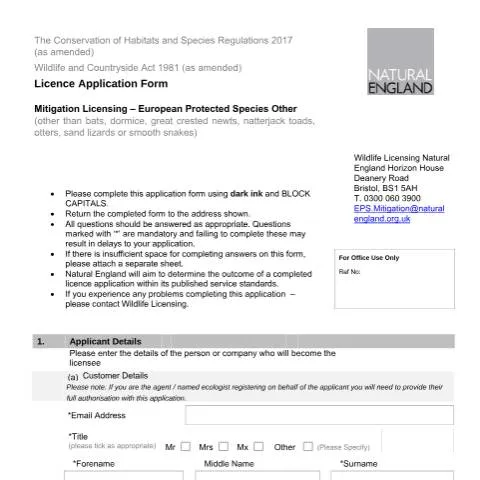
When a construction project or development activity encounters European protected species, work cannot simply proceed as planned. The Conservation of Habitats and Species Regulations 2017 and the Wildlife and Countryside Act 1981 create strict legal protections that can bring development to an immediate halt. The A12 mitigation licence application represents the formal pathway through which developers, ecologists, and landowners can lawfully proceed with activities that would otherwise constitute criminal offences under wildlife protection legislation.
This licensing system applies to a specific group of European protected species excluding the more commonly encountered bats, dormice, great crested newts, natterjack toads, otters, sand lizards, and smooth snakes—which have their own dedicated licensing routes. The A12 form instead covers other European protected species that might be affected by development or land management activities, creating a crucial legal mechanism for balancing conservation requirements with legitimate development needs.
The application process is administered by Natural England's Wildlife Licensing team from Horizon House in Bristol, reflecting the national importance of these decisions. Each application undergoes rigorous assessment to ensure that any licensed activity meets strict criteria for species protection while allowing essential development to proceed under carefully controlled conditions.
Understanding the Scope: Which Species and Activities Require This Licence
The A12 application specifically addresses European protected species beyond the six most frequently encountered groups. This includes species such as wild birds covered by the Birds Directive, certain marine mammals, and other fauna protected under the Habitats Directive that don't fall within the established licensing categories for bats, newts, or other common development constraints.
Activities requiring mitigation licensing typically arise during:
- Construction and infrastructure projects where protected species habitats cannot be entirely avoided
- Land management operations that may disturb breeding sites or feeding areas
- Restoration or conservation work that paradoxically requires temporary disturbance to achieve long-term habitat improvement
- Emergency repairs or safety works where immediate action is necessary despite species presence
The licence doesn't permit activities purely for convenience or cost-saving. Natural England requires compelling justification that the proposed activity serves legitimate purposes and that all reasonable alternatives have been exhausted. This might include imperative reasons of overriding public interest, public health and safety requirements, or activities that ultimately benefit the species in question.
Importantly, the licensing system operates as a last resort. Applicants must demonstrate they have first sought to avoid impacts entirely, then minimise unavoidable impacts, and finally provide appropriate compensation or enhancement measures for any residual effects on protected species populations.
The Named Ecologist Requirement: Professional Expertise at the Heart of Applications
Every A12 application must include details of a named ecologist who takes professional responsibility for the ecological aspects of the proposed work. This isn't merely an administrative requirement—it reflects Natural England's insistence that mitigation licensing involves genuine ecological expertise rather than bureaucratic box-ticking.
The named ecologist typically holds membership of professional bodies such as the Chartered Institute of Ecology and Environmental Management (CIEEM) or the Institute of Environmental Management & Assessment (IEMA). Their role encompasses several critical responsibilities:
| Responsibility Area | Key Requirements | Professional Standards |
|---|---|---|
| Species Surveys | Comprehensive baseline assessment using appropriate methodologies | Following published survey guidelines and seasonal constraints |
| Impact Assessment | Detailed evaluation of potential effects on local populations | Evidence-based analysis with uncertainty clearly acknowledged |
| Mitigation Design | Specification of measures to avoid, minimise, and compensate impacts | Proven techniques with realistic success criteria |
| Implementation Oversight | On-site supervision during licensed activities | Continuous monitoring and adaptive management |
The named ecologist's professional indemnity insurance and continuing professional development become particularly relevant given the legal implications of mitigation licensing. Should licensed activities cause unintended harm to protected species, both the licence holder and the named ecologist may face regulatory scrutiny.
Where the applicant is registering on behalf of an agent or organisation, the form requires clear confirmation that the named ecologist has appropriate authority to act. This prevents situations where well-meaning but unauthorised individuals submit applications without proper organisational backing or professional oversight.
Navigating Organisational Applications: Size, Status, and Regulatory Complexity
When organisations rather than individuals seek mitigation licences, the application process becomes considerably more complex. The A12 form requires detailed information about organisational structure, legal status, and the specific individuals who will take responsibility for compliance.
Natural England categorises organisations by size—micro (1-10 employees), small (11-49), medium (50-249), or large (250+ employees)—because this affects both the application assessment and ongoing compliance expectations. Larger organisations typically face enhanced scrutiny regarding their environmental management systems and track record with previous licensing conditions.
The legal status declaration covers various organisational forms:
- Private limited companies must provide their Companies House registration number
- Registered charities need their charity registration details
- Government agencies and local authorities operate under different accountability frameworks
- Voluntary organisations may require additional documentation of their governance structures
Professional partnerships and consultancies present particular challenges. Where an ecological consultancy applies on behalf of a developer client, the licence conditions will typically bind both parties. The consultancy cannot simply withdraw from the project and leave the developer without ongoing ecological support during the licence period.
Alternative contact details become crucial for organisational applications. Natural England may need to reach decision-makers outside normal business hours, particularly if monitoring reveals unexpected impacts on protected species. The alternative contact must have authority to make immediate decisions about stopping or modifying licensed activities if required.
Completing the Application: Technical Precision and Regulatory Expectations
Natural England's processing standards depend heavily on application quality. The form must be completed using dark ink and block capitals—requirements that reflect both practical scanning needs and the formal nature of legal documentation. Pencil entries, correction fluid, or illegible handwriting can result in immediate rejection without consideration of the substantive content.
Mandatory fields marked with asterisks require completion regardless of apparent relevance. Empty mandatory fields trigger automatic rejection, even where the applicant believes the information doesn't apply to their specific circumstances. When space constraints prevent full responses, Natural England expects separate continuation sheets rather than abbreviated answers that might compromise assessment quality.
The customer type classification—farmer, householder, ecologist, or other professional category—influences how Natural England processes the application. Farmers and householders typically receive additional guidance and support, recognising that wildlife licensing may be unfamiliar territory. Professional ecologists and consultants face higher expectations regarding technical accuracy and supporting documentation.
Email addresses have become increasingly important since Natural England moved toward digital communication for routine licensing correspondence. However, the organisation maintains postal communication for formal decisions and legal notices, reflecting the statutory nature of wildlife licensing.
Professional Membership and Credibility Assessment
The professional membership field allows applicants to demonstrate relevant expertise and regulatory oversight. CIEEM membership carries particular weight given the institute's specific focus on ecological practice and professional standards. IEMA membership indicates broader environmental management expertise that may be relevant for complex development projects.
Natural England doesn't mandate specific professional qualifications, but membership of recognised professional bodies influences both application assessment and ongoing licence conditions. Non-members may face additional requirements for external ecological oversight or enhanced monitoring and reporting obligations.
Submission Pathways and Processing Timelines
Completed A12 applications must be submitted to Natural England's Wildlife Licensing team at Horizon House, Deanery Road, Bristol BS1 5AH. The organisation has moved away from email submissions for formal licence applications, citing security concerns and the need for complete application packages including supporting documents and fees.
Natural England operates within published service standards for determining licence applications, though specific timescales aren't guaranteed on the form itself. The organisation typically provides initial acknowledgement within five working days, followed by substantive assessment that can take several weeks or months depending on application complexity and the need for additional information.
The reference number system allows applicants to track their applications through Natural England's internal processes. However, the organisation discourages frequent progress enquiries, preferring to focus resources on application assessment rather than status updates.
Post-Submission Requirements and Ongoing Obligations
Successful licence applications create ongoing legal obligations that extend well beyond the initial approval. Licence holders must typically provide regular monitoring reports, notify Natural England of any significant changes to proposed activities, and maintain detailed records of all work undertaken under licence authority.
Licence conditions commonly include requirements for:
- Pre-commencement surveys to confirm species presence and update baseline information
- Toolbox talks and staff briefings to ensure all site personnel understand wildlife protection requirements
- Incident reporting procedures for any unexpected species encounters or potential compliance issues
- Post-completion monitoring to assess mitigation effectiveness and inform future licensing decisions
Licence holders cannot transfer their authority to other parties without Natural England's express consent. This prevents situations where licensed activities continue after the original applicant has left the project or transferred responsibility to different contractors.
Integration with Broader Planning and Environmental Frameworks
Mitigation licensing operates within a complex web of planning, environmental, and wildlife legislation that requires careful coordination. The A12 application often forms part of broader Environmental Impact Assessment processes, Habitats Regulations Assessment procedures, or planning condition discharge requirements.
Local planning authorities increasingly expect developers to secure all necessary wildlife licences before granting planning permission, creating potential timing challenges where species surveys must align with seasonal constraints and development programmes. Natural England strongly recommends early engagement to identify licensing requirements and allow sufficient time for application preparation and determination.
The relationship between mitigation licensing and other regulatory frameworks can create unexpected complications. For instance, marine licensing requirements may apply where coastal development affects both terrestrial and marine protected species. Environmental permitting may be required for activities that also need mitigation licensing, creating overlapping regulatory oversight.
Brexit has introduced additional complexity regarding European protected species legislation. While the Conservation of Habitats and Species Regulations 2017 maintain equivalent protection standards, ongoing policy development may affect future licensing requirements and application procedures. Natural England advises applicants to check current guidance before submitting applications, particularly for projects with extended timescales.
The A12 mitigation licensing system represents a sophisticated balance between wildlife protection and legitimate development needs. Success depends on early planning, professional ecological input, and meticulous attention to both technical and administrative requirements. While the process may appear bureaucratic, it serves the essential function of ensuring that England's protected species receive appropriate consideration within an active development landscape.
Species-Specific Mitigation Requirements and Standard Methods
Different European protected species require distinct mitigation approaches, and Natural England has developed detailed guidance for the most commonly affected species groups. Understanding these species-specific requirements is crucial for developing an effective mitigation strategy that meets both regulatory standards and conservation objectives.
For great crested newts, the most frequently licensed species under A12 applications, mitigation typically involves a combination of seasonal restrictions, habitat creation, and population translocation. The standard approach requires survey work during the active season (mid-March to mid-October) to establish population size classes. Small populations (fewer than 10 adults) may require simple exclusion fencing and habitat enhancement, whilst large populations (over 100 adults) often necessitate complex translocation programmes spanning multiple breeding seasons.
The timing of great crested newt mitigation is particularly critical. Exclusion fencing must be installed before the species becomes active in spring, typically by early March, and maintained throughout the active season. Translocation operations can only occur during specific weather conditions—mild, damp evenings when newts are naturally active. Hand-capture methods require multiple survey visits, often extending the mitigation period significantly beyond initial estimates.
Bat mitigation presents different challenges, with requirements varying dramatically between species. Common pipistrelle bats roosting in modern buildings may require only simple exclusion methods and alternative roost provision. However, rare species such as barbastelle or Bechstein's bats demand highly specialised mitigation, including detailed knowledge of foraging patterns, commuting routes, and roost hierarchies.
Maternity roosts receive the highest level of protection, with work typically prohibited between May and August when dependent young are present. Even outside the breeding season, bat mitigation must account for torpid animals that may be present during winter months. Licensed bat workers must hold appropriate survey licences and demonstrate species-specific handling experience before being permitted to undertake exclusion work.
For dormice, mitigation strategies focus heavily on maintaining habitat connectivity. Standard methods include pre-clearance surveys using nest tubes, followed by habitat manipulation to encourage natural dispersal away from development areas. Where translocation is necessary, receiving sites must demonstrate suitable habitat quality and carrying capacity. The timing of dormouse mitigation is constrained by their hibernation period (October to April) and breeding season (May to September), leaving narrow windows for intervention work.
Reptile mitigation typically involves habitat manipulation and translocation, with different approaches for common species (grass snake, slow-worm) versus rarer species (sand lizard, smooth snake). Receptor sites must be identified and enhanced before translocation begins, often requiring habitat creation works 12-24 months in advance. The translocation process itself involves systematic clearance using refugia and hand-capture methods, with multiple visits required to achieve adequate capture rates.
Natural England has published detailed technical guidance documents for each species group, including standard mitigation protocols and success criteria. These documents specify minimum standards for survey effort, mitigation timing, and post-development monitoring requirements. Applicants should consult the most current versions of these guidance documents when developing their mitigation strategies, as methodologies are periodically updated based on new research and monitoring data.
Working with Ecological Consultants and Licensed Practitioners
The complexity of A12 licence applications typically necessitates engaging specialist ecological consultants with demonstrable experience in European protected species work. Selecting appropriate consultants is crucial for application success, as poorly prepared submissions frequently result in requests for additional information or outright refusal.
When selecting ecological consultants, verify their relevant survey licences and species-specific experience. Natural England maintains public registers of licensed individuals, allowing verification of consultant credentials. For bat work, consultants should hold appropriate survey licences for the species likely to be encountered. Great crested newt consultants should demonstrate experience with similar population sizes and development types. The consultant's track record with A12 applications can often be assessed through their previous work or professional references.
Established ecological consultancies often maintain relationships with Natural England case officers and understand current policy interpretations and processing priorities. This institutional knowledge can prove invaluable in navigating application requirements and avoiding common pitfalls that delay determination. However, consultant selection should prioritise technical competence and species expertise over purely administrative considerations.
The scope of consultant involvement varies significantly between projects. Simple applications may require only survey work and basic mitigation design, whilst complex cases demand detailed population modelling, habitat assessment, and long-term monitoring programme development. Early engagement with consultants during project planning stages allows identification of potential constraints and optimal survey timing, potentially avoiding costly delays later in the development process.
Survey licensing requirements are species-specific and must be carefully managed. Bat surveys require appropriately licensed surveyors, with different licence levels permitting different survey methods. Emergence and re-entry surveys can be conducted by Level 1 licensed surveyors, but roost inspections and handling require higher licence levels. Great crested newt surveys require appropriate survey licences, with different authorisations for environmental DNA sampling versus traditional survey methods.
Quality assurance in ecological survey work is essential for successful A12 applications. Natural England expects survey work to follow established methodologies and good practice guidance. Surveys conducted outside recommended seasonal windows or using inappropriate methods may be rejected, necessitating repeat work and causing significant project delays. Consultants should provide detailed survey protocols before commencing fieldwork, allowing review of proposed methodologies.
The relationship between developers, consultants, and contractors requires careful management throughout the mitigation process. Licensed mitigation work must be overseen by appropriately qualified ecological clerks of works, who ensure compliance with licence conditions during construction activities. This oversight role is distinct from general ecological consultancy and requires specific experience with construction site management and wildlife protection protocols.
Post-development monitoring is typically required for A12 licences, extending the consultant relationship well beyond construction completion. Monitoring programmes may span several years and require consistent methodologies to enable meaningful assessment of mitigation success. Early discussion of monitoring requirements and associated costs prevents disputes during the post-construction phase.
Enforcement, Compliance, and Legal Consequences
The enforcement framework surrounding European protected species offences is robust, with significant legal and financial consequences for non-compliance. Understanding these enforcement mechanisms is essential for all parties involved in development projects affecting protected species, as ignorance of legal requirements provides no defence against prosecution.
Natural England operates a comprehensive compliance monitoring programme, including both routine inspections and investigation of reported incidents. Site visits may occur without prior notice, particularly where concerns have been raised about licence compliance or unauthorised activities. During inspections, officers examine adherence to licence conditions, implementation of prescribed mitigation measures, and maintenance of required records and monitoring data.
The Wildlife and Countryside Act 1981 creates several categories of offences relating to European protected species, with penalties varying according to the severity of the breach. Simple possession or disturbance offences may result in fines up to £5,000 per animal affected, whilst more serious offences involving reckless or intentional harm can attract unlimited fines and up to six months imprisonment. Corporate defendants face potentially much larger financial penalties, particularly where breaches result in significant conservation impacts.
Magistrates' courts handle most wildlife crime prosecutions, but serious cases may be referred to Crown Court where sentencing powers are unlimited. Recent prosecutions have resulted in substantial financial penalties, particularly where developments have proceeded without appropriate licences or in breach of licence conditions. The courts increasingly recognise the conservation importance of European protected species and impose deterrent sentences accordingly.
Corporate liability extends beyond direct contractors to include developers, project managers, and senior executives where corporate failures contribute to offences. The Corporate Manslaughter and Corporate Homicide Act 2007 principles have been applied to environmental offences, potentially exposing senior management to personal liability where organisational failures result in serious breaches. Due diligence in securing appropriate licences and ensuring compliance provides important protection against such liability.
Enforcement action may include immediate stop notices halting development work where serious breaches are identified. Such notices remain in force until appropriate remedial measures are implemented and compliance is restored. The costs associated with work stoppages often far exceed the expense of proper licensing and mitigation, making compliance both a legal and commercial imperative.
Natural England maintains detailed records of enforcement action, including warning letters, formal cautions, and prosecution referrals. Repeat offenders or organisations with poor compliance records may face increased scrutiny in future licence applications, potentially affecting determination timelines and approval prospects. Building a positive compliance record through proper licensing and adherence to conditions facilitates smoother processing of subsequent applications.
Mitigation banking and strategic approaches are increasingly being explored as alternatives to site-by-site licensing, particularly for great crested newts. These approaches involve creating large-scale habitat enhancement projects that can offset impacts from multiple development sites within a defined geographical area. District licensing schemes operate in several areas of England, allowing developers to make financial contributions toward strategic conservation projects rather than implementing individual site mitigation.
The success of strategic approaches depends on robust governance arrangements and long-term habitat management commitments. Natural England retains oversight of these schemes, ensuring that conservation outcomes meet or exceed those achievable through traditional licensing approaches. For developers, strategic schemes can offer cost savings and reduced project risk, whilst delivering enhanced conservation benefits through landscape-scale habitat creation and management.