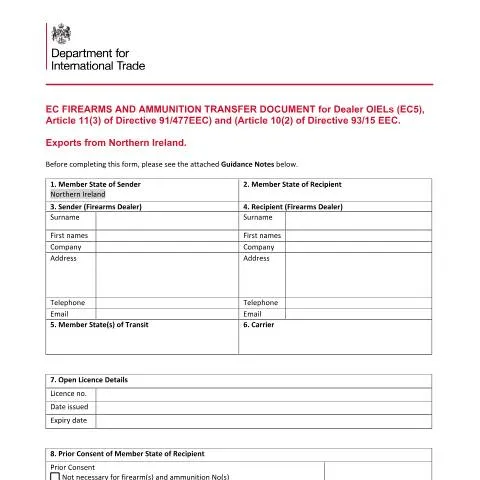
Understanding the EC5 Form: A Tool for Firearms Dealers
In the complex landscape of firearms legislation within the UK, the EC5 Form emerges as a pivotal document for firearms dealers engaged in the transfer of firearms and ammunition across borders. This form is not just a bureaucratic necessity; it plays a critical role in ensuring compliance with the law while facilitating international trade. As the world evolves, so does the need for stringent yet clear regulations governing the movement of potentially dangerous goods. Understanding the intricacies of the EC5 Form can greatly affect the operations of firearms dealers, particularly those operating within Northern Ireland.
A Brief Historical Context of Firearms Regulation
The Export Control Joint Unit (ECJU), part of the Department for Business and Trade, enforces regulations surrounding the export of firearms and ammunition as a part of the UK's commitment to international treaties and directives. The EC5 Form is rooted in European legislation, specifically Article 11(3) of Directive 91/477/EEC and Article 10(2) of Directive 93/15/EEC, which lay down essential guidelines for the movement of firearms within the EU.
This historical backdrop highlights the UK's dedication to maintaining strict control over firearms exports, particularly in light of past conflicts and the potential for misuse. The directives aim to prevent illicit arms trading while allowing legitimate businesses the means to operate in a regulated environment. As such, the EC5 Form serves as an instrument of both compliance and facilitation.
Crucial Steps in Completing the EC5 Form
The successful completion of the EC5 Form is a task that requires attention to detail and an understanding of the specific requirements. Here’s a structured approach to filling out the form:
- Sender and Recipient Information:
- Clearly enter the names, addresses, and contact details for both the sender (the firearms dealer) and the recipient.
- Ensure that the information is accurate to avoid delays.
- Transit Details:
- Indicate the member states involved in the transit of the firearms.
- Be mindful of the carrier you choose; they must comply with international shipping regulations.
- Open Licence Information:
- List the licence number along with its issue and expiry dates. This information is essential as it verifies that the transfer is conducted under a legitimate framework.
- Prior Consent Confirmation:
- If prior consent from the member state of the recipient is required, ensure to attach the necessary documentation.
- Details of Firearms and Ammunition:
- Provide a detailed description of each item being transferred. This includes category, type, make/model, calibre, and any other relevant characteristics. Use the EC4 Continuation Sheet if the space provided is insufficient.
- Signature and Date:
- The form must be signed by the exporter, certifying that all information is accurate and complete.
Completing the form accurately is not merely a procedural requirement — it can have serious implications for regulatory compliance. Errors or omissions may lead to significant delays, penalties, or even the rejection of the transfer request.
Submission Guidelines: Where and How to Send the EC5 Form
Once the form is duly completed, it is crucial to follow the correct submission protocol to ensure that your application is processed without issue. The EC5 Form must be emailed directly to the Department for International Trade at [email protected]. It is advisable to keep a record of your submission, including the date and time of sending, as this can be useful for tracking purposes.
In addition, be sure to follow any specific instructions provided in the Guidance Notes attached with the form. These notes outline certain restrictions, such as field limits that prevent text from exceeding designated areas. Adhering to these guidelines will minimize the possibility of encountering administrative hiccups.
Consequences of Non-Compliance: The Risks of Inaction
Failing to submit the EC5 Form or submitting an incomplete form can have dire repercussions for firearms dealers. The risks include:
- Legal Penalties: Non-compliance with export regulations can lead to hefty fines and legal repercussions for dealers.
- Reputation Damage: In the firearms industry, a tarnished reputation can lead to loss of business and customer trust, which is difficult to regain.
- Operational Delays: Delayed shipments can hinder business operations, affecting sales and customer relationships.
Given these potential consequences, it is imperative for firearms dealers to prioritise the proper filling and timely submission of the EC5 Form.
The Role of the EC5 Form in the Transfer Process
The EC5 Form is a crucial instrument in the broader framework of firearms export regulation. It acts as both a declaration of intent and a compliance mechanism that ensures all parties involved in the transfer are operating within the law.
Upon submission, the form is reviewed by the relevant authorities, who assess it thorough compliance checks. The need for documentation such as a prior consent letter or open licence details highlights the form's role as a safeguard against illegal arms trading and misuse.
Tracking the Status of Your EC5 Submission
Once submitted, firearms dealers may wish to track the status of their EC5 submission. The Department for International Trade typically does not provide direct tracking for individual forms. However, dealers can follow up on their submission through the contact methods provided in the guidance notes.
It’s advisable to maintain communication with the department, especially if there are delays in receiving confirmation. Keeping detailed records of communication can prove useful in resolving any issues that may arise.
Case Study: A Successful EC5 Submission
Consider the case of a firearms dealer based in Northern Ireland who needed to export a batch of hunting rifles to a registered dealer in Spain. Upon identifying a potential recipient, the dealer began the process by:
- Confirming that the recipient was a licensed dealer in Spain and understanding the requirements for export.
- Completing the EC5 Form meticulously, ensuring all details were accurate and compliant with both UK and EU regulations.
- Gathering necessary documents, including an open licence and the prior consent confirmation from the Spanish authorities.
- Emailing the completed form along with supporting documents to the Department for International Trade.
After submitting the form, the dealer followed up within a week, leading to a swift approval. The timely submission and careful handling of documentation ensured that the rifles were exported without any complications.
Conclusion: The Importance of Diligence in Firearms Export
The EC5 Form is not just a piece of paperwork; it represents a critical process in the legal export of firearms and ammunition. For firearms dealers, understanding its importance, the steps required to complete it, and the implications of compliance or non-compliance can be the difference between a smooth transaction and facing legal challenges.
As the global landscape evolves, so too must the approach to firearms regulation. By ensuring that all submissions are accurate and compliant, dealers can contribute to a secure and responsible trade environment.
Understanding the EC5 Form: Purpose and Importance
The EC5 form serves a critical role in the management of firearms and ammunition transfers between dealers in the UK. Specifically designed for firearm dealers, this official declaration outlines the specifics of the transaction, ensuring compliance with UK firearms legislation. The EC5 form is not merely a bureaucratic requirement; it is a vital document that strengthens the integrity of the firearms trade by providing a traceable record of all dealer-to-dealer transactions. This traceability is crucial not only for legal compliance but also for public safety, as it allows authorities to monitor the movement of potentially dangerous items.
When completing an EC5 form, dealers must ensure that all sections are accurately filled out, as any discrepancies can lead to significant legal consequences. The form requires detailed information about both the seller and purchaser, including the type and quantity of firearms or ammunition being transferred. Furthermore, it includes sections for registration numbers, descriptions of the items, and signatures from both parties, affirming that the transaction is legitimate and compliant with the relevant laws.
Who Needs to Complete the EC5 Form?
The obligation to complete the EC5 form falls squarely on registered firearm dealers operating under the Firearms Act 1968 and subsequent regulations. This includes any business engaging in the sale, transfer, or exchange of firearms and ammunition as part of their commercial activities. In particular, dealers licensed under the Home Office are required to carefully maintain their records, with the EC5 form playing a pivotal role in this process.
However, it’s worth noting that not all dealers may need to submit the EC5 form for every transaction. Certain exceptions exist, particularly for transfers that occur within a single licensee's inventory or those that involve firearms not classified under stringent regulations. For instance, transfers of air weapons or deactivated firearms may not require an EC5 form, but it is essential for dealers to consult the guidance provided by the Home Office to determine the necessity of the form on a case-by-case basis.
In addition, individuals or entities looking to become registered dealers should be aware that an understanding of the EC5 form, along with its associated legal obligations, is fundamental to their operations. This understanding helps ensure that they remain compliant with the law and avoid potential criminal liabilities associated with improper firearms transactions.
Completing the EC5 Form: Step-by-Step Guide
Filling out the EC5 form is a meticulous process that involves several key steps. Dealers must approach this task with precision to avoid mistakes that could jeopardize their license and business. Here’s a step-by-step guide to ensure compliance:
- Gather Necessary Information: Before starting the form, ensure you have all necessary information at hand, including your National Insurance number, dealer license details, and specifics about the firearms or ammunition being transferred. This will streamline the process and minimize errors.
- Section by Section Completion: The EC5 form is divided into various sections, each requiring specific details. Start with your information as the seller, including your dealer license number and contact information. Then, provide the same for the purchaser.
- Detail the Transaction: Describe each firearm or item of ammunition being transferred. This includes make, model, caliber, and any unique identifiers such as serial numbers. Be as detailed as possible to avoid future confusion or issues with compliance.
- Sign and Date: Once all information is accurately filled out, both parties must sign and date the form. This signature acts as a declaration that all details are correct and that the transaction complies with the law.
- Distribution of Copies: After completion, ensure that both parties retain a copy of the EC5 form for their records. It is advisable to keep these forms for at least six years, as they may be requested during compliance audits or investigations.
By meticulously adhering to these steps, dealers can ensure that their use of the EC5 form facilitates lawful transactions and contributes to the safety and security of the firearms trade in the UK.