Navigating the England Woodland Creation Offer Amendments
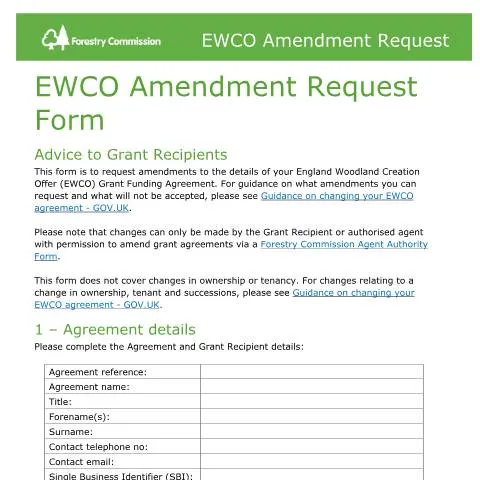
When managing your forestry project under the England Woodland Creation Offer (EWCO), changes are part of the journey. The Change your England Woodland Creation Offer agreement form serves as a crucial tool in ensuring your project remains aligned with your evolving needs and circumstances. Whether it’s adjusting contact details, altering project specifications, or navigating unique situations, understanding this form's purpose is vital. This article will delve into the specifics of the EWCO Amendment Request, providing guidance on its usage, completion, and submission processes.
Understanding the Importance of the EWCO Amendment Request
The EWCO Amendment Request form is not merely a bureaucratic hurdle; it is your gateway to adapting your grant agreement as your project's needs change. Many grant recipients may find themselves in situations requiring updates that do not fall under standard operational changes.
Reasons for Amendments
- Change in Project Scope: Adjusting the area you plan to afforest or modifying your species selection due to environmental assessments.
- Changes in Contact Information: If the primary contact for your project has shifted, updating these details ensures that communication channels remain effective.
- Extending Capital Funding Period: This is particularly crucial for projects facing delays due to unforeseen circumstances.
Each amendment you request must be clearly justified and passed through the formal channels to ensure compliance and appropriateness as per the Forestry Commission’s guidelines.
Profiles of Grant Recipients Eligible for Amendments
The form can only be submitted by the Grant Recipient or an authorized agent. Understanding who qualifies as a Grant Recipient is crucial when filling out this form.
Who Can Submit the EWCO Amendment Request?
- Individuals: If you are an individual landowner or farmer, you can submit the request directly.
- Organisations: For businesses, a director or senior representative must submit the request, often requiring an accompanying letter on official letterhead.
- Agents: Authorized representatives must be registered and approved via an Agent Authority Form to act on behalf of the Grant Recipient.
It’s essential to check that any agent involved in the process is formally recognized to prevent administrative hiccups.
A Step-by-Step Guide to Completing the EWCO Amendment Request Form
Completing the EWCO Amendment Request form requires careful attention to detail. Each section plays a specific role in facilitating your amendment request.
Breaking Down the Form Sections
Section 1: Agreement Details
This section captures the basic information about your agreement. Ensure accuracy in the following fields:
- Agreement Reference: Double-check this against your original EWCO documentation.
- Grant Recipient Details: Provide your title, full name, and contact information.
Section 2: Amendment Details
This is where you specify the nature of the amendments. Different subsections allow you to:
- Update your contact details (Section 2.1)
- Change agent information (Section 2.2)
- Add or remove contact persons (Section 2.3)
Each of these subsections has specific requirements, including submitting supporting letters if contacts change due to business transitions.
Other Amendments (Section 2.4)
If your changes involve significant shifts like altering project boundaries or introducing different species, it is crucial to resubmit a modified version of your original EWCO Application Form along with any maps or supplementary documents. This ensures that the Forestry Commission can thoroughly assess the impact of your requested amendments.
Submission Process: From Completion to Confirmation
With the form completed, the submission process is the next critical step. Here’s how to navigate this efficiently:
Steps to Submit the Amendment Request
- Review Your Amendments: Ensure all details are accurate and justify the need for each change.
- Gather Supporting Documentation: This includes letters for contact changes, updated application forms, and any additional necessary documentation.
- Submit the Form: The submission can typically be done via email or posted directly to the Forestry Commission. Check specific guidelines for your submission method.
- Await Confirmation: After submission, you will receive a confirmation response detailing the next steps, including whether your amendments were accepted or if further information is required.
Understanding the timelines involved is also important. While the Forestry Commission aims to process these requests promptly, the time frame can vary based on the complexity of the amendments and internal review processes.
The Distinction Between the EWCO Amendment Request and Other Forms
The EWCO Amendment Request might be confused with other forms related to forestry projects, such as the initial application or change of ownership forms. However, recognizing the distinctions is vital.
Key Differences
| Form Type | Purpose | Who Uses It |
|---|---|---|
| EWCO Amendment Request | To request changes to an existing grant agreement | Existing Grant Recipients or their agents |
| EWCO Application Form | To apply for funding under the EWCO scheme | New applicants seeking funding |
| Change of Ownership Form | To report ownership changes of land under the EWCO | New landowners taking over existing projects |
Each form serves its unique purpose and targets specific scenarios that recipients of EWCO funding might encounter.
What Happens After Submission?
Post-submission, understanding the next steps is crucial to ensure your project can continue without disruption. Here’s what to expect:
Review and Decision Process
Once submitted, your request will be reviewed by the Forestry Commission team. They will assess the viability of the proposed changes against the stipulations of your original grant:
- Evaluation of Amendment Requests: Each request is evaluated on its own merits, which may include the potential impact on the project's environmental outcomes.
- Communication of Decision: You will receive an Amendment of Grant Offer letter if your request is accepted. This letter requires your signature and must be returned to the EWCO team.
- Timeline for Work Commencement: Note that any changes must be agreed upon before any related work can begin. Claims related to work done ahead of amendment approval will not be reimbursed.
Special Considerations: Exceptional Circumstances
In certain situations, the need for amendments arises from exceptional circumstances. Understanding how these are treated can help mitigate potential challenges.
Handling Exceptional Requests
- Extension of Funding Period: If you require an extension of the Capital Funding Period due to delays beyond your control, articulate the reasons clearly in your request. Documentation supporting your case should accompany your submission.
- Navigating Complex Changes: Significant changes, such as altering the scope of the project or changing species composition, require careful justification. Engage with Forestry Commission staff if you’re unsure how to frame these requests.
By anticipating these exceptional cases, you can streamline the process and reduce the risk of delays in your project timeline.
Final Thoughts on the Amendment Process
Engaging with the EWCO Amendment Request process is a critical aspect of managing your forestry project. By understanding the nuances of the form, the roles involved, and the submission process, you can navigate potential changes more effectively. Remember, the key to successful amendments lies in clear communication with the Forestry Commission and meticulous attention to detail in your submissions.
Understanding the England Woodland Creation Offer: Eligibility Criteria
The England Woodland Creation Offer (EWCO) is designed to incentivize landowners and farmers to establish new woodlands across England, thereby contributing to biodiversity, climate change mitigation, and enhancing rural landscapes. However, before you consider changing your existing agreement, it's crucial to understand the eligibility criteria that govern the EWCO. Eligibility primarily hinges on several factors, including the type of land, location, and your overall land management practices.
To qualify for the EWCO, your proposed land must typically be non-forested at the time of application and should not be classified as agricultural land. Special considerations apply to sites that are actively used for agriculture or pasture management. Additionally, the land must meet specific ecological conditions, ensuring that it contributes positively to local habitats and ecosystems. The Forestry Commission evaluates each application based on these criteria, and any changes to your agreement must still align with these foundational requirements.
Furthermore, it’s essential that applicants demonstrate a commitment to long-term woodland management practices. This may include having a sustainable management plan that outlines how the woodland will be maintained and utilized over time. If you are considering changes to your existing EWCO agreement, it is advisable to consult with a Forestry Commission advisor. They can provide personalized guidance based on your specific circumstances and help ensure that any changes align with the program's objectives and legal framework.
Possible Changes to Your EWCO Agreement: What You Need to Know
Changing your England Woodland Creation Offer agreement can take many forms, including alterations to the specified area of woodland, shifts in planting species, or updates to your management plans. Each of these changes requires careful consideration and, often, formal approval from the Forestry Commission.
When contemplating a change to the size of your woodland area, you must assess the ecological impact of such a decision. For instance, reducing the area of your woodland could lead to implications for wildlife habitats and biodiversity. Conversely, expanding the woodland area might necessitate additional funding or changes to your management plan. Before proceeding with changes, conducting an environmental impact assessment is advisable to ensure compliance with environmental regulations.
Additionally, if you wish to switch the tree species you intend to plant, you must consider how these species will thrive in your particular soil and climate conditions. Certain species may be better suited for your local environment, contributing positively to biodiversity and resilience against climate change. Engaging with a forestry expert can provide valuable insights into which species might be most appropriate for your situation.
Lastly, if you’re considering a change to your woodland management plan, remember that any modifications must continue to align with the EWCO’s sustainability and ecological goals. This is particularly important if your changes could affect the overall management strategy over the long term. Submit a formal request for change to the Forestry Commission, including detailed reasoning and a revised management plan that highlights how your proposed changes support the program's objectives.
Financial Implications of Changing Your EWCO Agreement
One of the most significant considerations when changing your England Woodland Creation Offer agreement is the potential financial implications. While the EWCO provides funding support for establishing new woodlands, any changes to your agreement might affect the level of financial support you receive.
If you decide to scale back on the area of woodland or shift the planting species, this could potentially lower your funding allocation. The Forestry Commission assesses the financial viability of your revised proposal, which may require you to present a new budget outline or financial forecast. Always consult with an agricultural financial advisor familiar with government grants and funding opportunities to understand the financial landscape surrounding your changes.
In some cases, you might find that the adjustments you wish to make do not align with current funding allocations, leading to an unexpected loss of support. Therefore, understanding the financial repercussions of these changes upfront is crucial. If you foresee a positive change resulting in more extensive woodland management practices that could yield additional funding, be sure to prepare a detailed proposal to submit. This would involve outlining how your changes could enhance the overall quality and sustainability of the woodland, thereby justifying an increase in funding.
Additionally, any new costs associated with management, maintenance, or additional planting should be clearly documented in your proposals to provide a comprehensive overview of your financial needs related to the altered agreement. This level of detail not only aids in securing continued or additional funding but also demonstrates your commitment to maintaining a successful woodland management strategy.