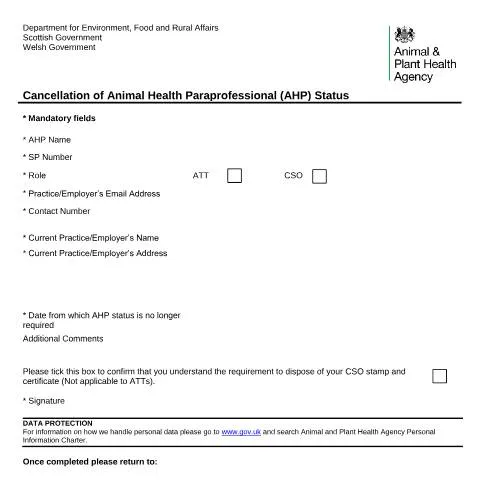
Understanding the Importance of the OV56 Form in Animal Health Management
The OV56 form is a pivotal document for professionals in the animal health sector, primarily related to the cancellation of Animal Health Paraprofessional (AHP) status. This form ensures that the status of those working within the animal health landscape is accurately updated, which can significantly impact public health, animal welfare, and compliance with regulations.
Who Needs to Fill Out the OV56 Form?
Individuals who hold AHP status and wish to cancel it must complete this form. This includes those who have transitioned to different roles or have ceased their responsibilities that require AHP certification. It's also critical for individuals ensuring they comply with regulatory requirements set out by the Animal and Plant Health Agency.
Identifying Roles and Responsibilities
- ATT (Animal Health Technician): If you are performing technical duties related to animal health and wish to cancel your AHP status, this form is essential.
- CSO (Common Service Operator): Similarly, if you're a CSO and no longer require AHP certification, you must submit the OV56 form.
Key Details Required for Form Completion
To properly fill out the OV56 form, several mandatory fields must be completed. Here’s a breakdown:
- AHP Name: The full name of the individual canceling their AHP status.
- SP Number: A unique identifier assigned to the AHP.
- Role: Specify whether you are an ATT or CSO.
- Practice/Employer’s Email Address and Contact Number: Essential for any follow-up communications.
- Current Practice/Employer’s Name and Address: This ensures that records accurately reflect where the individual was employed.
- Date From Which AHP Status is No Longer Required: This indicates when the cancellation takes effect.
- Signature: A confirmation from the individual that they understand the responsibilities associated with canceling their AHP status.
The Legal Framework Surrounding AHP Status Cancellation
The cancellation of AHP status does not happen in a vacuum. It is embedded within legal and regulatory frameworks established to safeguard animal health and welfare. The Department for Environment, Food & Rural Affairs (DEFRA) and the Animal and Plant Health Agency (APHA) have laid out specific guidelines that govern the conduct and responsibilities of AHP professionals.
Understanding this framework is crucial as it outlines the implications of maintaining or canceling one’s status. For example, professionals must be aware of their obligations under the Animals Act 1971 and associated regulations, which can include responsibilities for reporting certain diseases and adhering to biosecurity protocols.
Consequences of Inaction: What Happens if the Form is Not Submitted?
Failing to submit the OV56 form can lead to significant repercussions. Professionals may find themselves in breach of regulatory compliance, which can carry penalties ranging from fines to criminal prosecution. Furthermore, it could affect their ability to work within the animal health sector in the future.
In addition, not formally canceling status may result in confusion about one's qualifications, causing issues for the employer and colleagues who may rely on accurate certifications to ensure legal compliance.
Addressing Errors and Missing Information
In the event of an error or missing piece of information when submitting the OV56 form, there are protocols to follow to correct these issues promptly. Common pitfalls include:
- Leaving mandatory fields blank, which will result in the form being rejected.
- Providing an incorrect SP number, leading to delays in the cancellation process.
If you realize there is an error after submission, contact the OV Team immediately to rectify the issue. This proactive approach can save time and prevent complications.
Methods for Submission: Navigating the Process
The OV56 form can be submitted in various ways, each with its unique considerations:
- Email Submission: This is the quickest method. Completed forms can be sent directly to [email protected]. Ensure that the file format is compatible and that all mandatory fields are filled to avoid rejection.
- Postal Submission: If you prefer traditional methods, you can post the completed form to the address provided:
OV Team, Animal and Plant Health Agency, Customer Service Centre One Health, County Hall, Spetchley Road, Worcester WR5 2NP
Note that postal submissions may take longer to process, so factor this into your timing if you have a deadline.
Comparative Overview of Submission Methods
| Method | Speed | Pros | Cons |
|---|---|---|---|
| Fast | Immediate confirmation | Requires digital capability | |
| Post | Slower | Traditional method | Possible delays in delivery |
Preparing Justifications: What You Need to Know
When submitting the OV56 form, you may be required to provide additional documentation depending on your circumstances. To ensure a smooth process, consider the following:
- Proof of Previous Employment: Documentation that confirms your role and why you no longer require AHP status.
- Confirmation of Current Status: If transitioning to a new role, clarifying your new responsibilities may be necessary.
It’s wise to gather these documents in advance, ensuring that they are up-to-date and accurately reflect your professional standing.
Final Thoughts on Navigating the OV56 Process Effectively
Successfully navigating the OV56 form process not only affirms your compliance with regulations but also reinforces your commitment to maintaining high standards within animal health. By understanding the implications of your AHP status and following the proper procedures, you can ensure that your professional journey remains uninterrupted and compliant.
For any further queries or assistance, always feel free to reach out to the OV Team at the provided contact details. Remember, timely communication is key!
Understanding the Implications of OV56 Status Cancellation
The OV56 status is essential for individuals working as Animal Health Paraprofessionals (AHPs) in the United Kingdom. Cancellation of this status does not merely signify the end of one's official capacity to perform certain duties but also carries broader implications for professional credibility and future employment opportunities. Individuals affected by the OV56 cancellation must fully comprehend how it impacts their current job roles, potential career paths, and reputation within the agricultural and veterinary sectors.
When the OV56 status is revoked, the individual loses the ability to undertake specific functions related to animal health, including the ability to certify animal health documents or engage in certain biosecurity tasks. For those employed directly by veterinary practices or agricultural enterprises, this may lead to reassignment or even job loss. It's advisable for affected individuals to seek guidance from the Animal and Plant Health Agency (APHA) to understand the specific reasons for cancellation and to explore any opportunities for reinstatement or appeal.
Moreover, a cancelled status could have financial implications. If an AHP was relying on this position as a primary source of income, they may need to investigate alternative employment avenues or explore public assistance options through the Department for Work and Pensions (DWP). Understanding the local job market for animal health professionals can facilitate a smoother transition during this challenging period.
Reinstatement Process for OV56 Status
If your OV56 status has been cancelled, it is crucial to know that a pathway to reinstatement may exist, contingent on the reasons for cancellation. First, you must obtain a clear understanding of the actions that led to the cancellation, which could range from compliance issues to lapses in continuing professional development (CPD). The APHA provides detailed guidance on how to address these concerns and rectify any deficiencies.
The reinstatement process typically requires individuals to demonstrate that they have undertaken appropriate remedial action. This might involve completing additional training, submitting documents to confirm compliance with regulations, or participating in relevant workshops. Documentation proving compliance with the necessary criteria should be submitted alongside any application for reinstatement.
If you believe your cancellation was unjust, you have the right to appeal. The appeal process may include a formal hearing and should incorporate all relevant evidence supporting your case. It’s vital to keep thorough records of your professional activities to strengthen your appeal, and consulting with a legal expert in employment law may be beneficial to navigate this complex process effectively.
Long-term Career Considerations Following OV56 Cancellation
Securing the OV56 status is a valuable credential in the field of animal health. Following its cancellation, professionals may feel uncertain about their long-term career trajectory. However, this situation can be an opportunity for reflection and growth. Individuals may consider diversifying their skill sets by pursuing additional qualifications or certifications that could enhance their employability in related fields, such as veterinary nursing, animal care, or biosecurity management.
Networking with other professionals in the veterinary and agricultural industries can also provide insights into emerging trends and job openings. Engaging in professional organizations can facilitate connections that might lead to new job opportunities. Utilizing resources from the Royal College of Veterinary Surgeons (RCVS) can guide further education and networking avenues.
Lastly, it’s essential to remain updated on ongoing developments within animal health legislation and practices. This not only demonstrates a commitment to professional growth but can also restore confidence in potential employers regarding your ability to adapt and thrive in a changing landscape.