Navigating the Waters of the Boatmasters' Licence Upgrade Application
Within the maritime industry of the UK, securing a Boatmasters' Licence (BML) is essential for individuals aspiring to command certain types of vessels on inland and coastal waters. The upgrade process for this licence can be a daunting task for many, yet it opens the door to a range of professional opportunities. Whether you are looking to expand your operational area or enhance your qualification tier, understanding the nuances of the application is vital.
Understanding the Regulatory Framework
The Boatmasters' Licence is a product of the Maritime and Coastguard Agency (MCA), falling under the broader regulatory landscape of maritime safety and vessel operation. Established to ensure that individuals operating commercial vessels possess the necessary skills and knowledge, the BML is governed by the Merchant Shipping Act 1995 and its subsequent amendments. This legal framework is designed to safeguard not only the operators but also the passengers and cargo transported by these vessels.
To illustrate how this framework operates, consider the qualifying service time (QST). This is a critical component of your application as it confirms that you have recent and relevant experience. The MCA mandates that your QST must be accumulated within the past five years, demonstrating your active engagement in maritime operations.
Eligibility and Profile of Applicants
The audience for the BML upgrade application is quite diverse, encompassing various tiers and types of mariners. Each tier of the licence aligns with different operational capacities and responsibilities. Here’s a closer look at who may submit an application for an upgrade:
- Current BML Holders: Individuals already possessing a Tier 2 BML looking to upgrade to Tier 1 or expand their operational area.
- First-time Applicants: Those who have previously held a BML but are seeking to return to the industry after a hiatus.
- Specialists: Mariners aiming to add endorsements for specific operations or local knowledge endorsements, which are crucial for navigating particular areas.
The MCA categorizes the BML into various levels, primarily Tier 1 and Tier 2, each with its own set of requirements and operational permissions. Understanding these distinctions is crucial, as the application process varies significantly between tiers.
Key Tier Distinctions
| Tier Level | Validity | Operational Scope |
|---|---|---|
| Tier 1 | National | Tidal and non-tidal waters |
| Tier 2 | Specified area | Limited to defined waters |
This differentiation not only affects the licensing process but also defines the operational scope for mariners. A thorough understanding of these tiers will aid applicants in making informed decisions about their career paths.
Completing the Application Form
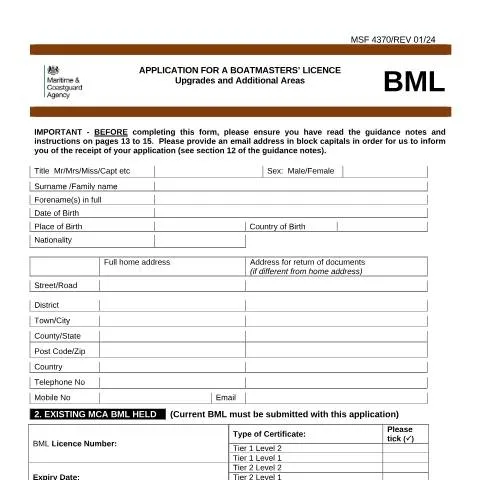
When embarking on the journey to upgrade your Boatmasters' Licence, the initial step is the meticulous completion of the application form. The form, referenced as MSF 4370/REV 01/24, requires a comprehensive array of personal details, including:
- Full name and contact information
- Current BML details
- Details of your recent maritime service
Before you begin filling out the form, it's imperative to review the accompanying guidance notes, specifically pages 13 to 15, which provide essential instructions. Failure to adhere to these guidelines can lead to delays or even rejection of your application.
Detailed Steps to Complete the Form
1. Personal Information: Be sure to provide all requested details accurately. This includes your full home address and contact number, which will be used for communication regarding your application.
2. Current BML Submission: This is a key requirement, as your application cannot proceed without submitting your existing BML. Ensure you have this document ready.
3. Service Record: You are required to detail your service, including the name of the vessel, your rank, and the duration of service. This record is the basis for validating your operational experience.
4. Safety Training Documentation: Applicants must also include evidence of having completed the mandatory MCA-approved safety training. This is crucial, as the MCA places a strong emphasis on safety practices.
Submission Process and Follow-Up
Once your application form is complete, the next step is to submit it to the MCA. You will need to include the required fees and any supporting documentation. It is advisable to send your application via a traceable method to ensure its safe receipt. The MCA will provide a receipt upon processing your application, which should be retained for your records.
What Happens After Submission?
After submission, keep track of your application status. You can expect communication from the MCA regarding the progress of your application. If you do not hear back within a reasonable timeframe, consider following up with the agency. Remember, they may require additional documentation or clarification, so being proactive can ensure your application proceeds smoothly.
The Importance of Safety Training
Taking on the responsibility of operating a vessel comes with significant safety obligations. The MCA requires all applicants to have undergone specific safety training, including Personal Survival Techniques, Fire Safety, and First Aid. These components are not merely formalities; they are critical in preparing you for real-life emergencies that may arise on the water.
In cases where you have completed maritime studies that cover these areas, you may submit the relevant certification as an alternative to formal training certificates. Make sure to consult the specific requirements outlined in the guidance notes to avoid any pitfalls.
Consequences of Incomplete Applications
Submitting an incomplete application can lead to substantial delays in obtaining your upgraded BML. It is crucial to double-check that you have included all required documentation and have fulfilled all prerequisites before sending your application. Failing to do so might not only result in rejection but could also require you to restart the entire application process later on.
Understanding the Fees
The fees associated with the application for upgrading your Boatmasters' Licence can vary depending on the specific upgrades and endorsements you are applying for. Therefore, refer to the latest fee schedule provided by the MCA. Ensure that your payment method aligns with their accepted forms, which will be outlined in the guidance notes.
Additional Considerations and Assistance
As you embark on this application journey, remember that the MCA is there to assist you. Don’t hesitate to reach out for clarification or guidance as needed. They can provide insights into the best practices for completing the form and ensure that you are on the right track.
Moreover, consider joining professional networks or forums where current BML holders share their experiences and tips. Learning from others who have successfully navigated this process can provide valuable insights that may enhance your application experience.
Conclusion: Stepping into a New Role
Upgrading your Boatmasters' Licence is more than just a bureaucratic procedure; it is a significant step in your maritime career. The opportunities that accompany an upgraded licence, whether it be commanding larger vessels or operating in broader areas, can transform your professional trajectory. A well-prepared application can set the foundation for a successful career on the waters. Approach this process with care, diligence, and a clear understanding of your requirements, and you will be well on your way to achieving your maritime goals.
Understanding the Types of Boatmasters' Licences
Before applying for an upgrade, it is vital to comprehend the different types of Boatmasters' Licences available in the UK. The Boatmasters' Licence (BML) is essential for operating commercial vessels on inland waterways and certain coastal waters. There are different categories of BML, including:
- Category A: This licence is suitable for vessels operating in the sea and inland waters. A Category A licence allows you to carry passengers and cargo on vessels operating at sea up to 60 miles from a safe haven.
- Category B: This is typically for vessels operating in inland waters and coastal areas up to 20 miles from a safe haven. It is essential for those who are involved in short-haul ferrying and other passenger services.
- Category C: This category is designed for those operating vessels closer to shore, typically within 3 miles of a safe haven. This licence is adequate for local harbour or short-distance services.
- Category D: Ideal for those operating smaller vessels or working near the shoreline. It is often required for leisure and charter boat operations.
Each type has specific requirements and limitations regarding the size and type of vessel you can operate, as well as the area in which you can navigate. It is crucial to identify the appropriate category that meets your operational needs before applying for an upgrade.
Preparing for the Upgrade Application
Before launching your application for an upgrade, several preparatory steps need to be undertaken. This not only ensures a smoother application process but also enhances your chances of success. Here are key preparations:
- Assess Your Current Qualifications: Review your existing qualifications and experience to determine whether they meet the requirements for the upgrade you are seeking. You will likely need to demonstrate a certain level of experience on relevant vessels.
- Gather Required Documentation: Compile all necessary documentation, including proof of sea service, medical certificates, and previous qualifications. Ensuring all documents are up-to-date and correctly formatted is vital.
- Complete Relevant Training: Depending on the upgrade, you may be required to undertake additional training or examinations. Engage with recognised training providers to ensure you meet the necessary standards.
- Understand the Assessment Process: Familiarise yourself with the assessment requirements for the upgrade category. This may include both practical and theoretical examinations. Checking the guidelines set by the Maritime and Coastguard Agency (MCA) will give you detailed insights.
Preparation is critical, as deficiencies in documentation or qualifications can lead to delays in the processing of your application or even outright rejection. Take the time to prepare adequately.
Maintaining Compliance After Upgrade
Once you have successfully upgraded your Boatmasters' Licence, compliance with various regulations and continued professional development becomes essential. Here are key aspects to consider:
- Regular Medical Checks: Boatmasters are required to undergo regular health assessments to ensure they maintain the necessary physical and mental fitness for the role. Ensure you keep your medical documentation up-to-date.
- Continuous Professional Development (CPD): Engaging in ongoing training and professional development will not only enhance your skills but also keep you abreast of any regulatory changes in the maritime industry. Many local training providers offer courses specifically tailored to Boatmasters.
- Recordkeeping: It is advisable to maintain accurate records of your sea time, training, and any incidents that may occur while operating under your licence. This will serve you well in case of inspections or audits by regulatory authorities.
- Networking and Community Engagement: Joining professional networks and communities can provide valuable resources and support. Engaging with peers in the industry can also keep you informed about best practices and emerging trends.
Staying compliant and proactive in your professional development not only assures regulatory compliance but also enhances safety and operational effectiveness in your maritime activities.