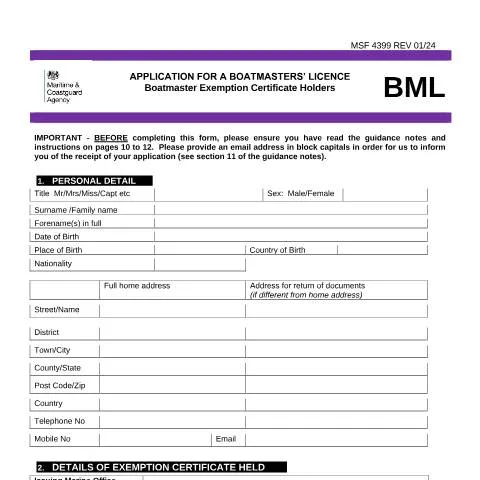
Navigating the Waters: An In-Depth Look at the Boatmasters’ Licence Exemption Certificate
For many individuals working within the maritime sector in the UK, obtaining a Boatmasters' Licence Exemption Certificate (commonly referred to as a BML Exemption Certificate) is a pivotal step in their professional journey. This certificate not only enables maritime professionals to operate specific types of vessels without the full Boatmasters’ Licence but also signifies a level of competency acknowledged by regulatory bodies. Understanding the ins and outs of this document can significantly impact one’s maritime career.
Understanding Eligibility: Who Can Apply for the BML Exemption Certificate?
The eligibility criteria for acquiring a Boatmasters’ Licence Exemption Certificate are specifically tailored to individuals already engaged in maritime activities. Generally, the following groups are eligible to apply:
- Current Boatmasters’ Licence Holders: Individuals holding an existing exemption certificate under specific conditions may seek renewal or an upgrade.
- Maritime Professionals: Those who have accrued relevant experience on commercial vessels in the past five years are encouraged to apply. The experience must meet certain qualifying service time (QST) criteria.
- Individuals Undergoing Training: Candidates who are currently participating in a maritime training program may also be eligible for the exemption, provided they meet the prerequisite qualifications.
It's vital to note that applicants must possess a valid medical fitness certificate along with the necessary identification documents during the application process. Understanding the specific QST requirements is crucial, as this often becomes a sticking point for many applicants.
Qualifying Service Time (QST)
Qualifying Service Time (QST) refers to the minimum period an applicant must have worked on relevant vessels. This requirement generally encompasses:
- Time spent aboard commercial vessels.
- Experience relevant to the type of operation for which the exemption is sought.
- Proof of service must be documented and verifiable.
Note that self-certification of service is not permitted; applicants need to provide tangible evidence of their maritime experience.
The Application Process: Steps to Secure Your Exemption
Securing a Boatmasters’ Licence Exemption Certificate involves a detailed and structured application process. Below is a step-by-step guide to help you navigate this procedure:
- Gather Necessary Documents: Ensure you have the following ready:
- The original Boatmaster Exemption Certificate (MSF 4369).
- A valid medical fitness certificate tailored to your specific operational requirements.
- Two passport-sized photographs taken within the last six months, properly endorsed.
- A valid form of photo identification, such as a passport or driver’s licence.
- Complete the Application Form: Fill out the form in clear and legible writing. Ensure all sections are completed to avoid delays.
- Schedule Your Test: Depending on your qualifications, you may be required to undergo a Boat Handling Test or a Test of Underpinning Knowledge. Indicate your availability for these tests in the application form.
- Submit Your Application: Send your application along with the required documents to the relevant Marine Office. Make sure to include your contact details for confirmation.
- Await Confirmation: After submission, the Maritime and Coastguard Agency (MCA) will process your application and notify you of any additional steps or tests required.
It is advisable to maintain a copy of your submitted documents for your records. The processing time can vary, so plan accordingly.
The Practical Implications of the BML Exemption Certificate
The Boatmasters’ Licence Exemption Certificate holds significant value in practical maritime operations. Understanding its implications is crucial for operators and employers alike.
Operational Flexibility
A valid exemption certificate provides holders with flexibility in operating certain types of vessels, which can include:
- Commercial passenger boats.
- Workboats and tugs.
- Vessels involved in cargo transport across inland waters.
This flexibility is essential for businesses that require personnel capable of operating various vessels under differing scenarios.
Regulatory Compliance
Employers must ensure that their crew members possess the appropriate qualifications to comply with maritime regulations. The exemption certificate serves as proof that the holder has met the necessary criteria, thereby assisting companies in maintaining compliance with the Maritime and Coastguard Agency’s standards.
Insurance and Liability Considerations
Holding an exemption certificate can also influence insurance policies for vessel operators. Many insurance providers require proof of licensure or exemption to adequately cover maritime operations. As a certificate holder, you may find yourself better positioned in negotiations with insurers, thereby potentially reducing operational costs.
Validity, Renewal, and Retraction: Managing Your Certificate
The Boatmasters’ Licence Exemption Certificate is not a permanent document; understanding its validity and renewal process is crucial for maritime professionals:
Duration of Validity
The exemption certificate typically has an expiry date, which is specified upon issuance. It is essential for holders to track this date carefully to ensure continual compliance and avoid operational disruptions.
Renewal Procedures
Renewing your exemption certificate requires adherence to the same rigorous standards as initial application. Key steps include:
- Submission of a new application form.
- Providing updated evidence of qualifying service time if applicable.
- Re-evaluating your medical fitness status.
Renewals are generally recommended to be initiated well ahead of the expiration to allow adequate time for processing.
Conditions of Retraction
The MCA retains the authority to retract a BML Exemption Certificate under specified circumstances, including:
- Failure to meet ongoing medical requirements.
- Evidence of misconduct or violations of maritime regulations.
- Inability to demonstrate qualifying service during the renewal process.
If your certificate is retracted, it is critical to address any issues promptly to minimize the impact on your maritime operations.
Addressing Issues: What to Do in Cases of Loss or Dispute
Like any important document, the Boatmasters’ Licence Exemption Certificate could be lost or subject to error. Understanding the correct procedures can help navigate these situations effectively.
Steps if Your Certificate is Lost
In the event that your exemption certificate is lost, the following steps should be taken:
- Report the Loss: Notify the MCA as soon as possible to prevent potential misuse of your certificate.
- Apply for a Replacement: Submit a formal request for a replacement certificate, including any required documentation and potentially a fee.
- Maintain Records: Document all correspondence regarding the loss for future reference.
Contesting Errors
If you believe an error has been made in the issuance or documentation of your certificate, it is imperative to act quickly:
- Contact the MCA directly to discuss the discrepancy.
- Provide any supporting evidence that may assist in clarifying the situation.
- Follow up on your application for correction if necessary.
Swift action will help rectify any issues that may affect your ability to operate legally and effectively in the maritime sector.
The Legal Significance of the BML Exemption Certificate
The BML Exemption Certificate serves as a crucial legal document within the maritime industry, providing holders with legitimate clearance to operate under specified conditions. Here are some aspects that underline its legal importance:
Legal Validation
This certificate is recognized by the MCA as proof of competency and adherence to maritime regulations, making it vital for legal operations.
Professional Endorsement
For employers, the certificate validates the qualifications of their crew, adding a layer of legal protection and compliance that is essential in the heavily regulated maritime environment.
Final Thoughts: The Importance of Staying Informed
Securing a Boatmasters’ Licence Exemption Certificate is not merely a bureaucratic hurdle; it is an essential component of a successful maritime career. The certification process, while rigorous, serves to safeguard both operators and the industry at large. By understanding the nuances of eligibility, application, and maintenance of this important document, maritime professionals can enhance their operational capacity and ensure compliance with regulatory standards.
Whether you are a seasoned mariner or new to the industry, keeping informed about the regulations surrounding the BML Exemption Certificate can significantly impact your professional journey and the safety of maritime operations across the UK.
Understanding the Types of Boatmasters' Licence Exemption Certificates
Before applying for a Boatmasters' licence exemption certificate, it's important to understand the different types available and the specific circumstances under which each can be applied. The Maritime and Coastguard Agency (MCA) administers these exemptions to ensure safety and operational standards are maintained across various maritime activities.
The most common types of exemptions include:
- Short Range Exemption: This is generally applicable for vessels operating within a limited distance from the shore or in inland waters. Applicants must demonstrate familiarity with the area of operation and possess the necessary safety equipment on board.
- Dredging Exemption: For those involved in dredging activities, an exemption certificate allows the operation of dredging vessels without a full Boatmasters' licence, provided certain criteria are met, including safety training and operational experience.
- Working Vessels Exemption: This applies to vessels that are used for specific purposes such as research, survey or rescue operations. Applicants must provide documented evidence of the vessel's purpose along with proof of competence in the operation of the vessel.
Each exemption type has its own set of requirements, and thorough preparation is vital to ensure compliance and successful application. Understanding these nuances can significantly improve the likelihood of obtaining an exemption certificate seamlessly.
Step-by-Step Application Process for the Boatmasters' Licence Exemption Certificate
The application process for a Boatmasters' licence exemption certificate is systematic and requires attention to detail. Here's a comprehensive step-by-step guide to assist applicants in navigating this process efficiently:
- Determine Eligibility: Review the MCA guidelines to confirm that your operational circumstances align with the requirements for an exemption. This involves understanding your vessel's purpose, the type of waters you will operate in, and whether your previous experience meets the criteria laid out for the exemption type you are applying for.
- Gather Required Documentation: Compile all necessary documents, which may include proof of previous maritime experience, safety training certificates, and any other relevant qualifications. Ensure that these documents are current and clearly demonstrate your competence.
- Complete the Application Form: Download and fill out the appropriate MCA application form for the exemption certificate. Be meticulous in providing all requested information, as incomplete forms can delay the process. Use clear and concise language, supporting your claims with documentation as necessary.
- Submit Your Application: Send your completed application form along with all supporting documentation to the designated MCA contact point. Be mindful of any specific submission guidelines, such as whether to submit electronically or by mail.
- Application Review Process: Once submitted, your application will go through a review process. The MCA may contact you for further information or clarification, so be prepared to provide additional details if required.
- Receiving Your Certificate: If your application is approved, you will receive a Boatmasters' licence exemption certificate by post. Ensure you review this certificate upon receipt to verify that all details are accurate, as this will be crucial for your subsequent operations.
By following this detailed application process, you can significantly enhance your chances of securing the necessary exemption certificate and continue your maritime activities with confidence.
Insurance and Safety Requirements When Operating Under an Exemption
Operating a vessel under a Boatmasters' licence exemption certificate does not absolve owners and operators from following safety protocols or securing appropriate insurance. Understanding and meeting these requirements is crucial not only for compliance but also for the safety of all onboard and the environment.
Insurance: It's mandatory to have adequate insurance that covers liability and damages associated with operating a vessel. Depending on your operational scale and the type of activities engaged in, the level of insurance required may vary. Consult with an insurance professional who specializes in marine insurance to determine the right coverage for your needs.
Safety Equipment: Regardless of the exemption type obtained, vessels must be equipped with the necessary safety gear. This includes, but is not limited to, life jackets, flares, a first aid kit, fire extinguishers, and navigation lights. Regular inspections of this equipment are essential to ensure functionality and compliance with safety regulations.
Training: While the exemption certificate alleviates the need for a full Boatmasters' licence, operators should still possess a solid understanding of navigation, emergency procedures, and general seamanship. Regular training sessions or refresher courses can not only enhance skills but also demonstrate a commitment to safety when operating your vessel.
By prioritizing these insurance and safety aspects alongside your exemption certificate, you will foster a safer maritime environment, mitigating risks while enhancing operational efficiency.