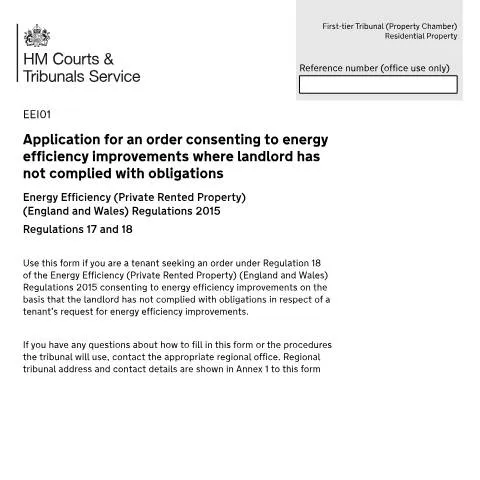
Navigating the EEI01 Form: Importance and Impact on Tenants’ Rights
For many tenants across England and Wales, the quest for adequate energy efficiency in rented properties can feel like navigating a maze. When landlords fall short of their obligations under the Energy Efficiency (Private Rented Property) (England and Wales) Regulations 2015, tenants are left in a challenging position. Enter the Form EEI01, a crucial tool enabling tenants to seek a consent order for energy efficiency improvements. Understanding this form is essential, as it plays a pivotal role in advancing tenants' rights while fostering healthy living conditions.
Understanding the Energy Efficiency Regulations
The Energy Efficiency (Private Rented Property) (England and Wales) Regulations 2015 impose specific duties on landlords regarding the energy performance of their properties. These regulations are designed to enhance energy efficiency, promote sustainability, and reduce energy bills for tenants. However, when landlords neglect these obligations, the EEI01 form acts as a formal request to rectify these deficiencies.
The form allows tenants to apply for an order under Regulation 18, permitting them to undertake energy efficiency improvements when their landlord fails to respond to their requests. In essence, this document empowers tenants, giving them a voice and a means to ensure their living conditions meet acceptable energy standards.
Dissecting the EEI01 Submission Process
Completing the EEI01 form can be daunting, yet it is straightforward if approached methodically. Each section of the form requires specific details that need careful consideration.
Applicant's Details: The First Steps
The initial section of the form requests the applicant’s details. Here, accuracy is paramount. Tenants must fill in their name, capacity (e.g., tenant, joint tenant), and contact information — including phone numbers and email addresses. This ensures that the tribunal can reach out for further information or clarification.
- Name: Ensure to provide your full name as registered in your tenancy agreement.
- Capacity: Clarify your role in relation to the property.
- Contact Information: Verify all details for accuracy; any missing or incorrect information can delay the process.
Property Address: Specify Your Location
Next, it’s crucial to provide the full address of the subject property, including postcode. This ensures that the tribunal clearly identifies the location of the property in question.
Landlord Details: Building Your Case
The subsequent section focuses on the landlord's information. Correctly identifying the landlord is essential, as the order sought will be directed at them. Provide their name, contact details, and any reference numbers associated with your tenancy or prior communications with the landlord.
Grounds for Your Application: The Heart of Your Case
The grounds of the application section is arguably the most critical part of the EEI01 form. This is where tenants outline the reasons for their application, detailing how the landlord has failed to comply with their energy efficiency obligations. Clarity and precision are vital here; vague statements can hinder your case.
Organising Your Arguments
- Detail Specific Obligations: Cite specific obligations your landlord has neglected, referencing any relevant clauses from your tenancy agreement.
- Document Communication: Include dates and methods of communication where you have requested improvements.
- Impact of Lack of Compliance: Elaborate on how the landlord’s inaction has affected your living conditions, such as high energy bills or discomfort.
The Order You Wish to Seek: Setting Expectations
In the section detailing the order sought, clearly state what you wish the tribunal to do. This might involve granting permission to carry out specific energy efficiency improvements like insulation or boiler upgrades.
Explaining Your Request
Provide a concise justification for your request. This could include reference to specific improvements that are necessary based on energy performance assessments or expert advice. Be explicit about how these improvements will benefit both you and potentially the landlord in the long run.
The Timeline of the EEI01 Journey: What to Expect
Once the EEI01 form is submitted, tenants might wonder about the next steps and expected timelines. Understanding the process can alleviate some of the stress involved.
Submission to Tribunal Review
Upon submission, the tribunal will review your application. Typically, you can expect to receive a confirmation of receipt within a few weeks. The time taken for a tribunal to make a decision can vary, but generally, you can anticipate an initial hearing within three months of your submission.
Hearings and Further Documentation
After the initial review, you may be required to provide additional documentation to support your case. This could be a bundle of evidence, including:
- Energy performance certificates
- Communications with your landlord
- Professional assessments of the property’s energy efficiency
Channels for Submitting the EEI01 Form: Navigating Your Options
Submitting the EEI01 form can be done through various channels, each with its pros and cons. Understanding these can help streamline the process.
Online Submission
Submitting the form online is often the quickest method. Tenants can complete and submit the form via the HM Courts & Tribunals Service website. Ensure that all information is entered accurately, as online forms will not allow for corrections after submission.
Paper Submission
For those who prefer a physical copy, paper submission is still an option. Fill out the form by hand, ensuring clarity, and send it via post to the appropriate tribunal office. Remember to seek proof of postage, as this will serve as evidence of your submission.
In-Person Submission
While less common, some tribunals may allow for in-person submissions. This can be beneficial if you have questions or seek immediate feedback on your application. Check with your local tribunal office for availability.
What Happens After Submission: The Next Steps
After submitting the EEI01 form, tenants should brace for a process that involves waiting and potential court appearances. However, this period is also an opportunity to prepare.
Preparation for the Tribunal Hearing
Once your application is accepted, you will be informed of a hearing date. Preparation is essential. You will want to gather all supporting documents, witness statements (if applicable), and outline your key arguments.
Attending the Hearing
On the day of the hearing, arrive on time and be prepared to present your case clearly and confidently. The tribunal will assess your application based on the evidence provided, and you will have the opportunity to explain your situation. Be sure to answer any questions posed by the tribunal members succinctly and honestly.
The Importance of Record-Keeping Throughout the Process
Maintaining accurate records throughout the EEI01 application process is vital. This includes keeping copies of all forms submitted, correspondence with your landlord, and any documentation related to the improvements sought.
Benefits of Detailed Records
- Evidence for Your Case: Detailed records can support your claims and provide a timeline of events.
- Facilitates Communication: When communicating with the tribunal or your landlord, having organized records can make discussions more efficient.
- Informs Future Actions: Keeping track of your interactions and submissions allows you to make informed decisions moving forward.
In Closing: The Empowerment of Tenants through EEI01
The EEI01 form represents more than just a piece of paper; it embodies the rights of tenants to seek improvements in their living conditions. By understanding the intricacies of this form and the surrounding regulations, tenants can take decisive action in addressing energy efficiency issues in their rented properties. Empowered with knowledge and the right tools, tenants can navigate the formalities of the tribunal system, ensuring their living environments meet the standards they deserve.
Understanding Energy Efficiency Consent Orders in the UK
Energy Efficiency Consent Orders are critical tools for homeowners and businesses looking to improve their energy performance while ensuring compliance with local regulations. These orders are typically aimed at tackling issues related to energy use and carbon emissions. To qualify for an Energy Efficiency Consent Order, applicants must demonstrate a genuine commitment to energy efficiency improvements, often supported by relevant energy assessments or audits. Understanding the nuances of these consent orders, including what constitutes satisfactory evidence and compliance requirements, is essential for a successful application.
Key Considerations Before Submitting Your Application
Before applying for an Energy Efficiency Consent Order using Form EEI01, several strategic considerations should be thoroughly assessed:
- Eligibility Criteria: Ensure that your property meets the specific criteria set out by local authorities. Factors such as the age of the building, its current energy rating, and existing insulation levels can significantly impact eligibility.
- Required Documentation: Collect necessary documents which may include energy performance certificates, previous energy assessments, and any prior consent orders. It is advisable to have these documents ready to avoid delays in processing your application.
- Consultation with Energy Assessors: Engaging with certified energy assessors can provide insights into what improvements are necessary and ensure that your project aligns with the goals of energy efficiency. They can also assist with filling out Form EEI01 accurately and thoroughly.
- Potential Financial Incentives: Explore any financial incentives or grants that may be available to support energy efficiency projects in your area. Local councils and environmental agencies often have programmes that can offset costs associated with implementing the required improvements.
Common Pitfalls in the Application Process
When applying for an Energy Efficiency Consent Order via Form EEI01, there are several common pitfalls applicants should be cautious of:
- Incomplete Applications: One of the leading causes of application rejections is incomplete or inaccurate information. Ensure that all fields in Form EEI01 are filled out correctly and that any additional documentation is included.
- Ignoring Deadlines: Be mindful of submission deadlines, especially if there are any time-sensitive incentives or grants associated with your energy efficiency improvements. Late submissions can result in missed opportunities.
- Neglecting Follow-Up: After submitting your application, do not hesitate to follow up with the relevant authority to confirm receipt and inquire about the processing timeline. This proactive approach can help expedite the approval process.
- Failure to Understand Local Regulations: Energy efficiency regulations may vary significantly across different regions. Familiarizing yourself with your local guidelines and requirements can enhance your application's chances of approval.