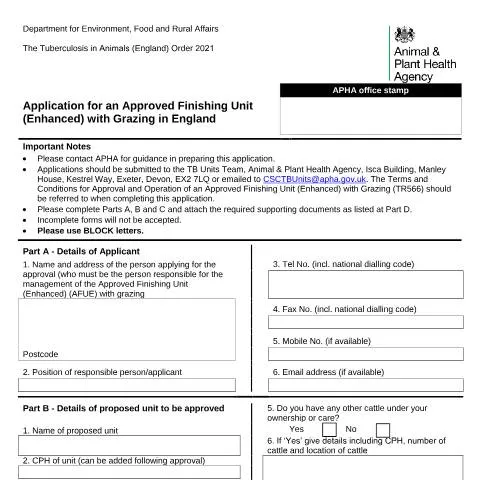
Understanding the Application for an Approved Finishing Unit (Enhanced) with Grazing
The application for an Approved Finishing Unit (Enhanced) with Grazing is a crucial process overseen by the Department for Environment, Food & Rural Affairs (DEFRA) in the UK. This document pertains to the management of cattle within a designated finishing unit, particularly focusing on ensuring compliance with health and environmental regulations. The significance of this application cannot be overstated; it directly impacts animal welfare, public health, and farming standards across England.
The Historical Context: Why the Form Exists
The necessity for this application arises from the ongoing efforts to control and prevent the spread of bovine tuberculosis (bTB), which poses severe risks not only to cattle but also to farming economies and public health. The Tuberculosis in Animals (England) Order 2021 established guidelines that mandate specific approvals for units that wish to manage cattle grazing. The introduction of enhanced regulations aims to streamline oversight while ensuring that animal welfare standards are upheld.
Regulatory Framework and Compliance
Under this framework, the UK government has set forth conditions that all finishing units must satisfy before receiving approval. This includes adherence to biosecurity measures, proper waste management, and maintaining healthy grazing practices. The application process also requires detailed information regarding the operational capabilities of the unit, the management of cattle, and the physical layout of the grazing land.
Who Needs to Apply? Profiling the Applicants
The application is specifically designed for individuals or entities responsible for the management of cattle within approved finishing units. Here are the key profiles of potential applicants:
- Farmers and Livestock Managers: Those who wish to manage an enhanced finishing unit that allows for grazing and needs to ensure compliance with bTB regulations.
- Corporate Entities: Organizations involved in large-scale livestock management that need to secure approvals for multiple units.
- Veterinary Professionals: Those acting as representatives for farmers, assisting in completing the application process on their behalf.
It's essential for applicants to understand that this process is not just a formality; it’s a comprehensive evaluation of their ability to maintain the health and safety of their cattle while adhering to national standards.
A Journey Through the Application Process
Embarking on this application involves several critical stages:
- Preparation: Gather all necessary documents and information, including the site plan, biosecurity protocols, and contingency plans.
- Completion of the Application: Fill out Parts A, B, and C of the application form accurately, ensuring that all required details are included.
- Submission: Send the completed application and supporting documents to the appropriate contact at the Animal and Plant Health Agency (APHA).
- Inspection: An APHA veterinarian will conduct an on-site inspection to verify compliance with safety and health regulations.
- Approval Notification: Once the inspection is completed, the applicant will receive notification regarding the approval status.
Diving Into the Form: Key Sections Explained
This application consists of several distinct sections, each requiring specific information. A deeper understanding of these sections can facilitate a smoother application process.
Part A: Applicant Details
The first part solicits personal information about the applicant, including:
- Name and address
- Contact numbers and email
- Position within the organization or farm
It is vital to ensure that all details are accurate and up-to-date, as this is the primary point of contact throughout the application process.
Part B: Details of the Proposed Unit
Part B requires information about the specific unit being applied for, including:
- Name of the proposed unit
- CPH (Cattle Purchase History) number
- Details regarding ownership and postal address
- Proposed maximum number of cattle
This section is critical as it establishes the scope and scale of operations that the applicant intends to manage, which directly impacts the approval process.
Part C: Declaration of Responsibilities
In this part, the applicant must acknowledge their responsibilities regarding the management of the unit. Key commitments include:
- Affirmation that the information provided is accurate.
- Commitment to notify APHA of any significant changes in management or facility conditions.
- Assurance of compliance with agricultural codes of practice.
This declaration emphasizes accountability and the importance of maintaining high standards of care for cattle.
What to Expect After Submission: The Timeline
Once the application has been submitted, applicants may be curious about the timeline involved. Here’s an overview of what typically happens:
- Initial Review: The APHA will conduct a preliminary review of the application to ensure completeness.
- Site Inspection: A veterinarian will inspect the proposed unit, which usually occurs within a few weeks of submission, depending on scheduling and location.
- Approval Decision: Following the inspection, applicants can expect feedback within a few weeks. This may include requests for additional information or clarifications.
- Final Notification: Once all criteria are met and compliance is confirmed, an official approval will be granted, allowing the operation of the unit to commence.
Navigating Challenges: What Happens in Case of Refusals or Issues
Encountering a refusal or request for additional documentation can be daunting. Understanding the recourse available is critical for applicants:
- Review of Reasons: Carefully examine any feedback provided by APHA, as this will highlight areas requiring correction.
- Resubmission: Applicants may need to address specific issues raised and resubmit their application.
- Seeking Guidance: It may be beneficial to contact APHA for clarification or assistance with the application process.
Addressing issues promptly and efficiently can greatly enhance the chances of receiving approval in subsequent submissions.
Detailed Requirements: Essential Documentation and Support
In addition to the completed application form, several documents must accompany the submission. Understanding these requirements is essential for compliance:
- Site Plan: A diagram detailing the layout of the proposed unit, including grazing areas and boundaries.
- Biosecurity Protocol (TR567): Outlining measures to prevent disease transmission among cattle.
- Contingency Plan (TR568): A scheme detailing actions to be taken in case of disease outbreaks or emergencies.
These documents are not merely formalities; they play a significant role in demonstrating an applicant’s commitment to upholding health and safety standards.
Conclusion: Preparing for Success in the Application Process
The application for an Approved Finishing Unit (Enhanced) with Grazing is more than a bureaucratic hurdle; it is a vital component of responsible cattle management in the UK. By understanding the intricacies of the application process, preparing thoroughly, and adhering to regulatory requirements, applicants can set themselves up for success. Navigating the complexities of this application may require diligence and patience, but the rewards—ensuring animal welfare and contributing to public health—are invaluable.
Understanding the Approved Finishing Unit (Enhanced) Requirements
To apply for an Approved Finishing Unit (Enhanced) with grazing for cattle, it’s crucial to understand the specific requirements set forth by the UK government. This includes compliance with the Animal Welfare Act 2006 and adhering to the guidelines proposed by the Animal and Plant Health Agency (APHA). The key factors in maintaining an Approved Finishing Unit include adequate space per animal, access to clean water, appropriate feed, and effective health management protocols.
The space requirements for cattle in a finishing unit vary depending on the breed and age. For instance, the minimum space allowance for adult cattle is typically 2 square meters per animal when housed indoors. Outdoor grazing must also be included in your application, necessitating sufficient pasture land to allow for natural behavior and movement. Grazing management plans must highlight how you intend to rotate grazing areas to prevent overgrazing and maintain pasture quality.
Application Process and Key Documentation
The application process for establishing an Approved Finishing Unit (Enhanced) involves several key steps and the submission of specific documentation. Initially, you will need to complete the Form APHA 100, which provides detailed information about your farming operation, including the expected livestock numbers and the infrastructure available on the farm.
Alongside the application form, you must also submit:
- Farm Maps: Detailed maps that outline the layout of your farm, including the location of grazing fields and infrastructure.
- Animal Welfare Standards: Evidence of compliance with welfare standards which may include records of training for staff on animal handling and husbandry practices.
- Health Management Plan: A comprehensive plan that outlines how you will manage the health of your cattle, including vaccination schedules and biosecurity measures.
- Pasture Management Strategy: Documentation on how grazing will be managed sustainably, including rotational grazing plans and soil management practices.
After submission, the APHA will assess your application, which may involve an on-site inspection to confirm compliance with welfare standards and the functionality of your infrastructure. It’s important to be prepared for this inspection, as any deficiencies identified may result in delays or rejections of your application.
Financial Considerations and Support Options
Establishing an Approved Finishing Unit (Enhanced) can be a significant financial investment. It’s important to consider the initial costs of infrastructure, feed, and veterinary care, as well as ongoing operational expenses. In the UK, there are various grants and financial support mechanisms available aimed at helping farmers establish approved units.
For instance, the Countryside Stewardship Scheme provides funding for environmentally sustainable practices, which can complement your grazing management strategy. Additionally, the RDP (Rural Development Programme) offers financial support to farmers for investments related to innovation and modernization of farming practices. Keep an eye on the deadlines for these funding opportunities, which are usually announced annually.
Furthermore, maintaining records of all expenses associated with your Approved Finishing Unit is crucial for financial management and can help in preparing for any tax obligations. The HM Revenue and Customs (HMRC) allows you to claim certain expenses against your income, which can alleviate some financial burden during your operational years.
Being aware of your National Insurance obligations is also essential, as self-employed farmers must ensure they are correctly registered. Contributing to the National Insurance scheme is vital for accessing certain benefits and pensions later on.