The Importance of the CA14 Form in Recording Historic Events
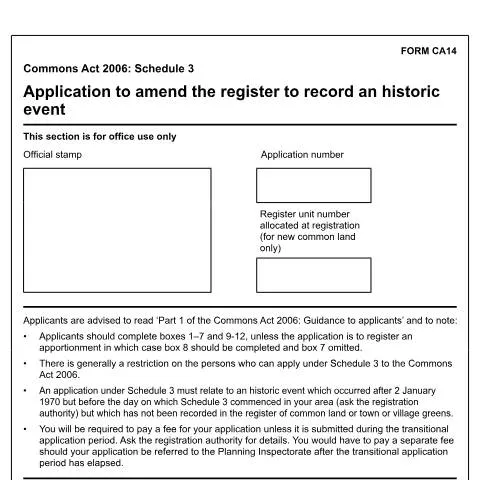
The CA14 form is a pivotal document within the framework of the Commons Act 2006, specifically designed to facilitate the recording of historic events related to common land and greens. This process is not merely bureaucratic; it serves a significant role in the preservation of local histories and community rights. When a historic event is recorded, it can affirm the rights of individuals or communities, ensuring their usage and benefit from communal spaces is formally recognized.
Understanding the Context: Commons Act 2006
The Commons Act 2006 provides the legal basis for managing common lands in England and Wales. Under this act, the CA14 form allows applicants to amend the register of common land to reflect events that occurred after 1970 but before an area was registered. Such amendments can relate to the creation, severance, or apportionment of rights associated with common land, making it essential for those seeking to clarify their rights.
Who Should Consider Submitting a CA14?
This form is typically submitted by individuals or organizations that can demonstrate a vested interest in the common land or greens affected. This includes:
- Landowners
- Local authorities
- Community groups
- Individuals with historical claims or usage rights
Understanding eligibility is key, as the Commons Registration Authority restricts who can apply, often requiring the applicant to show a direct connection to the land in question.
From Application to Approval: Navigating the Process
The journey starts with understanding the timeline: the form must be submitted within a specific transitional period following the enactment of the Commons Act 2006 to avoid additional fees. Here’s a step-by-step breakdown of the process:
Step 1: Preparing Your Application
Before completing the CA14, it is crucial to gather all necessary documents and details:
- Identify the historic event: Clearly define the event that necessitated the application and its implications for the common land.
- Confirm eligibility: Ensure you meet the requirements laid out in Schedule 3 of the Commons Act 2006.
- Fee structure: Understand whether you will need to pay a fee or if you qualify for a fee waiver during the transitional application period.
Step 2: Completing the CA14 Form
Filling out the form accurately is vital to avoid delays. The CA14 includes several key sections that applicants must complete:
- Commons Registration Authority: This section identifies the local authority responsible for processing your application.
- Name and Address of the Applicant: Include full details, as incomplete information can result in disqualification.
- Basis for Application: Describe your capacity to apply, detailing any rights or interests you have in the common land.
Common Missteps and How to Avoid Them
When filling out the CA14, it's essential to be aware of common pitfalls that could hinder your application:
Incomplete Information
Ensure all sections are filled out thoroughly. Missing information can lead to immediate rejection.
Incorrect Fee Payment
If a fee is required, verify the amount with the registration authority beforehand to avoid unnecessary delays.
Failure to Submit During the Transitional Period
Applications submitted after the transitional period may incur additional fees, and in some cases may not be accepted at all.
The Role of the Commons Registration Authority
Once the CA14 form is submitted, it is the responsibility of the Commons Registration Authority to review the application. This authority plays a crucial role in the following:
- Verification: Confirming the details of the application, ensuring accuracy and completeness.
- Public Notification: Depending on the application, there may be a public consultation period where objections can be raised.
- Final Decision: The authority will make a determination based on the provided information and any public input received.
Following Up on Your Application
After submitting your CA14, it's important to stay proactive. Regularly check in with the registration authority to monitor the progress and address any requests for additional information promptly.
Understanding the Implications of Your Application
Once your application is approved, it can have far-reaching consequences for both individuals and communities:
- Recognition of Rights: Successfully recording an event can solidify your rights to use and manage common land.
- Community Engagement: Involving local stakeholders in the process can promote community cohesion and awareness of communal spaces.
- Legal Standing: An entry in the register provides a legal basis for protecting your rights against future encroachments.
Comparing the CA14 with Other Forms
While the CA14 serves a unique purpose, it is essential to differentiate it from other forms relating to common land.
| Form | Purpose | When to Use |
|---|---|---|
| CA14 | Amend the register to record a historic event | When a relevant historic event has occurred |
| CA10 | Application to register land as common land | When seeking initial registration of new common land |
| CA11 | Application to register a right of common | When claiming a right on existing common land |
Spotlighting the Regulatory Framework
The establishment of the CA14 is rooted in a broader regulatory context that emphasizes the importance of community and environmental stewardship. The Commons Act 2006 arose from decades of legislation concerning land management, aiming to clarify existing rights and promote sustainable practices. Understanding this background not only enriches the process but also enhances one's appreciation of the role of common land in English culture.
Conclusion: Engaging with Common Land
Engaging with common land through applications like the CA14 is an opportunity to solidify rights and recognize the historical significance of these spaces. By understanding the nuances of this process, applicants can navigate the complexities involved effectively. The successful recording of historic events ensures that local histories are preserved, and community rights are respected, contributing to the vibrant fabric of rural and urban England.
Historical Context of Common Land in the UK
The concept of common land in the UK has roots that stretch back centuries, often intertwined with the evolution of land use and ownership. Common land refers to areas of land where local people have traditional rights to use, typically for activities such as grazing livestock, collecting firewood, or harvesting crops. Historically, these lands were essential to local communities, especially in rural areas, providing a vital resource for sustenance.
With the passing of the Enclosure Acts in the 18th and 19th centuries, many common lands were privatized, sparking significant unrest among those reliant on these areas for their livelihoods. These legislative changes, aimed at increasing agricultural efficiency, often disregarded the rights of local communities, leading to protests and movements advocating for the preservation of common land. One notable event occurred in the 1840s, known as the 'Cottagers' Revolt,' highlighting the tensions arising from the enclosure of common spaces.
Today, common land continues to play a role in the conservation of local ecosystems and the promotion of biodiversity. It is governed by a combination of historical rights and modern regulations, with recent advocacy efforts focused on restoring access and usage rights for communities that have been marginalized by urban development and agricultural practices.
Modern Legal Framework and Rights Associated with Common Land
In contemporary England and Wales, the Commons Act 2006 provides the primary legal framework governing common land. This legislation aims to clarify rights associated with common land, streamline the process for registering rights, and protect these vital spaces from inappropriate development. Under this act, landowners must notify the relevant authorities if they intend to alter the use or status of common land.
Rights associated with common land can vary significantly depending on the specific area and historical context. Common rights typically include grazing, cutting turf, and fishing, but these rights are often subject to regulation to ensure sustainable use. The need for careful management has led to the establishment of local commons councils, which engage with landowners, users, and local authorities to promote the interests of the community while safeguarding the ecological integrity of these spaces.
Additionally, the impact of the Countryside and Rights of Way Act 2000 cannot be overlooked. This legislation expanded public access to common land across England and Wales, allowing a broader segment of the population to enjoy these communal spaces. It was a significant advancement for walkers and outdoor enthusiasts, emphasizing the importance of preserving common land for public enjoyment while balancing the rights of traditional users.
Challenges and Controversies Surrounding Common Land Management
While common land has deep-rooted historical significance and legal protections, it is not without its challenges. One of the primary issues facing common land today is the conflict between conservation efforts and the rights of local users. Balancing the need for ecological preservation with the traditional rights of communities can often be contentious, with stakeholders sometimes at odds over land usage.
Another significant challenge arises from the growing pressures of urbanization and population growth. As cities expand, many common lands find themselves encroached upon by development projects, which may threaten their accessibility and ecological health. Advocacy groups consistently work to protect these areas from unsustainable development, but they often face significant hurdles, including funding limitations and political opposition.
Furthermore, climate change poses an additional layer of complexity to the management of common lands. As weather patterns shift, the traditional uses of these spaces may become unsustainable, prompting calls for adaptive management strategies that consider both environmental changes and community needs. These discussions are crucial as they shape the future of common land and greens in the UK, ensuring that they remain viable, accessible, and beneficial for generations to come.