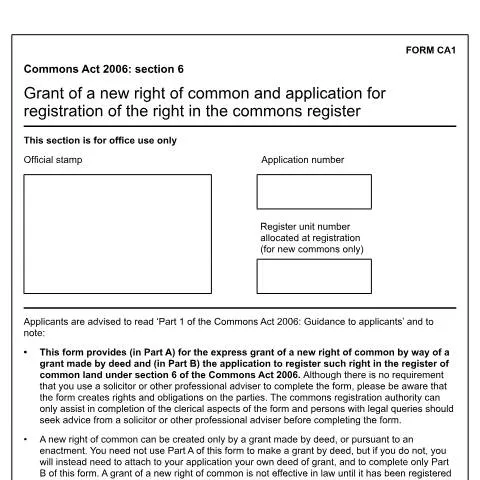
Understanding the CA1 Form: A Key to New Rights of Common
In the realm of land use and rights in the United Kingdom, the CA1 form plays an essential role for those wishing to establish new rights of common over land. It connects landowners, applicants, and local authorities, navigating the complexities of common land legislation. As part of the Commons Act 2006, this form is critical for applicants seeking legal recognition of their rights.
The Essentials of the Commons Act 2006
The Commons Act 2006 laid the groundwork for managing common land in England and Wales, addressing historical grievances and providing a legal framework for new rights of common. The act's primary purpose is to ensure the sustainable management of common land while allowing new rights to be established through legal means. The CA1 form is a vehicle through which these rights can be formalized.
This act recognizes that common land has both cultural significance and ecological value, shaping its use and preservation. It stipulates that new rights can only be created through a formal grant made under the deed, an essential consideration for prospective applicants.
Who Can Apply for a New Right of Common?
Eligibility for submitting the CA1 form is not universal; specific conditions apply. The Grantee, the party seeking the right, must meet certain criteria:
- The Grantee must own the Dominant Land, the land benefiting from the right of common.
- Alternatively, the application can be made by the landowner of the land where the right will be exercisable.
- Only those with a vested interest in the land are eligible to apply, ensuring that only relevant parties can claim rights.
Deciphering the CA1 Form: A Step-by-Step Guide
The CA1 form is divided into two primary parts: Part A for the Deed of Grant and Part B for registering the right in the commons register. Each section holds its importance and requires careful attention to detail.
Part A: Deed of Grant
This section is pivotal as it formally establishes the new right. Applicants must fill out details regarding the Grantee, the land being granted, and the nature of the right being requested.
- Grantee Information: Names and addresses must be provided accurately. In cases of multiple Grantees, a separate sheet should accompany the application.
- Nature of the Right: Clearly describe the right of common desired, including specifics such as "a right to graze ten sheep" or any quantifiable conditions.
- Additional Parties: If there are other involved parties, their details must also be included to prevent future disputes.
Part B: Registration Application
This section is where the Grantee formally requests registration of the new right. It's essential for the right to take effect legally. Key elements include:
- Evidence of the capability of the land to support the new right, particularly if it involves grazing or other activities.
- Registration fees, which vary depending on the nature of the application, must be settled to proceed.
Common Pitfalls and How to Avoid Them
While filling out the CA1 form may seem straightforward, there are common mistakes that can lead to delays or rejections. Here are some frequent pitfalls to avoid:
- Incomplete Information: Ensure all sections are thoroughly filled out. Missing details can stall the application process.
- Insufficient Evidence: When claiming rights involving land use, be prepared to submit evidence demonstrating the land's capability to sustain the claimed rights.
- Neglecting Fees: Be aware of any associated fees and ensure they are paid promptly.
What Happens After Submitting the CA1 Form?
Once the CA1 form is submitted, the application undergoes a review process by the local commons registration authority. Several outcomes are possible:
- Approval: If all criteria are met, the application will be accepted, and the new right will be registered in the commons register.
- Refusal: Should the application be declined, the authority will provide reasons for the refusal. Applicants have the right to appeal the decision, potentially leading to a reassessment by the Planning Inspectorate.
- Request for Additional Information: If the authority finds gaps in the application, they may request further documentation or clarification.
The Implications of a New Right of Common
Understanding the rights attached to common land is crucial for both landowners and Grantees. Establishing a new right of common can have substantial implications:
- Usage Rights: The Grantee gains specific rights to utilize the land, which can enhance agricultural activities or recreational use.
- Community Impact: New rights can shape local land use dynamics, influencing community relations and conservation efforts.
- Legal Obligations: Grantees may carry responsibilities regarding the maintenance and sustainable use of the common land.
Appeals and Remedies: Navigating the Appeals Process
Should an application be refused or require amendments, it is essential to understand the appeals process. The local commons registration authority is the first point of contact for inquiries regarding refusals.
Applicants may appeal to the Planning Inspectorate within a specified time frame, as dictated by the registration authority’s decision. The appeal process typically involves:
- Submitting a formal appeal stating grounds for contesting the refusal.
- Providing additional evidence if necessary, which may include legal documents or expert opinions.
- Awaiting a decision from the Planning Inspectorate, which may uphold or overturn the local authority's decision.
Building Relationships with Local Authorities
Establishing a new right of common involves more than filling out forms; it requires effective communication with local authorities. Building strong relationships can facilitate smoother applications and resolutions. Considerations include:
- Open Dialogue: Engaging early with the commons registration authority can clarify expectations and requirements, reducing the likelihood of complications.
- Understanding Local Context: Familiarize yourself with local regulations and historical context surrounding common land use to strengthen your application.
- Professional Advice: Seeking legal counsel or advice from land use professionals can ensure your application is robust and compliant with all stipulations.
Conclusion: The Path Forward with the CA1 Form
For individuals and organizations seeking to navigate the complexities of common land rights in the UK, the CA1 form serves as a crucial tool. By understanding the detailed requirements, the implications of establishing a right, and the potential pitfalls in the application process, applicants can significantly improve their chances of success. The framework provided by the Commons Act 2006 ensures that common land remains a valuable asset for both current and future generations.
Understanding the Legal Framework for Common Land and Greens
The legal framework governing common land and greens in the UK is multifaceted and rooted in centuries of English law. The primary legislation includes the Commons Act 2006, which provides the basis for creating rights of common, managing existing rights, and ensuring that common land is preserved for public use. Under this act, individuals or groups can apply to create new rights of common, such as grazing rights or rights to collect firewood.
To initiate this process, applicants must demonstrate a genuine intention to use the land in a way that benefits the community and adheres to the principles outlined in the act. This involves submitting a robust application to the appropriate local authority, which typically includes details about the intended use of the land, the number of people involved, and how the right will be managed to avoid conflict with existing rights and users.
In addition to the Commons Act, there are local byelaws and restrictions that may apply, depending on the location and historical significance of the land in question. Authorities, such as the relevant Local Common Council or the Department for Environment, Food & Rural Affairs (DEFRA), may impose additional conditions or restrictions to preserve the land's ecological and cultural value. It is crucial for applicants to engage with these authorities early in the process to navigate the complex legal landscape effectively.
Impact of Common Land Rights on Local Communities
The introduction of new rights of common can have significant impacts on local communities, both positive and negative. On one hand, these rights can enhance community cohesion by promoting shared use of local resources, fostering a sense of ownership, and encouraging community engagement in land management initiatives. For instance, when a group of residents is granted grazing rights, it may lead to increased cooperation among neighbours, who may collaborate on managing the land, organizing events, or even creating educational opportunities related to local biodiversity.
However, the establishment of new rights may also lead to potential conflicts among users of the land, especially in areas where existing rights of common are already in place. For example, competition for space, resources, and access can create friction between traditional users, such as local farmers, and new users intending to engage in recreational activities on the land. Therefore, it is vital for local authorities to facilitate dialogue and develop conflict resolution strategies when managing applications for new rights of common, ensuring that the diverse interests of all stakeholders are considered.
Furthermore, the impact of climate change and environmental degradation poses additional challenges for communities relying on common land. As these areas adapt to changing weather patterns, the sustainability of traditional practices may be questioned. Local authorities should consider incorporating climate adaptation strategies into their management plans for common land, ensuring that the rights granted are not only beneficial in the short term but also sustainable in the long run.
Steps to Establish a New Right of Common: A Practical Guide
Establishing a new right of common, such as the right to graze or collect wood, requires a systematic approach and familiarity with legal processes. Here’s a practical guide to the steps involved:
- Research Existing Rights: Before applying for a new right of common, it's essential to investigate whether any existing rights impact your proposal. This involves reviewing the local Commons Registration Authority's records and consulting with existing users.
- Engage with the Community: Communicate with local stakeholders, including landowners, farmers, and residents. Early engagement can help identify any potential issues and gain support for your application.
- Prepare Your Application: Gather all necessary documentation, including maps, plans, and written statements detailing your intentions. Be clear about how the new right will benefit the community and any measures you will take to prevent conflict.
- Submit Your Application: Apply to the appropriate local authority or Commons Registration Authority. Ensure that you follow their specific application procedures, which can vary widely.
- Respond to Feedback: After submission, be prepared to address any concerns raised by the local authority or the public. This may involve revising your proposal or providing additional information.
- Await a Decision: The local authority will consider your application and issue a decision. This process can take time, so patience and ongoing communication can be beneficial.
- Implement and Manage: Once granted, begin implementing your new right while adhering to any conditions set by the authority. Effective management is crucial to maintain the right and ensure its sustainability.
In conclusion, while the process of establishing a new right of common involves navigating legal and community complexities, it offers a valuable opportunity for enhancing local engagement and sustainable land use. By following these steps and maintaining open communication with all stakeholders, applicants can pave the way for successful and mutually beneficial outcomes.