Understanding the Purpose and Application of the Building Thermal Efficiency Innovation Grant Scheme
As energy efficiency becomes a priority in the UK, the Building Thermal Efficiency Innovation Grant Scheme offers a crucial opportunity for businesses and organizations aiming to enhance the energy performance of existing buildings. This grant scheme, initiated by the Department for Energy Security and Net Zero along with the Department for Business, Energy & Industrial Strategy, is designed to fund projects that introduce innovative methods for improving thermal efficiency.
For project leaders and companies, understanding the dynamics of this grant scheme is essential for securing funding and contributing to energy efficiency advancements. This document provides a comprehensive guide on the intricacies of the grant, from application to completion.
Grant Application Timeline: Key Dates and Expectations
To navigate the Building Thermal Efficiency Innovation Grant Scheme effectively, it is vital to remain aware of specific timelines associated with the application process. Here’s a breakdown of the key dates:
- Launch Date: The grant scheme is typically announced at the beginning of the fiscal year, around April.
- Application Period: Applications are generally accepted for a limited time, often lasting several months; prospective applicants should monitor the official announcements on GOV.UK.
- Assessment Period: Following the application submission, there may be a review period lasting several weeks to months, where applications are assessed against the funding criteria.
- Grant Award Notification: Successful applicants will typically receive notifications by the end of the assessment period, allowing them to commence their projects.
- Project Completion Deadline: All funded projects usually must be completed within a specified timeframe, often within one year, depending on the scope of the project.
This timeline is crucial for proper project planning and execution. It's advisable for applicants to prepare their proposals well in advance to ensure they meet all deadlines efficiently.
Navigating the Application Process: Steps to Success
The application process for the Building Thermal Efficiency Innovation Grant involves several critical stages, each requiring careful attention to detail. Here’s a structured approach to guide applicants through the submission process:
- Research and Preparation: Before applying, it’s important to thoroughly review the grant criteria and guidelines. Familiarize yourself with the types of projects that are eligible for funding, focusing on those that emphasize innovation and energy efficiency.
- Partnership Development: It is often beneficial to collaborate with academic institutions, technology partners, or other businesses to strengthen your application. Consider forming alliances that enhance your project’s scope and effectiveness.
- Project Proposal Writing: Craft a detailed project proposal that outlines objectives, methods, expected outcomes, and how the project aligns with the grant’s goals. Provide evidence of innovation and the potential impact on energy efficiency.
- Budget Planning: Develop a comprehensive budget that clearly delineates the allocation of grant funds across different project phases. Ensure it aligns with the grant’s funding limits and guidelines.
- Submission: After finalizing your proposal, submit it through the official channel specified by the BEIS. Ensure all documentation is correctly filled and all necessary attachments are included.
This structured approach not only aids in creating robust applications but also increases the likelihood of securing funding.
Detailed Breakdown of Grant Categories and Funding Levels
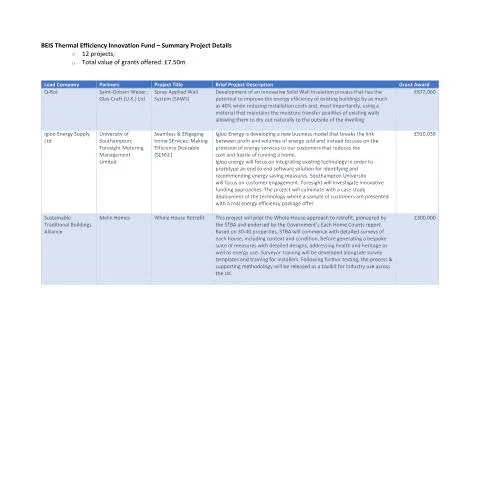
The Building Thermal Efficiency Innovation Grant Scheme categorizes projects based on the type of innovation and its anticipated impact on energy efficiency. Understanding these categories can help applicants align their projects with the grant's objectives. Here’s a comparative table illustrating various projects that have received funding:
| Project Title | Lead Company | Grant Award | Brief Project Description |
|---|---|---|---|
| Spray Applied Wall System (SAWS) | Q-Bot | £872,060 | Innovative solid wall insulation process improving energy efficiency while reducing installation costs. |
| SENSE | Igloo Energy Supply Ltd | £910,039 | New business model focusing on energy services to reduce home running costs and hassle. |
| Whole House Retrofit | Sustainable Traditional Buildings Alliance | £300,000 | Pilot project addressing energy use while considering health and heritage aspects in retrofitting. |
| Passive Ventilation with Heat Recovery | Free Running Buildings Ltd | £430,225 | Development of a zero-energy ventilation system that lowers heating demands while improving air quality. |
| IoT-Enabled Real-Time Energy Analytics | TerOpta Limited | £1,290,000 | Solution to measure and optimise energy consumption in commercial buildings. |
Preparing Justifications: Required Documentation for Applications
Applicants need to compile thorough documentation to support their applications. The following is a list of essential documents to include:
- Project Proposal: A detailed description of the project, including objectives, methodologies, and expected outcomes.
- Partnership Letters: Letters of support and collaboration from project partners, which affirm their role and contributions.
- Financial Statements: Recent financial records that demonstrate the applicant's fiscal responsibility and ability to manage the grant funds.
- Impact Assessment: A preliminary analysis of how the project will impact energy efficiency and any potential financial savings.
- Compliance Documents: Evidence of compliance with local regulations regarding building standards and environmental impact.
Assembling these documents meticulously can significantly boost the application's credibility and persuasiveness.
Considerations for Unique Situations: Tailoring Your Application
While the grant scheme is designed to be inclusive, certain situations may require additional considerations. Here are some scenarios where applicants should tailor their approaches:
- International Partnerships: If your project involves partners outside the UK, it is vital to clarify how these collaborations will adhere to UK energy efficiency standards and regulations.
- Innovative Technologies: For projects utilizing cutting-edge technology, applicants must provide a comprehensive explanation of how these technologies differ from conventional practices and the specific benefits they offer.
- Complex Projects: If your project involves multiple phases or components, consider breaking down the application to highlight how each stage will contribute to overall energy efficiency improvements.
- Urgent Projects: For projects with immediate deadlines due to existing building regulations or sustainability targets, explicitly state the urgency in your proposal and how the grant will facilitate timely completion.
Addressing these factors specifically can enhance the project's relevance and urgency in the eyes of the funding authority.
Project Execution: Post-Approval Expectations and Monitoring
Upon receiving grant approval, project leaders must adhere to specific guidelines and monitoring requirements. Understanding these can aid in successful project execution. Key post-approval steps include:
- Kick-off Meeting: Organize an initial meeting with all stakeholders to align on project objectives, timelines, and responsibilities.
- Regular Reporting: Most grant schemes require periodic progress reports detailing milestones achieved, challenges encountered, and financial expenditures.
- Compliance Checks: Prepare for scheduled compliance checks by the grant authority. Ensure all aspects of the project meet the stipulated standards and regulations.
- Final Evaluation: Upon completion, conduct a thorough evaluation of the project outcomes, including energy savings achieved and stakeholder feedback.
Compliance with these post-approval expectations is crucial not only for successful project completion but also for maintaining eligibility for future funding opportunities.
Leveraging Grant Outcomes: Future Opportunities and Sustainability
The successful implementation of projects funded by the Building Thermal Efficiency Innovation Grant Scheme presents several opportunities for future growth and sustainability. Participants should consider the following:
- Showcasing Results: Publicly share the outcomes of your project through case studies, presentations, or publications. Highlighting successes can attract future partnerships and funding.
- Engaging with Policy Makers: Utilize project findings to engage with local and national policymakers to advocate for continued support and funding for energy efficiency initiatives.
- Networking Opportunities: Participate in industry events and forums to create connections with other stakeholders, share experiences, and learn from successful projects.
- Sustaining Innovations: Explore options to scale successful aspects of your project, potentially leading to the development of new products or services focused on energy efficiency.
Maximizing the impact of your funded project can lead to sustained contributions to energy efficiency in the UK building sector.
Understanding the Grant Application Process
When applying for grants to improve building thermal efficiency in the UK, it’s essential to fully understand the application process. Each grant scheme may have specific requirements, but there are general steps that most applicants will need to follow.
Firstly, conduct thorough research on available grants. Websites like GOV.UK provide comprehensive listings of government-backed initiatives. Look for schemes such as the Energy Company Obligation (ECO) or the Green Homes Grant, which are designed to assist in funding energy efficiency improvements.
Once you have identified a suitable scheme, familiarize yourself with the eligibility criteria. This often includes details about the type of property, the existing energy efficiency rating, and the specific measures to be implemented. It's also crucial to gather required documents, which may include proof of ownership or occupancy, energy performance certificates, and detailed project plans.
After ensuring that your project meets the criteria, you can proceed to fill out the application form. Pay close attention to the instructions provided; incomplete or inaccurately filled sections can lead to delays or rejections. Provide clear and concise descriptions of the planned work, expected energy savings, and any additional benefits such as improving comfort or reducing carbon emissions.
One key aspect of the application process is adhering to submission deadlines. Each grant may have differing timelines, so ensure you mark these on your calendar. Additionally, some schemes may be competitive, meaning that if funding is limited, applications may be assessed based on set criteria such as innovation, impact, and cost-effectiveness. If your application is successful, keep a copy of all documentation submitted, as this can aid in future applications or audits.
The Role of Local Authorities and Partnerships
Local authorities play a significant role in implementing building thermal efficiency innovations through grant schemes. They are often the first point of contact for residents seeking funding for energy efficiency improvements. Many councils have their own local schemes that supplement national programs, tailored to the specific needs of their communities.
Collaborating with local authorities can yield several benefits. Firstly, they often have up-to-date information on available grants and can provide guidance throughout the application process. Some councils offer additional resources, such as workshops and information sessions that delve deeper into the intricacies of energy efficiency projects.
Moreover, local authorities may form partnerships with registered energy efficiency contractors, which can aid applicants in selecting qualified professionals. This can be particularly beneficial as partnering with a contractor who is familiar with grant requirements increases the likelihood of a successful application. Working with local businesses not only supports the economy but can also foster goodwill within the community, encouraging a collective effort towards improving energy efficiency standards.
Furthermore, engaging in community initiatives can enhance your chances of securing funding. For instance, organizing community workshops or informational meetings can exhibit a strong community interest in thermal efficiency improvements, which may align with the grant's objectives. Local authorities often prefer projects that engage the community and demonstrate collaborative efforts, thereby increasing your proposal's appeal.
Monitoring and Evaluating the Impact of Grants
Once funding has been received and the thermal efficiency measures are implemented, it is vital to monitor and evaluate the impact of the project. Many grant schemes require recipients to report on the effectiveness of the funded improvements. This step is crucial not only for compliance but also for gathering data that can support future funding applications.
To effectively monitor the impact, consider setting up key performance indicators (KPIs) such as energy savings, reduction in carbon emissions, and overall impact on residents’ comfort. For example, reviewing energy bills before and after the installation of measures like insulation or double glazing can provide tangible evidence of improvements.
Conducting surveys among residents can also yield qualitative data about improved comfort levels and satisfaction with the changes made. This feedback is invaluable, as it can highlight both the successes and areas for improvement in future projects. Moreover, sharing these results with local authorities or stakeholders contributes to a broader understanding of the benefits of thermal efficiency measures and can bolster the case for continued funding and support.
In terms of compliance, most grants come with stipulations for reporting and accountability. Ensure you keep detailed records of all expenditures and project outcomes. Regular updates to the granting body may be necessary, and failure to comply could result in having to repay the grant or losing support for future applications. Therefore, setting up a clear and organized system for tracking project progress is essential.