The Critical Window: Understanding Your 2025/26 Continuing Student Finance Application
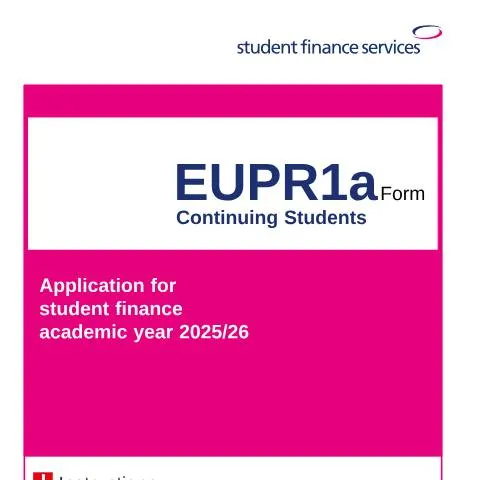
For thousands of continuing university students across the UK, the annual ritual of renewing student finance can feel like navigating a bureaucratic maze. The EU/PR1A/2526 form, issued by the Student Loans Company, represents your lifeline to tuition fee support for the 2025/26 academic year. Yet this seemingly straightforward document conceals a web of eligibility criteria, fee caps, and administrative requirements that can dramatically impact your funding prospects.
Unlike first-time applicants who face extensive financial scrutiny, continuing students encounter a different set of challenges. Your funding eligibility hinges not just on your current circumstances, but on when you originally started your course – a factor that creates distinct funding pathways with vastly different maximum loan amounts. The form's deceptively simple appearance masks complex regulations that have evolved through successive government policy changes over more than a decade.
The Timeline Trap: Why Your Course Start Date Determines Everything
The most crucial aspect of completing the EU/PR1A form lies in understanding how your original course commencement date fundamentally shapes your funding options. This isn't merely administrative housekeeping – it's the primary factor determining whether you'll receive £3,465 or potentially £11,440 in tuition fee support.
Pre-2010 Students: The Protected Generation
Students who began their studies in or before 2009/10 occupy a unique position within the student finance landscape. If you're studying at an English institution, your Tuition Fee Loan maximum stands at £3,465 – a figure that reflects the lower fee structure of that era. However, geography matters significantly: those studying in Northern Ireland can access up to £4,855, recognising the different fee regulations across UK nations.
This cohort includes an often-overlooked group: gap year students who deferred entry until 2010/11. Despite technically starting in a later academic year, these students retain the same funding parameters as their 2009/10 counterparts, acknowledging that their original application and course acceptance occurred under the earlier regime.
The Transitional Years: 2010-2012 Starters
Students commencing studies in 2010/11 or 2011/12 find themselves in a transitional category. The funding structure mirrors the pre-2010 cohort for English and Welsh institutions (£3,465 maximum), with Northern Ireland maintaining its higher ceiling of £4,855. Notably, students in this bracket studying in Wales cannot access the Welsh Tuition Fee Grant – a restriction that distinguishes them from later cohorts.
Post-September 2012: The New Reality
The landscape transforms dramatically for students who started from 1st September 2012 onwards. These students can access substantially higher loan amounts: up to £9,535 for standard full-time courses, including distance learning programmes. Private institution students face a reduced cap of £6,355, reflecting government policy on supporting alternative providers.
Welsh students starting between September 2012 and August 2018 encounter a hybrid system: their Tuition Fee Loan caps at £5,360, but they can claim a Welsh Fee Grant of up to £4,175 to bridge the gap to actual fees. This arrangement requires careful coordination between Student Finance Wales and your institution.
| Course Start Period | England/Wales Maximum | Northern Ireland Maximum | Special Provisions |
|---|---|---|---|
| Pre-2010 (including 2010/11 gap year) | £3,465 | £4,855 | Lower fee era protection |
| 2010/11 to 2011/12 | £3,465 | £4,855 | No Welsh Fee Grant eligibility |
| September 2012 onwards | £9,535 (standard) | £9,535 | Welsh hybrid system 2012-2018 |
| Accelerated degrees (England) | £11,440 | N/A | Intensive programme recognition |
Navigating Course Changes and Academic Disruptions
Section 2 of the form addresses one of the most complex areas of student finance: managing changes to your academic journey. The Student Loans Company requires detailed notification of any alterations to your original study plan, as these can significantly impact your funding entitlement and repayment obligations.
University Transfers and Course Switches
Changing institution or switching courses triggers a comprehensive review process. The form specifically asks you to identify whether you're changing university or college entirely or changing course within the same institution. Each scenario carries different implications for your funding continuity.
When transferring institutions, your new university must confirm course details before funding can be processed. This verification process can cause significant delays, particularly if attempted close to term commencement. The form warns explicitly that "if the new course details you give us can't be confirmed yet, your student funding may be delayed".
Repeating Study Periods: The Financial Implications
Academic setbacks requiring you to repeat a study period create complex funding calculations. The Student Loans Company must determine whether the repetition results from personal circumstances or academic failure, as this affects your remaining funding entitlement. The form requires detailed explanations of reasons for repetition, which undergo careful scrutiny.
Students repeating years may find their total funding period extended beyond the standard course length, but this isn't automatic. Each case receives individual assessment, considering factors such as medical circumstances, family crises, or institutional failures that contributed to the academic disruption.
Suspension and Withdrawal Procedures
Temporary or permanent departure from studies triggers immediate notification requirements. Suspending study creates a complex web of funding adjustments: existing loan payments to your institution may cease, while your future entitlement requires recalculation based on your revised study timeline.
Complete withdrawal from your course has more severe implications. Any tuition fee loans already paid to your institution for the current academic year may need partial repayment, depending on the timing of your departure and your institution's refund policies.
The Geographic Complexity: Studying Across UK Nations
The form's treatment of study location reveals the intricate reality of devolved education funding. Your funding doesn't simply depend on where you live, but where you study, creating scenarios where identical students receive vastly different support levels based purely on institutional geography.
Cross-Border Study Implications
English students studying in Scotland face particularly complex arrangements. While Scottish students at Scottish institutions receive free tuition, English students pay full fees but can access the higher loan amounts available to post-2012 starters. This creates a funding advantage over studying equivalent courses in England at certain fee levels.
Welsh students benefit from their hybrid funding model when studying in Wales, but lose access to the Welsh Fee Grant when studying elsewhere in the UK. This geographic restriction can create substantial financial disadvantages for Welsh students choosing to study outside Wales.
Work Placements and Study Abroad: Special Considerations
Section 2c addresses the increasingly common scenario of courses incorporating work placements or international study periods. The form requires term-by-term specification of where you'll spend your study time, distinguishing between university-based learning, study abroad components, and work placements.
Crucially, the form clarifies that teaching practice doesn't count as a work placement for Initial Teacher Training courses. ITT students should select "University or college" throughout, regardless of school-based training components. This distinction affects funding calculations and institutional reporting requirements.
The inclusion of Turing Scheme, Taith, and Erasmus+ programmes reflects post-Brexit mobility arrangements. Students participating in these programmes may access additional funding streams, but must coordinate between multiple funding bodies to avoid duplication or gaps in support.
The Administrative Mechanics: Completing Your Application Successfully
Beyond the policy complexities lies the practical challenge of completing the form accurately. The Student Loans Company's processing systems rely heavily on precise data matching, making attention to detail crucial for avoiding delays or rejections.
Personal Details: The Foundation of Your Application
Section 1 demands exact replication of details from your birth certificate or passport. This isn't bureaucratic pedantry – the Student Loans Company's fraud prevention systems flag discrepancies between your application and official documents. Even minor variations in name spelling or formatting can trigger time-consuming verification processes.
Your Customer Reference Number, if you have one from previous applications, serves as the primary identifier linking your current application to your existing student finance record. Omitting this number when you have one can create duplicate records, complicating future applications and potentially affecting your credit file.
Fee Amount Verification: A Critical Accuracy Point
Section 2b requires you to specify the exact tuition fee amount your institution charges for 2025/26. This figure must match your institution's published fees exactly. Discrepancies between your stated amount and institutional records can delay processing while Student Finance Services seeks clarification.
The form explicitly advises contacting your university or college if you're uncertain about fee amounts. This guidance reflects common problems where students assume fee levels or fail to account for course-specific charges that may differ from standard institutional rates.
Evidence Requirements and Supporting Documentation
While the form itself appears relatively simple, successful processing often depends on supporting evidence. Changes to course details typically require verification from your institution's student records office. Personal circumstance changes may need documentary support, particularly if they affect your funding eligibility.
The instruction to complete the form in ink reflects the Student Loans Company's document scanning and processing systems. Pencil entries or corrections may not scan clearly, leading to processing delays or requests for form resubmission.
NHS Bursary Interactions: The Exclusion Zone
A crucial exclusion within the form concerns students eligible for NHS, Department of Health, or Department of Health (Northern Ireland) bursaries. The form states explicitly that such students should not complete this application, as they won't be eligible for standard student finance support.
This exclusion covers most healthcare professional training programmes, including nursing, midwifery, and allied health courses. However, the form specifically excludes social work bursaries from this restriction, recognising that social work students typically access standard student finance rather than healthcare-specific funding.
The complexity arises for students on courses with mixed funding eligibility. Some healthcare courses transitioned from NHS bursary to student loan funding in recent years, creating potential confusion about which funding route applies. Students uncertain about their status must seek clarification from both their institution and the relevant funding body before proceeding.
Data Sharing and Privacy: The Modern Student Finance Ecosystem
The form's privacy notice reveals the extensive data sharing that underpins modern student finance administration. Your personal, financial, and course details flow between Student Finance Services, your institution, and potentially third-party scholarship providers to determine your complete funding package.
This data sharing enables institutions to calculate and award bursaries or scholarships automatically, but it also means your student finance application creates a comprehensive profile accessible to multiple organisations. Understanding this data flow helps explain why seemingly minor changes to your application can have wide-reaching implications across different funding streams.
The integration between student finance and institutional bursary systems means your application timing can affect scholarship eligibility. Some institutional awards depend on early application submission, creating incentives for prompt form completion beyond simply securing your tuition fee loan.
Strategic Considerations for Maximising Your Financial Support
Completing the EU/PR1A form successfully requires understanding not just the immediate requirements, but the broader strategic implications of your choices. The timing of submission, accuracy of information, and coordination with your institution all influence your overall funding package.
Early submission provides the best chance of smooth processing, particularly important if you're making course changes or have complex circumstances. The Student Loans Company processes applications in received order during peak periods, making early submission a practical advantage.
For students approaching their funding limit due to course changes or extended study, the form represents a crucial checkpoint. Each application contributes to your lifetime funding entitlement calculations, making accuracy essential for preserving future funding options.
The requirement for institutional notification of changes creates a dual responsibility: you must inform Student Finance Services through this form, while ensuring your university or college submits corresponding notifications through their systems. Coordination failures between these parallel processes commonly cause funding delays that can persist well into the academic year.